
Table of Contents
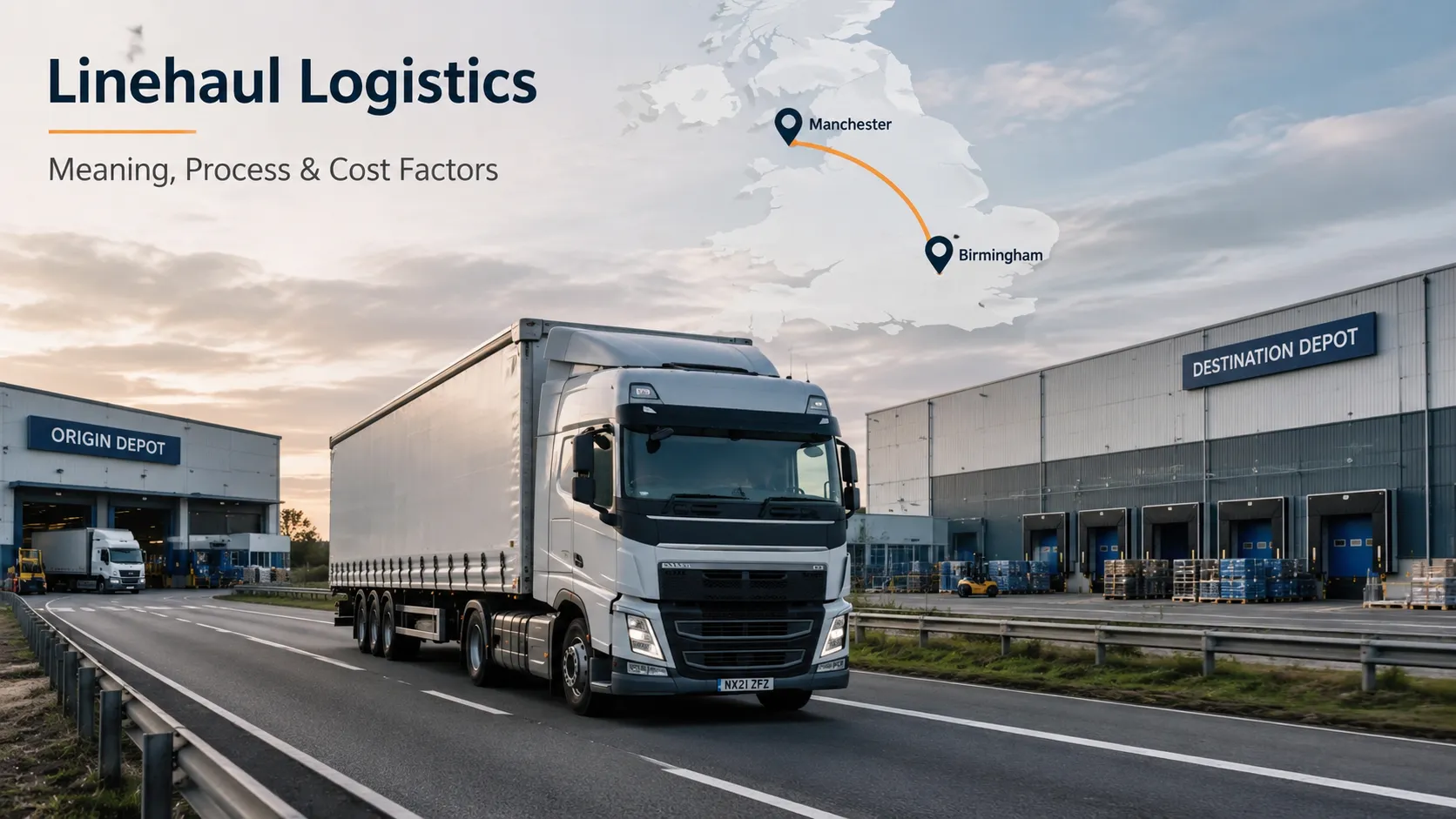
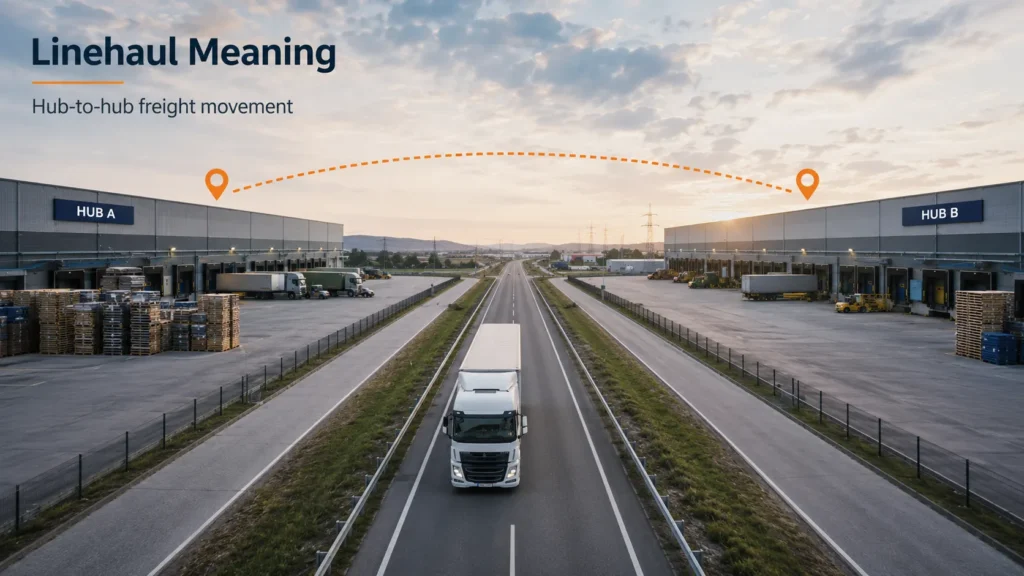
Linehaul logistics means moving freight between major transport points, not final customer addresses. It usually covers depot-to-depot, hub-to-hub, port-to-warehouse, or warehouse-to-distribution-centre transport. In simple terms, linehaul is the long-distance part of a delivery network.
This stage matters because it carries the biggest freight volumes across the supply chain. In the UK, GB-registered HGVs moved 168 billion tonne kilometres and travelled 19.4 billion vehicle kilometres in 2024. They also lifted 1.59 billion tonnes of goods, showing how central road freight remains to national supply chains.
We often call this stage middle-mile freight, because it sits between collection and final-mile delivery. A parcel may leave a local depot, move by line haul transport overnight, then enter another depot for final delivery. Good linehaul planning reduces empty miles, delays, fuel waste, and missed delivery windows.
Linehaul Meaning in Logistics
What Does Linehaul Mean?
The linehaul means the planned movement of freight across a fixed transport lane. That lane may connect two cities, two depots, or two regional hubs. Unlike local delivery, linehaul does not usually involve many customer stops.
A simple example is freight moving from Birmingham to Glasgow overnight. The goods may be parcels, pallets, retail stock, chilled food, or manufacturing parts. The driver’s job is to move the load safely between two network points. The final delivery team then handles local drops the next day.
Linehaul logistics supports several transport types:
- Road freight by rigid trucks or articulated HGVs.
- Rail freight between inland terminals.
- Air freight between airport hubs.
- Sea freight between ports and inland centres.
- Intermodal freight uses more than one mode.
Road remains common in UK linehaul because it offers flexible routing and fast hub access. However, rail and intermodal options can reduce emissions on long corridors.
How the Linehaul Logistics Process Works
Step-by-Step Linehaul Process
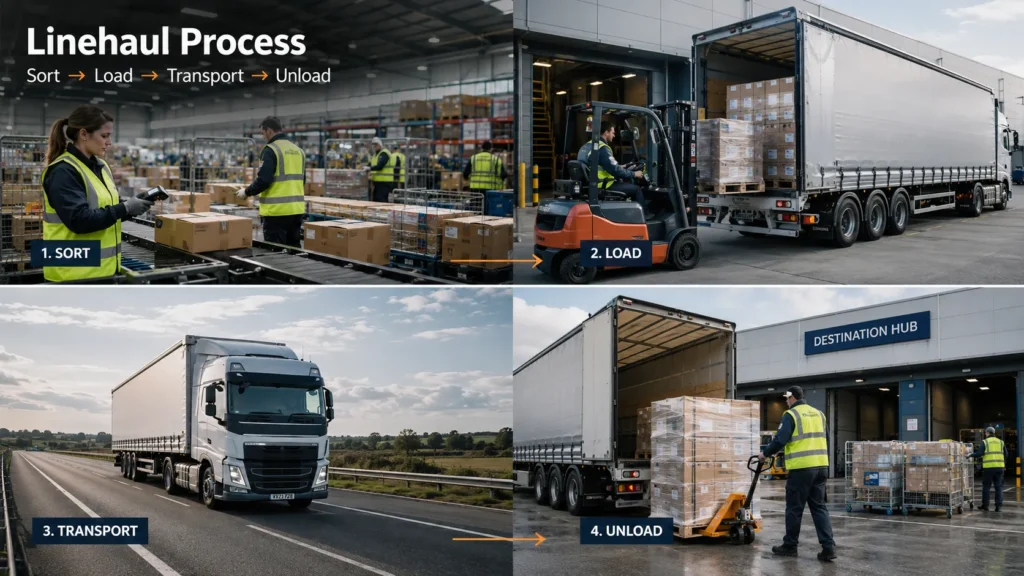
The process starts when freight arrives at an origin depot or fulfilment centre. Teams scan, sort, weigh, and group shipments by destination lane. Planners then assign loads to vehicles based on volume, weight, urgency, and delivery cut-off times.
Next, the vehicle leaves for the destination hub. Many parcel and retail networks run linehaul at night. This helps goods reach local depots before morning delivery rounds begin. Drivers follow fixed routes, planned rest periods, and legal driving limits.
At the destination hub, staff unload and scan freight again. They check shortages, damage, and routing errors. The goods then move into storage, cross-docking, or final-mile delivery. A strong system records every scan, time stamp, and exception.
Linehaul vs Final Mile
Linehaul and final mile do different jobs. Linehaul moves bulk freight over longer distances. Final mile delivers smaller consignments to homes, shops, offices, or worksites.
| Area | Linehaul logistics | Final-mile delivery |
|---|---|---|
| Main role | Hub-to-hub freight movement | Customer delivery |
| Typical distance | 50 to 500+ miles | 1 to 30 miles |
| Load type | Bulk parcels, pallets, cages | Individual orders |
| Main cost driver | Vehicle, fuel, driver hours | Stops, time, failed delivery |
| Network style | Fixed lanes | Dynamic routes |
| Performance metric | On-time hub arrival | First-time delivery success |
This split helps logistics teams control costs. A full trailer between hubs costs less per unit than hundreds of small local stops. That is why linehaul logistics is critical for parcel carriers, 3PLs, supermarkets, wholesalers, and manufacturers.
Key Cost Factors in Linehaul Transport
Distance, Vehicle Type and Load Fill
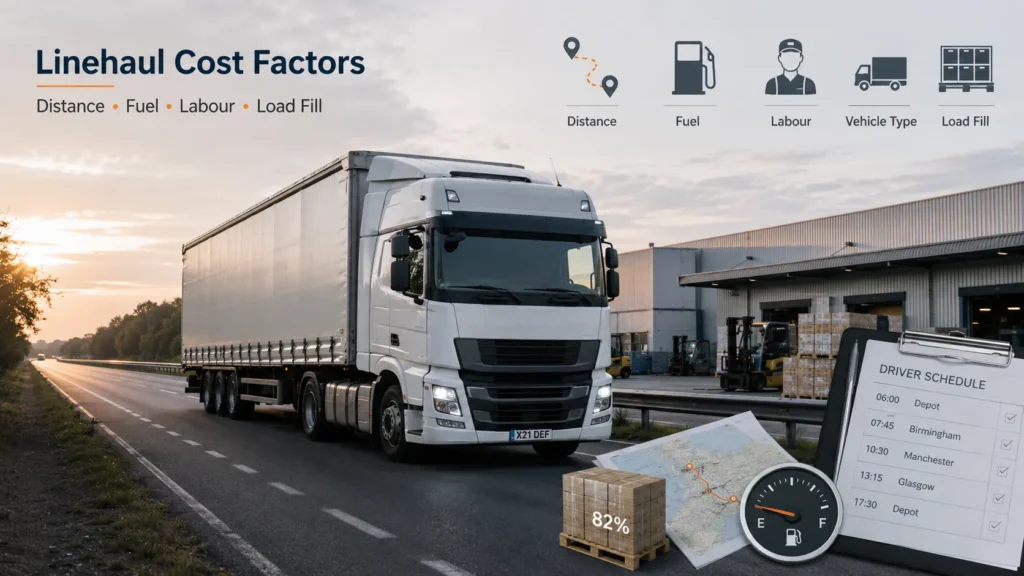
Distance is the first cost driver in line haul transport. Longer journeys use more fuel, driver hours, maintenance, and planning time. However, the cost per mile can fall when loads are full and lanes run regularly.
Vehicle type also changes the price. A small van costs less than an articulated lorry, but carries less freight. UK haulage rates often range from £1.80 to £3.00 per mile, depending on vehicle size, distance, weight, and service needs.
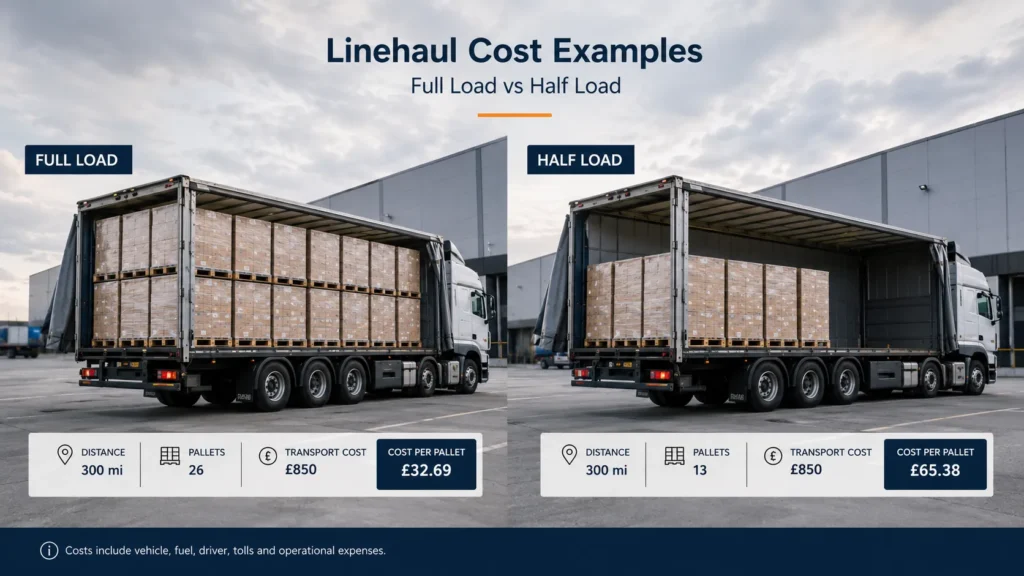
Load fill is equally important. A trailer running at 95% capacity spreads the cost across more units. A trailer running half-empty increases the cost per pallet or parcel. Good planners reduce this problem through backhauls, load consolidation, and shared-user networks.
Fuel, Labour and Compliance
Fuel is one of the most visible linehaul cost factors. Diesel price changes can quickly affect margins, especially on long routes. The UK government tracks weekly petrol and diesel prices because road fuel strongly influences transport costs.
Labour also matters. Drivers must follow legal working rules, rest periods, and tachograph requirements. A route that looks short on a map may still need extra hours due to congestion, loading delays, or depot waiting time.
Compliance adds more cost, but it protects service quality. Operators must manage vehicle inspections, insurance, maintenance, driver training, and safe loading. For HGVs over 7.5 tonnes in England and Wales, national limits rose to 50 mph on single carriageways and 60 mph on dual carriageways in 2015. Scotland kept separate limits.
Why Linehaul Logistics Matters for Service Quality
Speed, Reliability and Network Control
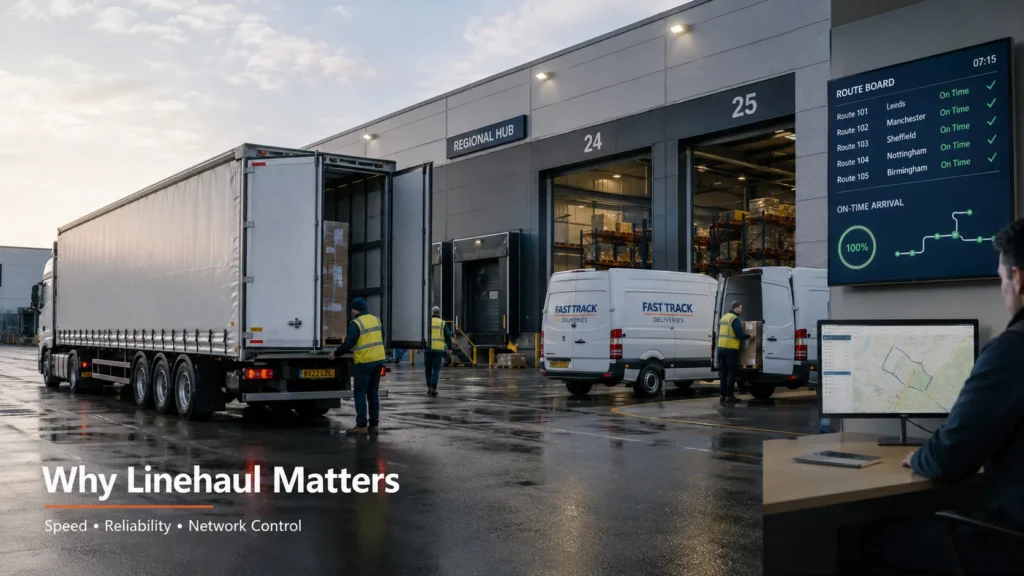
Strong linehaul logistics improve delivery speed across the full network. If a hub-to-hub trailer arrives late, every downstream route feels the delay. Local drivers may miss delivery slots, customer promises, and retail opening windows.
Reliable linehaul also improves stock availability. Retailers depend on timed movements from national distribution centres to regional sites. Manufacturers use scheduled transport to keep parts moving between suppliers, factories, and warehouses.
Good operators monitor linehaul through:
- Departure and arrival scan times.
- Trailer utilisation percentage.
- On-time performance by lane.
- Fuel use per route.
- Empty miles and backhaul rate.
- Damage, shortage, and exception reports.
This data helps teams fix weak lanes quickly. For example, a repeated 45-minute delay at one depot may need more loading bays, better staffing, or earlier trailer allocation.
Real Experience from Freight Operations
In real logistics operations, the best linehaul plans look simple but need tight control. We usually see problems when teams plan by distance only. A 180-mile route with poor loading discipline can perform worse than a 300-mile route with strong hub timing.
Experienced transport managers often focus on three questions. Is the trailer full enough? Can the driver complete the route legally? Will the destination hub process the freight before the next delivery wave?
Those questions protect both cost and service. They also show why middle-mile freight is not just “transport between depots”. It is the timing engine behind parcel, pallet, retail, and e-commerce delivery networks.
Common Linehaul Cost Examples
What Can Increase or Reduce Cost?
Linehaul rates change because every lane has different pressure points. A clean full-load route with a return load is efficient. A late, urgent, half-empty route costs more.
| Cost factor | Increases cost when | Reduces cost when |
|---|---|---|
| Distance | Route is long or congested | Lane is direct and regular |
| Vehicle size | Larger HGV is underfilled | Trailer runs near capacity |
| Fuel | Diesel prices rise | Fuel use is monitored |
| Labour | Waiting time increases | Loading runs on schedule |
| Backhaul | Vehicle returns empty | Return freight is booked |
| Service speed | Same-day or urgent move | Planned overnight movement |
| Handling | Freight needs extra care | Cross-dock is efficient |
A practical example shows the difference. A 250-mile linehaul at £2.40 per mile costs £600 before extras. If the vehicle carries 20 pallets, the base transport cost is £30 per pallet. If it carries only 10 pallets, the cost doubles to £60 per pallet.
That is why consolidation matters. More freight on the same route lowers unit cost without cutting service quality.