
Table of Contents
Freight accessorial charges can turn a clean transport quote into a higher final invoice. These charges cover extra work, time, equipment, fuel movement, or storage outside the standard haulage service. We see them most often when collection details are unclear, sites are not ready, or freight needs special handling.
A basic UK haulage quote usually covers planned movement from collection to delivery. It may not cover waiting time, a tail lift, timed delivery, failed delivery, pallet storage, or extra fuel movement. In 2026, UK haulage costs will remain sensitive because fuel is one of the highest running costs for operators. One UK haulage guide states fuel can account for around one third of running costs.
That is why shippers need to understand freight accessorial charges before booking. The right details protect budgets, reduce disputes, and keep goods moving. This guide explains fuel surcharge, detention fees, tail lift charge, and storage fees with practical examples.
What Are Freight Accessorial Charges?
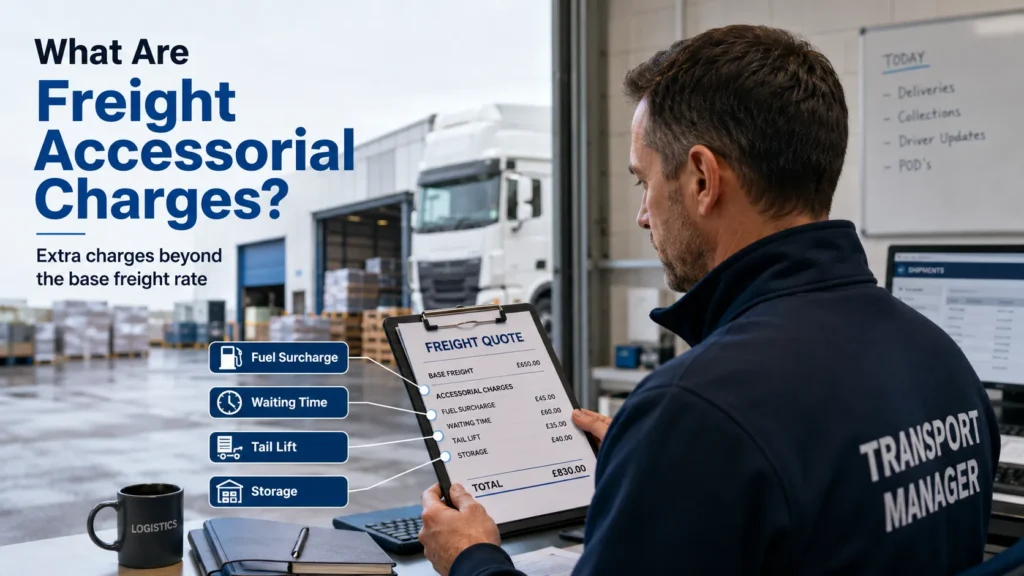
Extra charges outside the base freight rate
Freight accessorial charges are extra fees added when a shipment needs services beyond standard transport. A base freight rate normally covers vehicle movement, driver time within agreed limits, and planned collection and delivery. Accessorials cover the parts that fall outside that plan.
Common examples include a fuel surcharge, detention fees, a tail lift charge, storage fees, timed delivery, redelivery, booking-in fees, and restricted-access delivery. Pallet networks also list surcharge codes for services such as pre-booked delivery, booking-in delivery, tail lift, timed delivery, home delivery, Saturday delivery, and Amazon delivery.
These charges are not automatically unfair. They help carriers recover real costs when extra time, fuel, labour, or equipment is used. Problems start when the shipper does not know what triggers them. Clear shipment data prevents most surprise fees.
Why these charges matter
Freight accessorial charges matter because they change the true landed cost of delivery. A quote that looks cheaper can become expensive if it excludes waiting time, equipment, and storage. This is common with tight delivery windows, sites without forklifts, and warehouses with limited loading space.
For example, a pallet delivery may need a tail lift when the receiver has no forklift. A container move may attract waiting charges after the free loading time expires. A failed delivery may create storage fees while the carrier waits for new instructions.
Good logistics teams review accessorial terms before confirming a booking. They check free time, fuel rules, storage rates, site equipment, and delivery restrictions. That simple review can protect the margin on every shipment.
Fuel Surcharge Explained
What is a fuel surcharge?
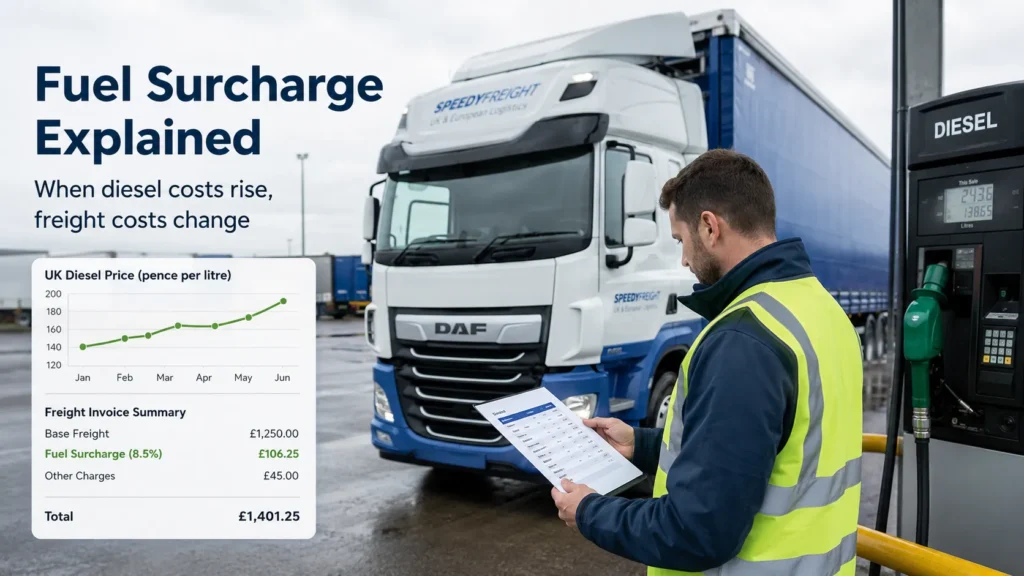
A fuel surcharge is a variable charge added when diesel costs rise above the carrier’s base level. It helps hauliers recover fuel volatility without changing the whole freight tariff every week. This matters because fuel pricing can move faster than contract rates.
In UK haulage, fuel costs remain a major operating expense. A 2026 haulage cost guide states that fuel costs often comprise over a third of total running costs. It also notes that fuel surcharge rates can vary when diesel prices fluctuate.
Some operators show this fee as a separate invoice line. SUEZ UK, for example, states that its fuel surcharge is displayed separately as “Fuel surcharge”. It also says the charge changes with the average actual diesel cost for the prior month.
How fuel surcharge is calculated
Fuel surcharge calculations differ by carrier, but the logic is usually simple. The carrier sets a base diesel price, tracks the current diesel cost, and then applies a percentage. This percentage is added to transport, movement, lift, or service charges.
A typical formula is:
Fuel surcharge = base freight charge × fuel surcharge percentage.
For example, if a road freight job costs £600 and the fuel surcharge is 8%, the surcharge is £48. The final transport line costs £648 before VAT and other fees.
Some contracts use published diesel indexes. Others use the haulier’s own monthly average diesel cost. SUEZ states its diesel figures are based on the average monthly diesel price, exclusive of VAT, and bulk purchase rates.
Detention Fees and Waiting Time
What are detention fees?
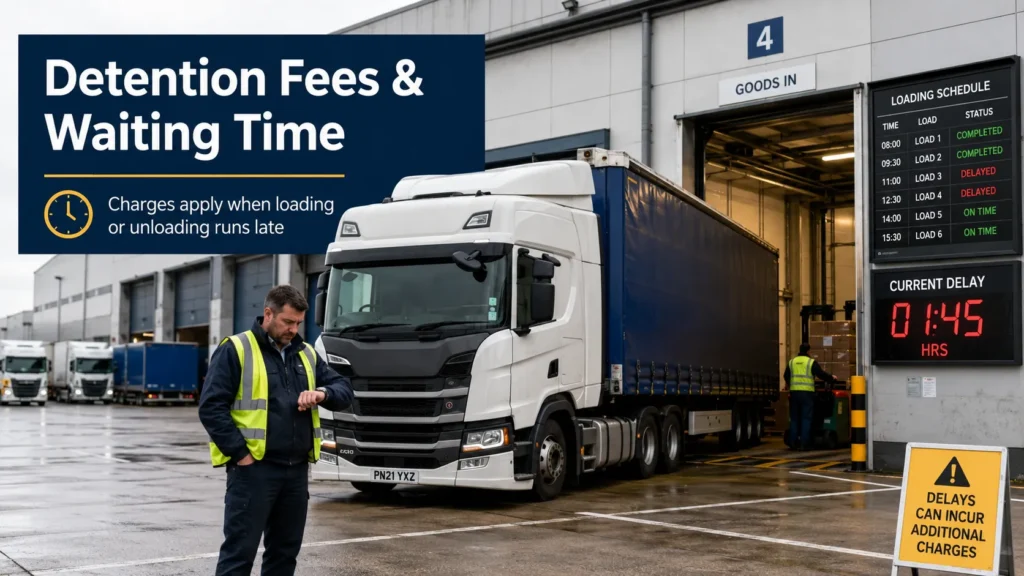
Detention fees are waiting time charges when a driver, vehicle, trailer, or container stays longer than agreed. In road freight, this usually happens at collection or delivery. The warehouse may not be ready, paperwork may be missing, or the loading bay may be blocked.
For container transport, Embassy Freight states that the agreed transport price includes 2 hours for loading and unloading. After that, the carrier charges additional costs based on a prearranged hourly rate.
This rule protects vehicle productivity. A lorry stuck for 4 hours cannot complete its next job. The carrier still pays the driver, fuel, insurance, compliance costs, and vehicle finance. Detention fees recover the lost operating time.
How waiting time builds up
Waiting time usually starts after the agreed-upon free time expires. If a contract gives 2 free hours and loading takes 3.5 hours, the chargeable waiting time is 1.5 hours. Some carriers round this to the next 30 or 60 minutes.
For example, assume a carrier allows 2 free hours and charges £45 per hour after that. If unloading takes 4 hours, the payable waiting time is 2 hours. The detention fee becomes £90.
We recommend recording arrival time, bay allocation time, loading start time, loading finish time, and departure time. These timestamps make disputes easier to resolve. They also show which sites cause repeated freight accessorial charges.
Tail Lift Charge Explained
What is a tail lift charge?
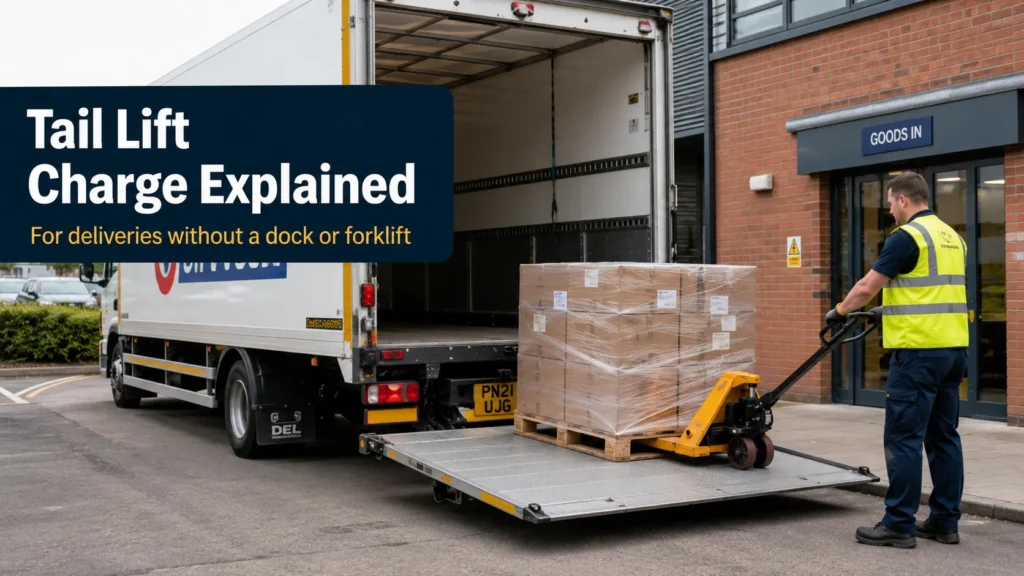
A tail lift charge applies when a vehicle needs a hydraulic platform to load or unload freight. This is common when the shipper or receiver has no forklift, loading dock, or pallet truck access. It is also common in retail, offices, schools, homes, and small warehouses.
Pallet networks treat a tail lift as a specific service. Translink Express lists “LF – Tail Lift” as a pallet surcharge code. It also states that the maximum weight for its tail lift service is up to 750 kg per pallet.
This charge exists because tail lift deliveries take longer and need suitable equipment. They also carry more risk. Drivers must manage pallet stability, kerbside access, gradients, and safe unloading space.
When a tail lift charge applies
A tail lift charge usually applies when collection or delivery cannot happen by forklift or dock. It can also apply when a booking fails to mention that lifting equipment is unavailable. That missing detail can force a different vehicle allocation.
For example, a standard curtain-sided vehicle may arrive at a warehouse expecting forklift loading. If the site has no forklift, the carrier may need a tail lift vehicle. That can create a surcharge, redelivery charge, or failed collection charge.
Shippers should confirm four details before booking. They should check pallet weight, site equipment, vehicle access, and whether the delivery is kerbside only. This prevents operational delays and keeps freight accessorial charges under control.
Storage Fees Explained
What are storage fees?
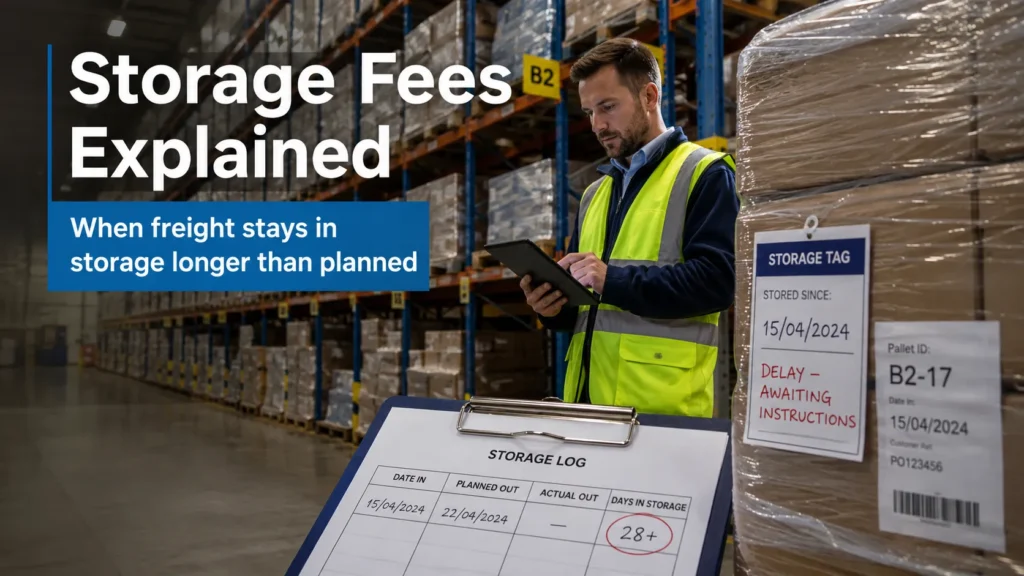
Storage fees apply when freight stays with the carrier, warehouse, port, or fulfilment provider longer than planned. This may happen after a failed delivery, customs delay, missing paperwork, receiver closure, or stock-holding request.
UK storage pricing varies by model. SFI Logistics reported in March 2026 that basic warehouse storage can be around £9 to £15 per square foot per year. It also stated that 3PL storage can work out around £1.50 to £3 per pallet per week.
That difference matters. A carrier depot is designed for short dwell time, not long-term stockholding. A 3PL warehouse suits stock storage, picking, packing, and onward distribution. Using the wrong place can make storage fees rise quickly.
How storage fees are calculated
Storage fees are usually charged by pallet, bin, cubic metre, square foot, or day. Some providers charge weekly. Others charge daily after free time expires. Charges may increase for oversized, hazardous, chilled, high-value, or awkward freight.
For example, 20 pallets stored at £3 per pallet per week cost £60 per week. If the delay lasts 4 weeks, storage reaches £240 before handling and VAT. If every pallet also needs receiving and dispatch handling, the total rises further.
To avoid storage fees, issue delivery instructions early. Confirm receiver availability, booking references, access hours, and customs paperwork. These basic controls reduce avoidable freight accessorial charges and protect delivery performance.
Common Freight Accessorial Charges Table
| Charge type | What triggers it | Typical charging method | Example cost impact |
|---|---|---|---|
| Fuel surcharge | Diesel moves above carrier base rate | Percentage of freight charge | £600 × 8% = £48 |
| Detention fees | Driver waits beyond free loading time | Hourly or part-hour rate | 2 hours × £45 = £90 |
| Tail lift charge | No forklift, dock, or safe unloading equipment | Per pallet or per delivery | Applies where tail lift vehicle is required |
| Storage fees | Freight remains in depot or warehouse | Per pallet, week, day, or space | 20 pallets × £3 = £60 weekly |
| Timed delivery | Delivery must happen within a fixed window | Flat surcharge | Higher than standard delivery |
| Redelivery | First delivery attempt fails | Per attempt or full re-run rate | Can include waiting and storage |
How to Reduce Freight Accessorial Charges
Improve booking details
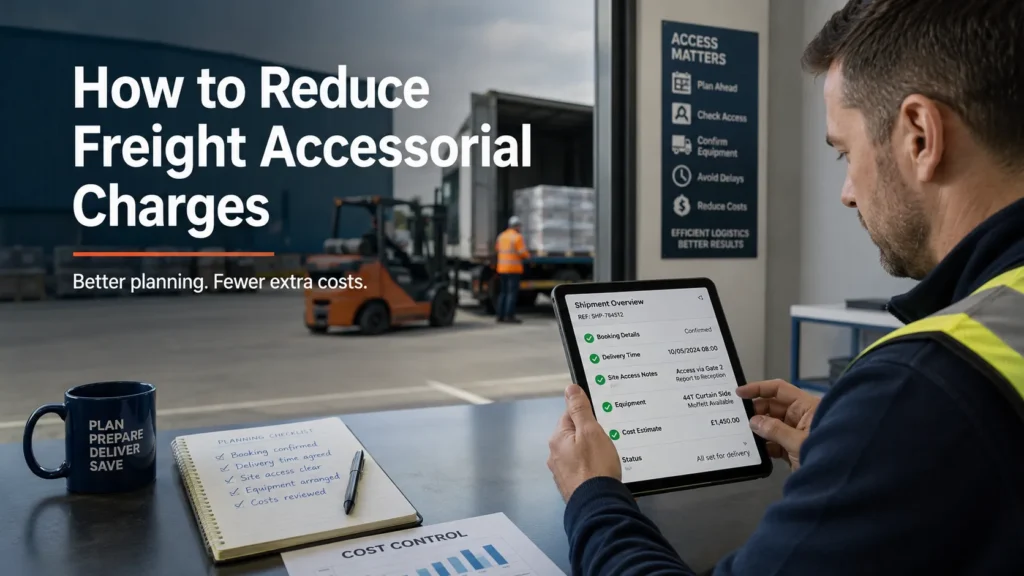
Accurate booking details reduce freight accessorial charges before the vehicle leaves the depot. We should treat every shipment as an operational brief, not just a price request. The carrier needs weight, dimensions, pallet count, access limits, opening hours, contact names, and equipment availability.
Strong booking data helps planners send the right vehicle the first time. It also prevents avoidable tail lift charge disputes. If a pallet weighs 800 kg and the carrier’s tail lift limit is 750 kg, the shipment needs another plan. That one detail can prevent a failed collection.
Useful booking checks include:
- Confirm forklift, dock, or tail lift requirements.
- Check collection and delivery opening hours.
- Share booking reference numbers before arrival.
- Confirm pallet weight and dimensions.
- Ask for free time and waiting rates.
- Check fuel surcharge percentage before approval.
Control time at the site
Fast site turnaround reduces detention fees. The cheapest way to control waiting time is preparation. Goods should be packed, labelled, wrapped, staged, and documented before the vehicle arrives. The loading team should know the collection reference and vehicle arrival window.
Warehouse managers should track loading performance by site. If one site regularly keeps drivers waiting over 2 hours, that site needs a process fix. The issue may be staffing, bay scheduling, paperwork, or internal stock location.
A simple loading checklist improves control. Prepare freight before arrival, assign a bay, verify paperwork, and capture timestamps. This makes freight accessorial charges easier to challenge when the delay was not your fault.
How to Check an Accessorial Invoice

Match the charge to the contract
Every accessorial invoice should match the agreed rate card, tariff, or quote terms. Start by checking whether the charge was listed before booking. Then compare the date, consignment number, service type, and reason code.
For fuel surcharge, check the percentage and base charge. For detention fees, check arrival and departure timestamps. For storage fees, check the start date, end date, pallet count, and free storage period. For a tail lift charge, confirm whether the service was requested or required on-site.
Do not reject accessorial charges automatically. Many are valid when extra service was delivered. Instead, ask for evidence and compare it against the booking. This approach keeps relationships professional and protects your budget.
Build better internal controls
Strong teams use accessorial data to improve future shipments. They do not just pay or dispute invoices. They track why charges happen, which sites cause them, and which customers create repeat delays.
For example, a monthly report may show £900 in detention fees across 10 deliveries. If 7 came from one receiver, the problem is operational, not pricing. A better delivery slot or booked-in process may remove most future costs.
We recommend creating a simple accessorial dashboard. Track charge type, carrier, site, customer, value, reason, and prevention action. This turns freight accessorial charges from invoice surprises into measurable logistics data.