
Table of Contents
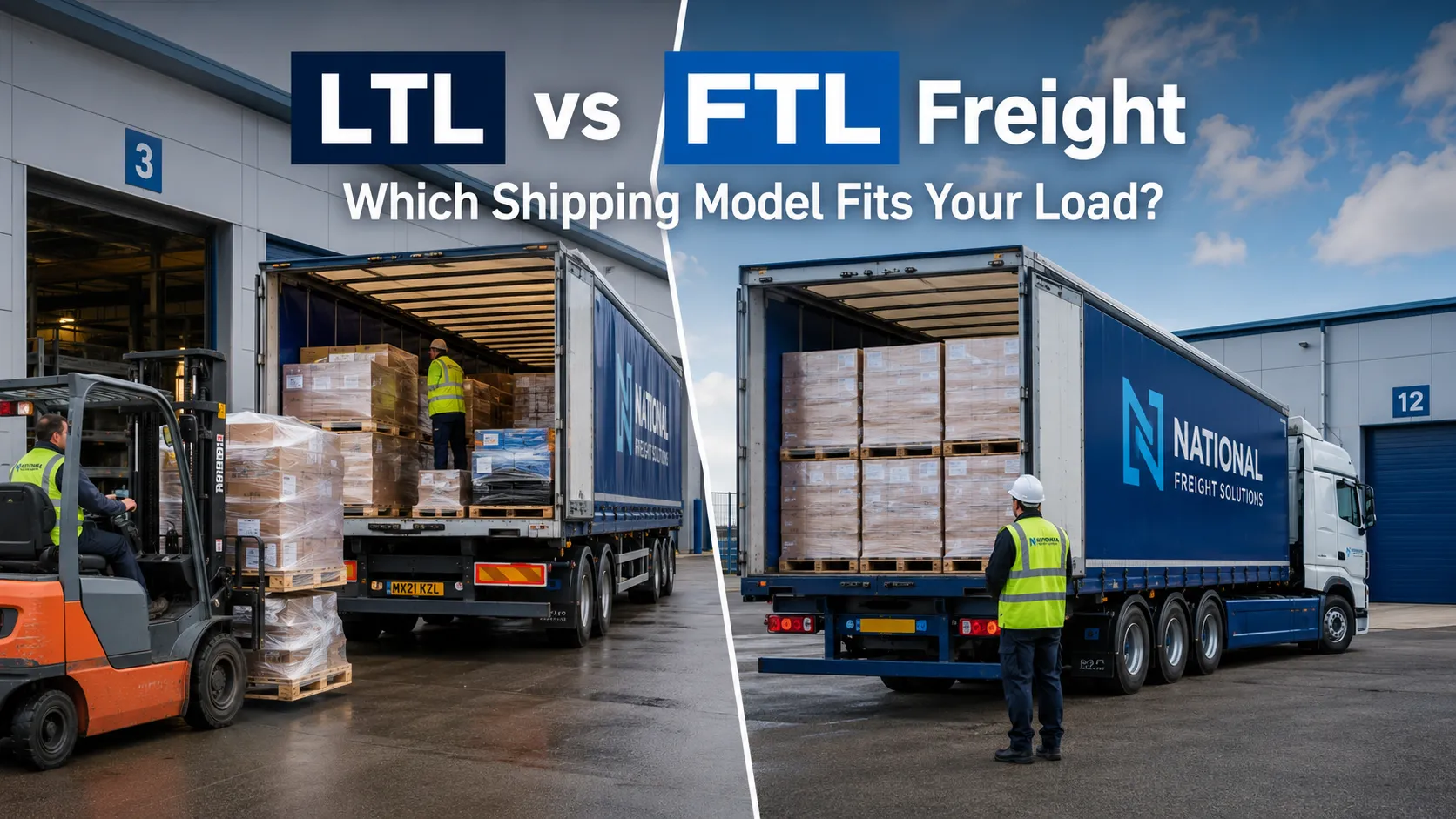
LTL vs FTL freight is one of the most important choices in road transport. The right model affects cost, speed, risk, handling, and customer delivery performance. In simple terms, LTL means less than truckload, where your pallets share trailer space with other shippers. FTL means full truckload, where one trailer moves one customer’s freight from collection to delivery.
UK road freight remains central to supply chains. In 2024, GB-registered HGVs lifted 1.59 billion tonnes of goods and moved 168 billion tonne kilometres. Road also carried 82% of UK domestic freight by tonne kilometres in 2024. That scale makes freight model selection a daily commercial decision, not just an operations task.
We use LTL vs FTL freight comparisons when a load sits between courier parcels and a dedicated trailer. A few pallets may suit LTL. A high-volume, urgent, fragile, or time-critical shipment may justify FTL. The best answer depends on pallet count, weight, route, service level, and risk tolerance.
What Is LTL Freight?
Less Than Truckload Explained
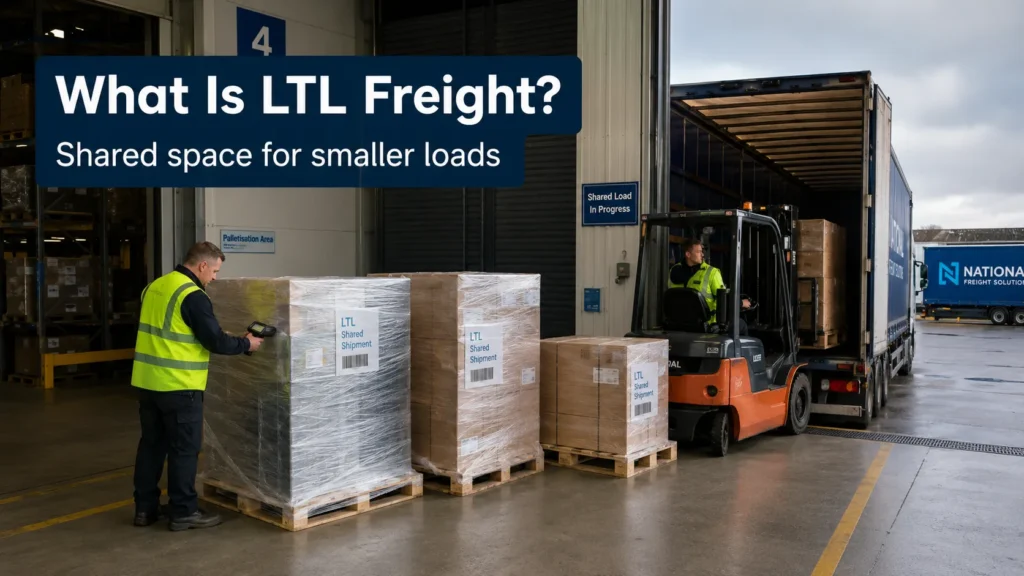
Less than truckload freight moves smaller consignments through a shared transport network. Your pallet freight travels with other customers’ goods, usually through a hub, depot, or consolidation point. This model suits businesses shipping one to six pallets, regular replenishment stock, or non-urgent B2B orders.
LTL works because shippers pay for the space they use. A company sending two pallets from Birmingham to Glasgow does not need to fund a whole trailer. The carrier combines that freight with other loads heading in the same direction. This spreads transport costs across several customers and improves vehicle utilisation.
The trade-off is handling. LTL shipments may be loaded, cross-docked, scanned, sorted, and reloaded before final delivery. That process adds flexibility but increases touchpoints. In our experience, LTL works best when goods are well-packed, clearly labelled, and not highly fragile.
What Is FTL Freight?
Full Truckload Explained
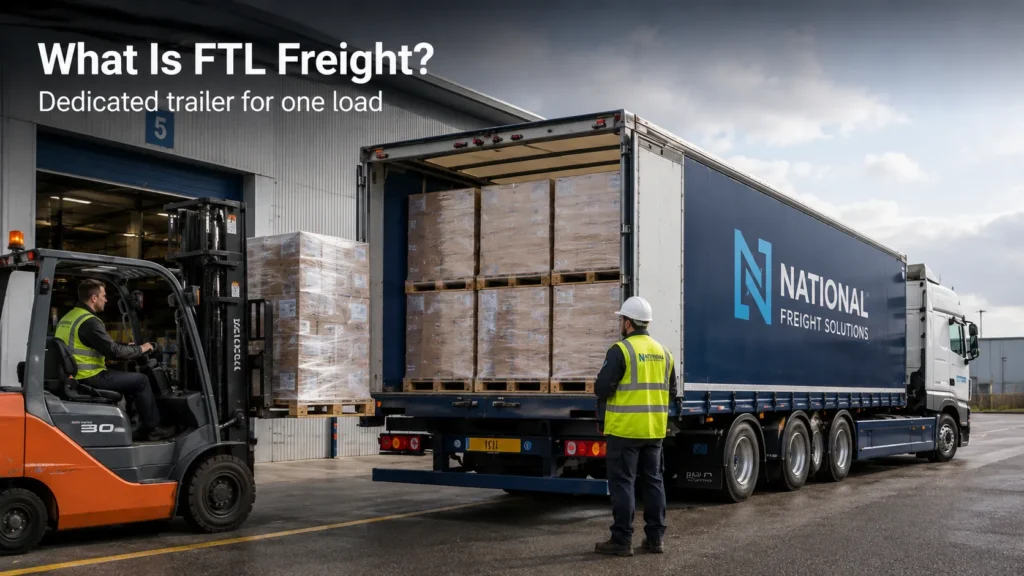
Full truckload freight gives one shipper dedicated use of a trailer or vehicle. The load travels directly from the collection point to the delivery point, usually without depot handling. This model suits larger consignments, urgent loads, high-value goods, fragile stock, and tight delivery windows.
FTL becomes attractive when the shipment fills enough trailer space to reduce the value of sharing. A UK articulated lorry can operate up to 44 tonnes gross vehicle weight, depending on axle configuration and legal plating. That does not mean every load can weigh 44 tonnes, but it shows the scale available for bulk freight.
Full truckload also gives better control. You can agree on collection time, delivery time, vehicle type, security needs, and route planning. This matters for manufacturing lines, retail launches, events, and temperature-sensitive freight. In the LTL vs FTL freight decision, FTL usually wins when reliability matters more than base price.
LTL vs FTL Freight: Main Differences
Cost, Speed, Handling, and Control
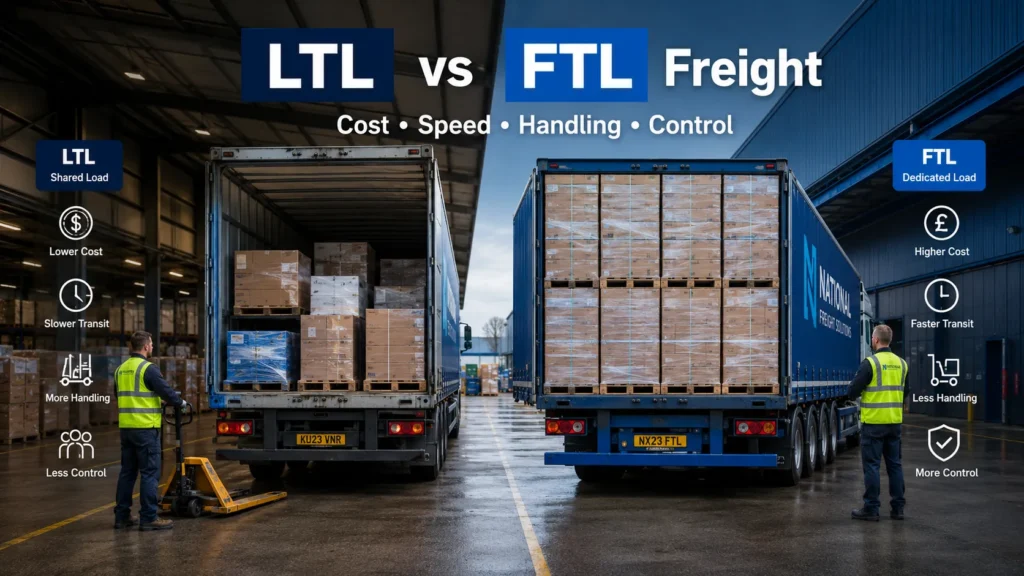
The biggest difference is the cost structure. LTL prices usually depend on pallet count, weight, dimensions, postcode zones, and service speed. FTL pricing usually depends on vehicle type, mileage, lane demand, driver time, fuel, and delivery restrictions.
Speed also changes the decision. LTL can be efficient on common lanes, but hub movement may add time. FTL usually moves faster because the vehicle travels directly. For example, eight pallets from Manchester to Bristol may arrive faster by FTL if booked as a dedicated same-day or next-day load.
Handling is another key factor. LTL can involve several touchpoints. FTL usually involves collection loading, and delivery unloading only. That reduces damage risk and improves accountability. For fragile machinery, premium packaging, or awkward pallet freight, fewer touchpoints often justify the extra spend.
| Decision Factor | LTL Freight | FTL Freight | Best Fit |
|---|---|---|---|
| Typical load size | 1–6 pallets | 10–26 pallets | Depends on volume |
| Trailer use | Shared | Dedicated | FTL for control |
| Handling points | Multiple | Usually 2 | FTL for fragile goods |
| Transit speed | Standard or economy | Faster direct routing | FTL for urgency |
| Cost model | Pay for space used | Pay for full vehicle | LTL for small loads |
| Delivery control | Moderate | High | FTL for strict slots |
| Damage exposure | Higher | Lower | FTL for high-risk freight |
When LTL Freight Fits Best
Small, Regular, and Flexible Loads
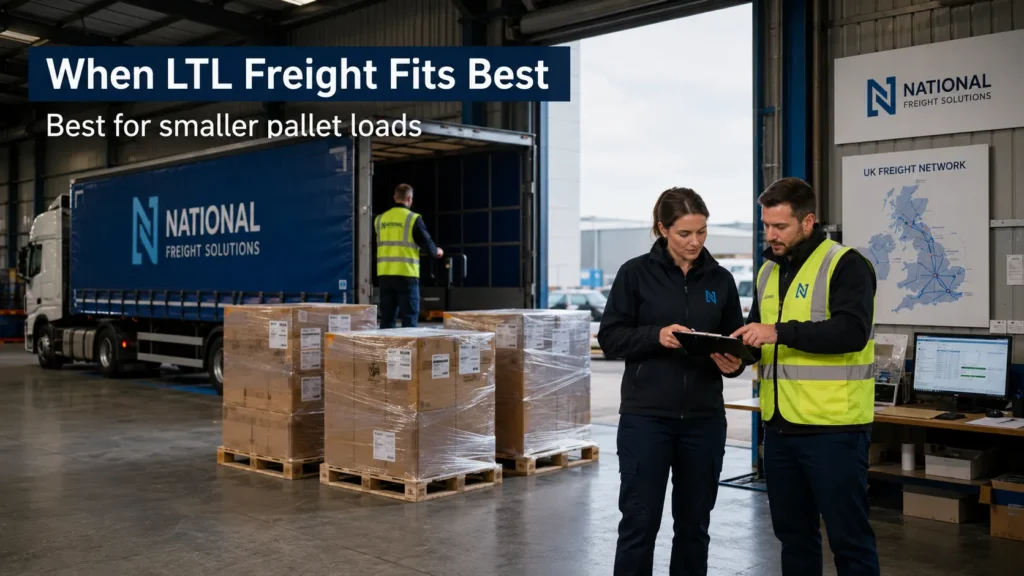
LTL freight fits best when your shipment is too large for parcel networks but too small for a trailer. One to six pallets is the common sweet spot. A wholesaler sending three pallets weekly to regional customers can avoid paying for empty trailer space.
This model also helps companies with mixed customer demand. A business may ship one pallet to Leeds, two pallets to Cardiff, and four pallets to London on the same day. LTL networks make that pattern practical without hiring several vehicles.
LTL also works when delivery windows are flexible. If a customer accepts a standard two-to-three-day service, shared freight can deliver good value. The key is disciplined packaging. We recommend using strong pallets, edge protectors, shrink wrap, clear labels, and photographed dispatch checks.
Good LTL examples include:
- 2 pallets of retail stock from Leicester to Edinburgh.
- 4 pallets of packaging materials from Leeds to Bristol.
- 1 pallet of spare parts from Birmingham to Kent.
- 5 pallets of non-fragile goods to a trade customer.
When FTL Freight Fits Best
Larger, Urgent, or High-Risk Loads
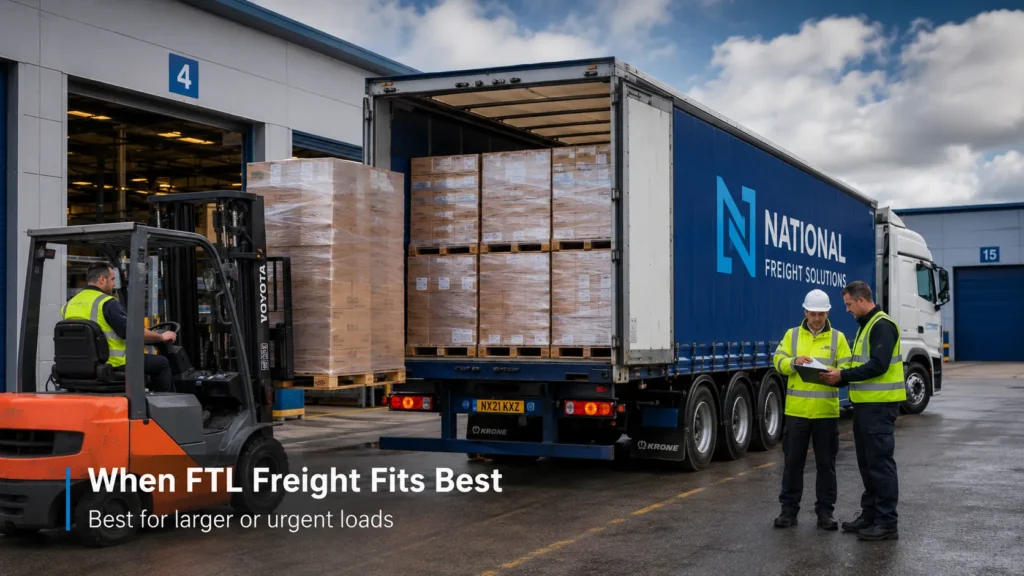
FTL freight fits best when load size, urgency, or risk makes sharing inefficient. A shipment of 18 pallets may cost less by FTL than by LTL, especially on a long UK lane. The tipping point changes by route, season, and carrier capacity.
Dedicated transport also helps when goods must arrive at a booked time. Many retailers, construction sites, and manufacturers run strict delivery slots. Missed slots can trigger waiting time, failed delivery charges, or production delays. FTL gives planners more control over driver routing and arrival time.
FTL is also better for freight that should not be moved between vehicles. Examples include fragile equipment, high-value electronics, exhibition stands, and specialist machinery. Fewer handovers mean fewer opportunities for misloads, damage, or delays.
Good FTL examples include:
- 22 pallets of stock for a retail launch.
- 14 pallets of fragile machinery with direct delivery.
- A same-day production-critical component shipment.
- A temperature-controlled food load with one delivery point.
LTL vs FTL Freight Cost Examples
Practical Pricing Logic
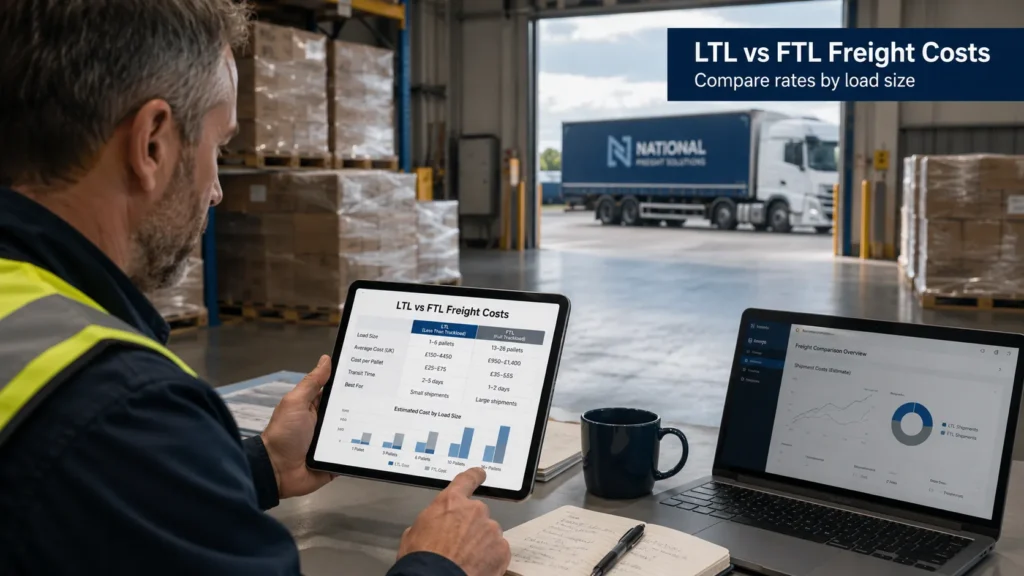
The cleanest way to compare LTL vs FTL freight is to calculate the cost per pallet and the risk cost. Imagine an LTL rate of £85 per pallet from Birmingham to Manchester. A four-pallet shipment would cost £340 before extras. If a dedicated 7.5-tonne vehicle costs £520, LTL saves £180.
Now change the volume. If 10 pallets move on the same lane at £85 per pallet, LTL costs £850. If a dedicated rigid vehicle still costs £520, FTL saves £330. This simple example shows why pallet count matters more than the label.
Accessorial charges can also change the result. Tail-lift delivery, timed booking, waiting time, failed delivery, storage, and redelivery can all alter the final invoice. A cheap LTL quote may become expensive if the consignee has poor unloading access.
| Example Load | LTL Cost Logic | FTL Cost Logic | Better Choice |
|---|---|---|---|
| 2 pallets, standard delivery | 2 × £85 = £170 | £520 vehicle | LTL |
| 4 pallets, flexible timing | 4 × £85 = £340 | £520 vehicle | LTL |
| 8 pallets, urgent slot | 8 × £85 = £680 | £520 vehicle | FTL |
| 12 pallets, fragile goods | 12 × £85 = £1,020 | £620 vehicle | FTL |
| 1 pallet, tail-lift needed | £85 + surcharge | £520 vehicle | LTL |
These figures are examples for decision-making. Real rates depend on lane, vehicle type, fuel, season, and carrier network.
Pallet Freight and Load Size Rules
Dimensions, Weight, and Trailer Space
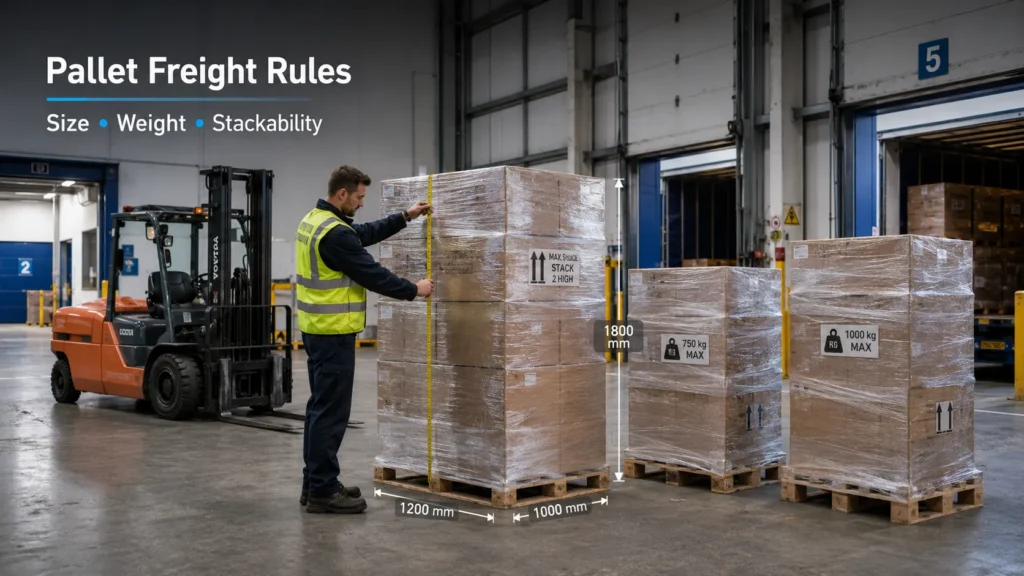
Pallet freight decisions depend on more than pallet count. A UK standard pallet is commonly 1,200 mm × 1,000 mm. Height and weight then decide stackability, vehicle choice, and hub handling. A single tall pallet may use more trailer space than two low pallets.
Weight also matters. A dense pallet of metal components may use little floor space but exceed network limits. A light pallet of packaging may fill a cube before it reaches weight limits. Logistics teams should record length, width, height, weight, stackability, and handling needs on every booking.
The LTL vs FTL freight tipping point often appears around 8 to 12 pallets. However, that is not a fixed rule. Twelve stackable pallets may still suit LTL on a strong lane. Eight fragile, non-stackable pallets may need FTL because they occupy protected trailer space.
Service Risk and Damage Control
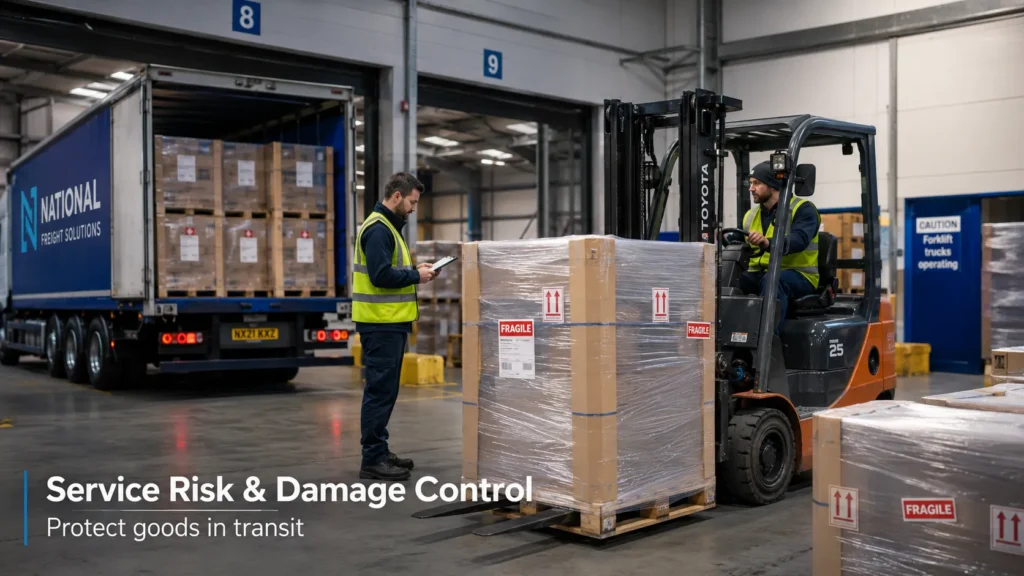
Handling Points Matter
Damage risk rises when freight moves through more handling points. LTL networks create efficiency through consolidation, but every transfer adds exposure. Forklift movement, cross-dock sorting, relabelling, and reloading all need strong process control.
FTL reduces this risk by keeping the load on one vehicle. That helps when goods have unusual shapes, exposed finishes, glass panels, or sensitive equipment. It also improves traceability because fewer people handle the freight.
We advise shippers to match service type with product margin. A low-margin pallet can tolerate standard LTL if packed correctly. A high-margin machine worth £18,000 may justify FTL, even when trailer space is not full. The extra transport cost can be cheaper than one damaged delivery.
Decision Table: Which Shipping Model Fits Your Load?
Quick Selection Guide
Use this table when comparing LTL vs FTL freight for live bookings. It gives a fast operational answer before asking carriers for rates.
| Your Situation | Choose LTL | Choose FTL |
|---|---|---|
| You ship 1–6 pallets | Yes | Usually no |
| You ship 10+ pallets | Sometimes | Often yes |
| Goods are fragile | Only with strong packaging | Yes |
| Delivery is urgent | Sometimes | Yes |
| Delivery slot is strict | Riskier | Better |
| Budget is the top concern | Yes | Sometimes |
| Load cannot be handled twice | No | Yes |
| Goods are stackable | Yes | Yes |
| Goods are high value | Maybe | Usually yes |
| You need direct routing | No | Yes |
A simple rule works well. Use LTL when space saving matters most. Use FTL when time, control, security, or damage prevention matters most.
Operational Examples for UK Shippers
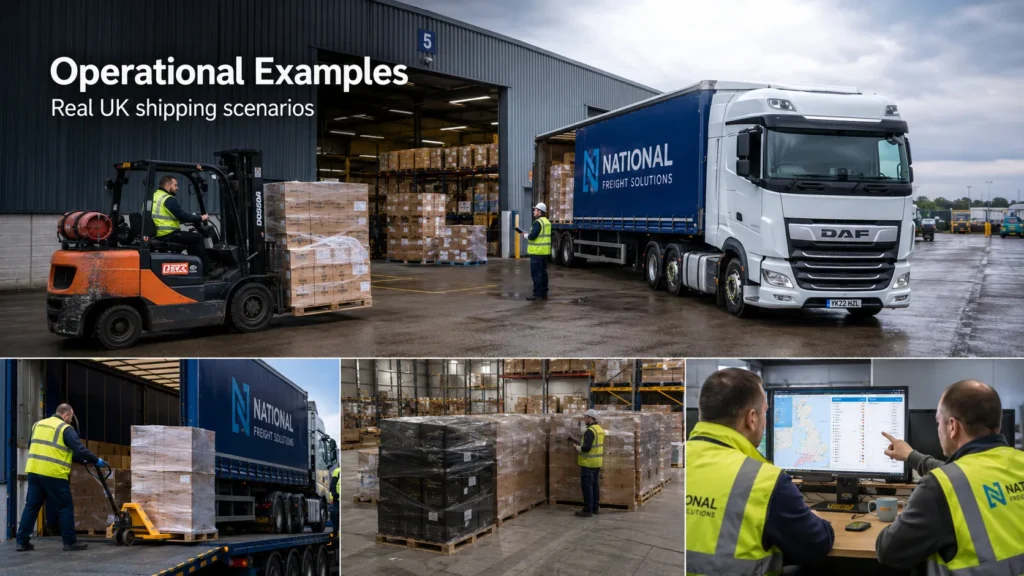
Real-World Load Scenarios
A furniture supplier shipping three wrapped pallets from Nottingham to Bristol should usually choose LTL. The load is small, the lane is common, and standard delivery may be enough. Strong corner protection and clear “do not stack” labels are essential.
A manufacturer sending 16 pallets from Sheffield to Southampton should price FTL first. The load size may already justify dedicated transport. Direct routing can also protect production schedules and reduce depot handling.
A food distributor moving eight chilled pallets needs a stricter review. If temperature control, short shelf life, and delivery timing matter, FTL may be safer. If the carrier has a strong chilled LTL network, shared movement may still work.
An e-commerce brand sending one pallet of returns to a warehouse should use LTL. The delivery is usually flexible, and the goods are not production-critical. The shipper should still check pallet weight, labelling, and booking reference accuracy.
Expert Tips Before You Book
Avoid Common Freight Mistakes
Accurate data prevents poor freight choices. Many failed bookings start with weak load details. Carriers need exact pallet dimensions, weight, stackability, collection hours, delivery hours, and unloading method.
Check these points before booking:
- Confirm pallet count, height, weight, and footprint.
- State whether pallets are stackable or non-stackable.
- Confirm tail-lift, pump truck, or forklift access.
- Add delivery booking references before collection.
- Photograph loaded pallets before dispatch.
- Compare total landed cost, not just linehaul price.
- Review damage risk before choosing the cheapest quote.
The best LTL vs FTL freight decision balances price and service quality. Cheap freight is not cheap when it causes redelivery, stock loss, or customer penalties.