
Table of Contents
Modern metal conveyor belt systems play a critical role in manufacturing, food processing, packaging, automotive production, and heavy industrial operations. Businesses depend on reliable conveyor solutions to move products safely while reducing labor costs and minimizing downtime.
Automation investments continue to grow as companies focus on higher productivity, better product quality, and lower operational costs. Companies such as Wire Belt Company demonstrate how specialized engineering improves conveyor performance through custom-designed mesh conveyor belt solutions for food processing and industrial applications.
Their expertise helps businesses improve efficiency, reduce downtime, and optimize production through tailored conveyor systems, technical support, belt surveys, training, and maintenance tools.
Their expertise includes designing, manufacturing, and installing specialized conveyor systems while providing technical support, belt surveys, employee training, and maintenance tools that help extend equipment life, optimize performance, improve efficiency, and reduce unexpected downtime.
Why Metal Conveyor Belt Systems Matter
Strong Performance in Demanding Environments
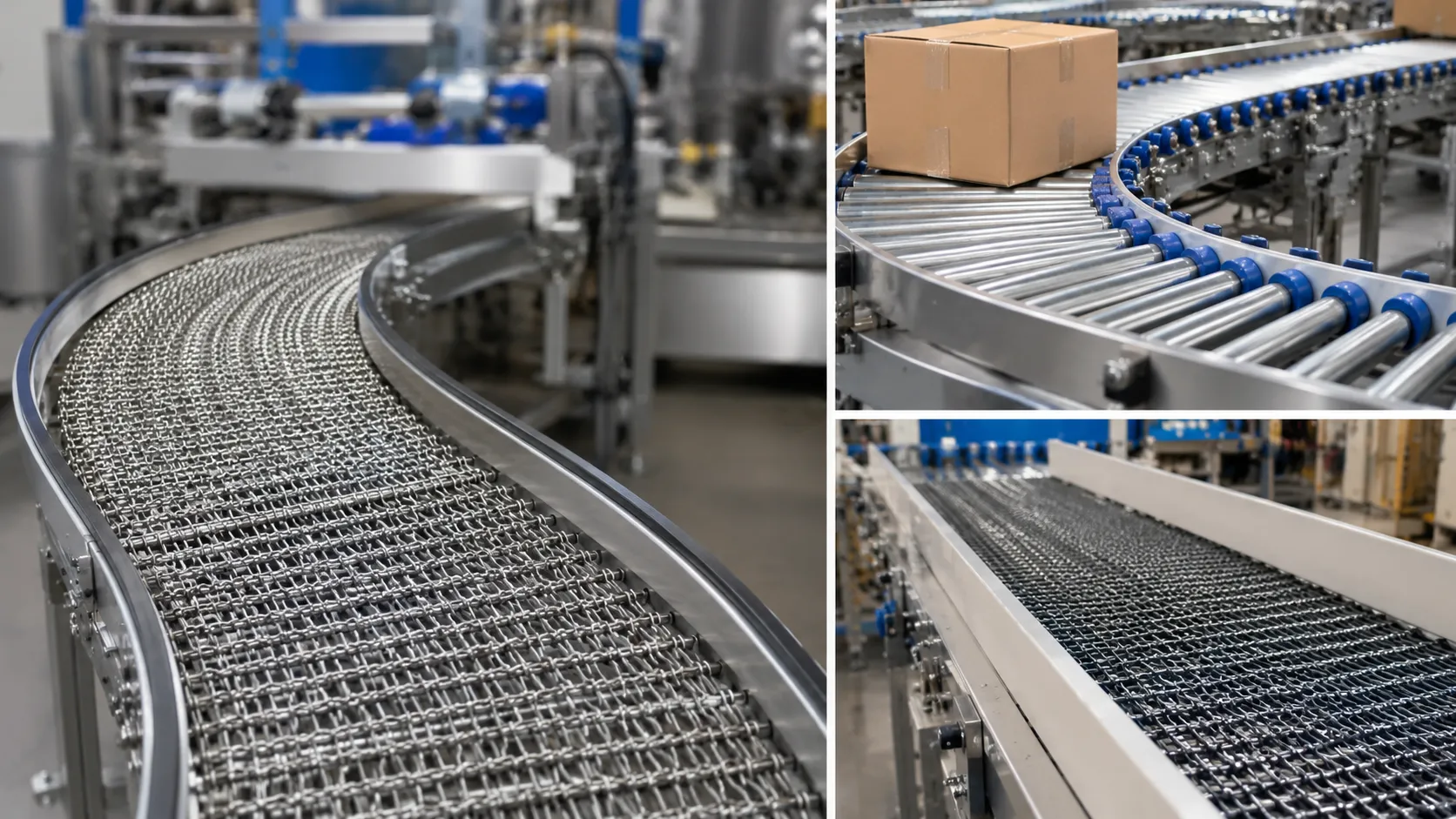
Metal conveyor belts outperform many traditional belt materials in environments involving high temperatures, heavy loads, moisture, and chemical exposure. Stainless steel construction provides corrosion resistance while maintaining structural strength during continuous production.
Industries that commonly rely on metal conveyor systems include:
- Food processing
- Baking operations
- Freezing applications
- Automotive manufacturing
- Heat treatment facilities
- Electronics assembly
- Pharmaceutical production
- Recycling operations
These industries require equipment that operates consistently under demanding conditions without sacrificing product quality.
Key Advantages of Metal Conveyor Belt Systems
Modern metal conveyor systems deliver several measurable operational benefits.
| Benefit | Business Impact |
|---|---|
| High durability | Longer service life and fewer replacements |
| Heat resistance | Performs in ovens and furnaces exceeding 1,000°F |
| Hygienic design | Supports food safety and easier cleaning |
| Low maintenance | Reduces unexpected production interruptions |
| Accurate product handling | Improves consistency across production lines |
| Excellent airflow | Ideal for cooling, drying, and freezing processes |
These advantages help manufacturers improve throughput while controlling long-term operating costs.
Material Handling Solutions Improve Productivity
Automation Supports Faster Operations
Effective material handling solutions involve more than conveyors alone. Integrated automation combines conveyor belts with sorting equipment, robotic systems, sensors, and control software.
An optimized system delivers several operational improvements:
- Faster product movement
- Lower manual handling
- Better worker safety
- Improved inventory accuracy
- Reduced product damage
- Higher production capacity
Many facilities now integrate smart monitoring systems that detect wear before failures occur. Predictive maintenance reduces emergency shutdowns and improves equipment availability.
Custom Conveyor Designs Solve Unique Challenges
Every production environment presents different material handling requirements. Product weight, size, temperature, and production speed all influence conveyor selection.
Custom-engineered metal conveyor belt systems can include:
- Balanced weave belts
- Flat wire conveyor belts
- Honeycomb belts
- Chain-driven belts
- Compound balanced belts
These specialized designs allow manufacturers to match conveyor performance with their exact production requirements while maintaining operational efficiency.
Choosing the Right Metal Conveyor Belt System
Important Selection Factors
Selecting the proper conveyor system begins with understanding operational needs rather than simply comparing prices.
Key evaluation criteria include:
- Load capacity
- Operating temperature
- Product dimensions
- Cleaning requirements
- Belt speed
- Corrosion resistance
- Maintenance accessibility
- Energy efficiency
A properly specified system reduces lifetime ownership costs while supporting consistent production performance.
Professional Support Extends Equipment Life
Ongoing maintenance remains essential even for highly durable metal conveyor belts. Preventive inspections identify worn components before failures affect production.
Manufacturers that offer comprehensive support services provide significant long-term value through:
- Technical consulting
- Belt condition surveys
- Installation assistance
- Operator training
- Preventive maintenance planning
- Replacement component recommendations
These services help organizations maximize equipment lifespan while maintaining safe and efficient operations.
Industry Trends Shaping Conveyor Technology in 2026
Manufacturers continue investing in digital technologies that improve conveyor reliability. Smart sensors now monitor belt tension, motor temperature, vibration, and bearing performance in real time.
Several trends are driving industry growth:
- Increased warehouse automation
- Greater food safety requirements
- Energy-efficient drive systems
- Predictive maintenance software
- AI-assisted production monitoring
- Sustainable manufacturing initiatives
Manufacturers increasingly prioritize automation investments that improve operational resilience and reduce maintenance expenses. Organizations also seek conveyor systems with longer service intervals and improved energy performance to lower overall production costs.
Bottom Line
Metal conveyor belt systems remain one of the most valuable investments for companies seeking reliable, efficient material handling solutions. Their durability, hygiene, heat resistance, and low maintenance requirements make them suitable for demanding industrial and food processing environments.
When combined with intelligent automation and professional maintenance, these systems improve productivity while reducing costly downtime. Working with experienced manufacturers such as Wire Belt Company allows businesses to benefit from custom conveyor solutions, technical expertise, preventive maintenance programs, and long-term operational support.