
Table of Contents
Freight cost management helps logistics teams control one of the most volatile costs in the supply chain. It covers how we plan, buy, move, audit, and improve freight spend across road, ocean, air, rail, and parcel networks. The goal is simple: move goods on time, at the right service level, for the lowest sustainable total cost.
In 2026, this work matters more because freight markets keep moving fast. Drewry’s World Container Index reached $2,800 per 40ft container on 28 May 2026, after a 3% weekly rise driven by Asia–Europe and Transpacific rate increases. Shanghai to Rotterdam spot rates reached $2,861 per 40ft container, while Shanghai to Genoa reached $4,253.
Road transport also faces pressure. UK diesel fuel duty remains a core cost factor, with the continued cut rate for diesel listed at £0.5295 per litre before staged changes. Labour matters too, as the UK National Living Wage rose to £12.71 per hour from April 2026. Strong freight cost management turns these moving costs into measurable decisions.
What Is Freight Cost Management?
A practical definition for logistics teams
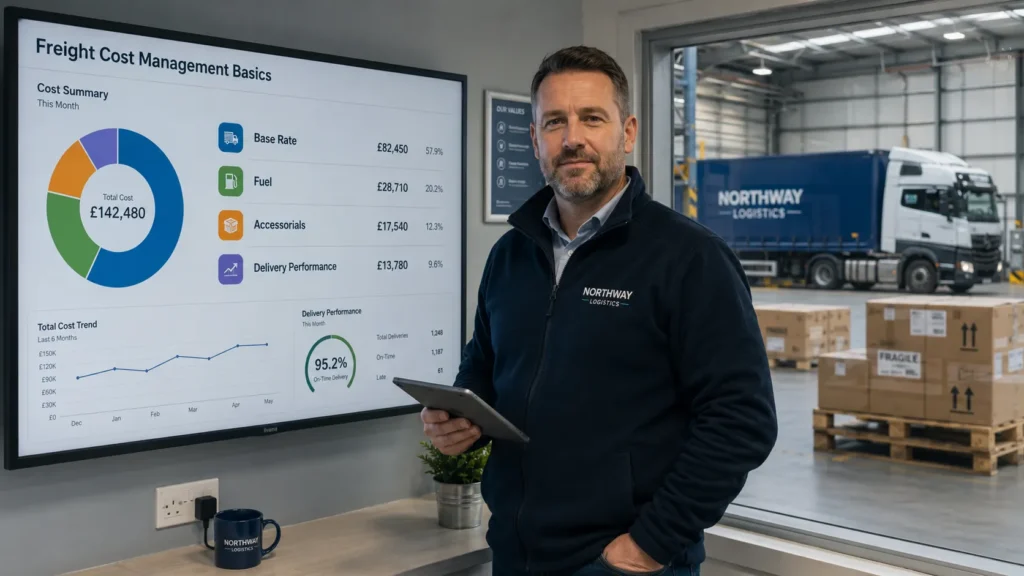
Freight cost management is the structured control of shipping costs from quote to delivery. It includes freight pricing, carrier sourcing, route planning, fuel control, invoice checking, service monitoring, and cost reporting. A strong process does not only chase cheap rates. It protects delivery performance while removing waste from every shipment.
We should treat freight as a full cost system. The invoice rate is only one part. Accessorials, detention, demurrage, failed deliveries, storage, customs delays, poor packaging, and weak forecasting all increase cost. A shipment that looks cheap at booking can become expensive after delays. That is why freight cost management works best when operations, procurement, finance, and sales use the same data.
Why freight spend gets out of control
Freight spend usually rises when teams manage transport reactively. Late orders trigger premium services. Poor cube use creates extra loads. Inaccurate addresses cause failed deliveries. Weak carrier contracts leave too much exposure to spot rates. Unchecked invoices allow small errors to repeat every week.
The real issue is not one big mistake. It is often hundreds of small leaks. A £35 waiting-time fee, a 4% fuel surcharge gap, or a £12 residential surcharge may seem minor. Across 5,000 monthly shipments, those costs become material. Freight cost management gives teams a way to find, rank, and fix those leaks.
The Core Freight Cost Framework
Break freight cost into controllable parts
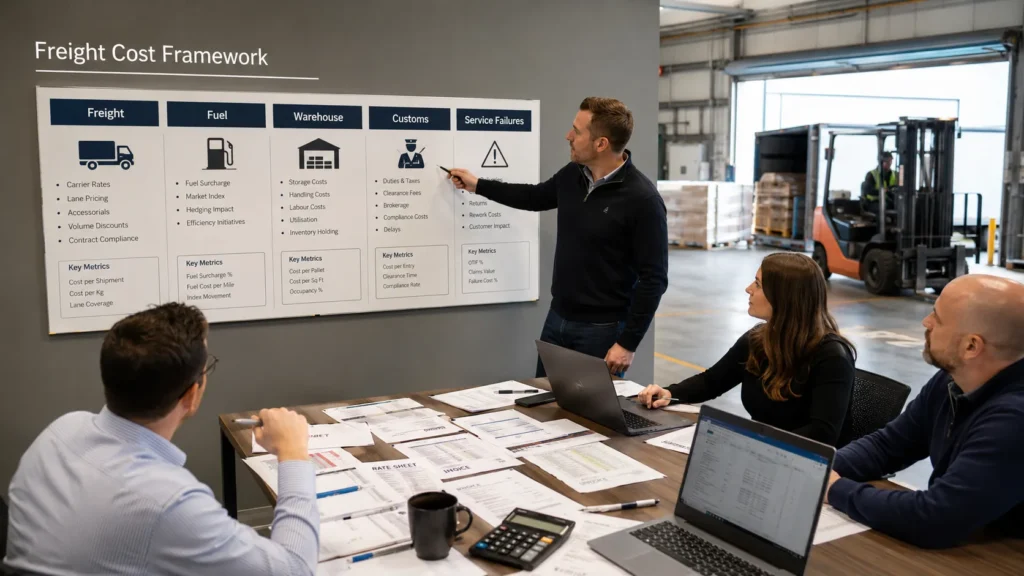
A useful freight cost framework separates costs into clear categories. This helps teams understand what they can control, negotiate, automate, or redesign. The main categories are base freight, fuel, accessorials, packaging, labour, warehousing, customs, technology, and service failure costs.
| Cost Area | What It Includes | Control Method | Example KPI |
|---|---|---|---|
| Base freight | Linehaul, collection, delivery | Tendering, lane pricing, mode choice | Cost per shipment |
| Fuel | Diesel, bunker, jet fuel surcharges | Fuel formula review | Fuel % of freight cost |
| Accessorials | Waiting time, tail-lift, detention | Root-cause tracking | Accessorials per order |
| Packaging | Cartons, pallets, void fill | Cube optimisation | Cost per shipped unit |
| Warehouse handling | Pick, pack, load, cross-dock | Labour planning | Cost per order |
| Customs | Declarations, duties, clearance delays | Data accuracy | Clearance cycle time |
| Service failure | Redelivery, claims, chargebacks | Carrier scorecards | On-time in full rate |
This structure makes shipping cost control easier because every cost has an owner. Procurement manages rates. Operations manages load quality. Finance audits invoices. Customer service reduces redeliveries. Senior leaders track the full cost-to-serve picture.
Build a cost-to-serve view
Freight cost management becomes stronger when we measure cost by customer, product, lane, and service promise. Many businesses know their total freight bill. Fewer know which customers, SKUs, or routes produce weak margins.
A cost-to-serve view can expose hidden problems. One customer may order low-value goods daily instead of consolidating weekly. Another may require timed delivery, tail-lift service, or manual booking. A bulky SKU may fill trailer space but generate low revenue. These details matter because logistics cost reduction should not damage profitable service. It should remove avoidable costs from the right places.
Freight Pricing: How Rates Are Built
Understand the pricing model before negotiation
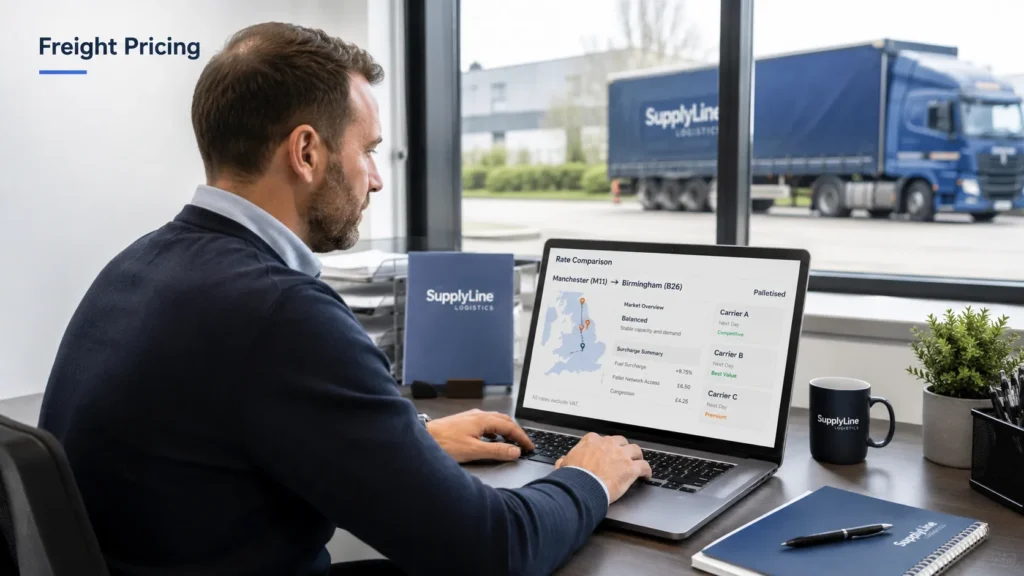
Freight pricing depends on mode, lane, volume, weight, cube, service speed, season, capacity, and risk. Road freight often uses pallet, full truckload, part-load, mileage, or zone pricing. Parcel networks use weight, dimensions, destination, and service level. Ocean freight uses container type, port pair, contract terms, spot rates, and surcharges.
Ocean pricing shows why benchmark data matters. On 28 May 2026, Drewry reported the WCI at $2,800 per 40ft container, with Shanghai to Genoa at $4,253. That same week, Asia–Europe demand and rate increases shaped pricing conditions. When market rates rise, fixed contracts can protect budgets. When markets fall, rigid contracts can leave savings on the table.
Separate base rates from surcharges
A common freight cost management mistake is comparing only base rates. Carrier A may quote £82 per pallet while Carrier B quotes £78. But Carrier B may charge more for fuel, residential delivery, booking changes, or waiting time. The cheaper base rate may not win after the total cost.
Use a landed freight comparison for every tender. Include base rate, fuel surcharge, minimum charge, timed delivery, failed delivery, waiting time, collection fee, tail-lift, storage, and claims history. This gives a real view of freight pricing. It also helps procurement choose carriers based on cost and reliability, not headline rates.
Shipping Cost Control Starts Before Booking
Fix order profiles before freight is purchased
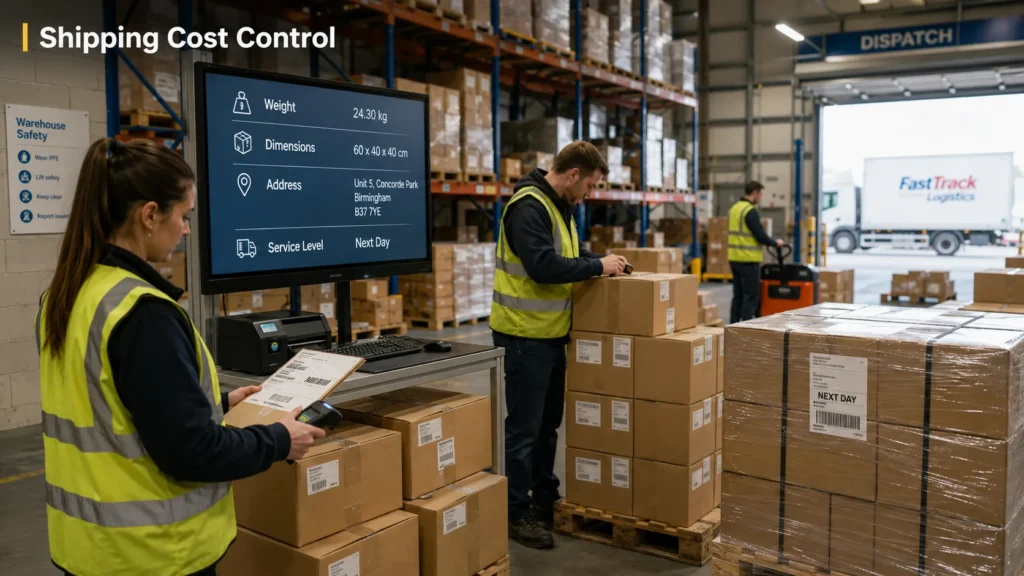
The best freight cost management starts before a shipment enters the transport system. Order cut-off times, minimum order values, carton dimensions, pallet build rules, and delivery promises all affect cost. If teams ignore these upstream factors, they force transport teams to buy expensive solutions.
For example, a business shipping 120 small orders per day may reduce costs by creating a free-shipping threshold. If the average order value rises from £42 to £55, the freight cost percentage often improves. A warehouse that changes carton sizes from 8 options to 14 options may also reduce dimensional weight charges. These changes improve shipping cost control without squeezing carriers.
Use consolidation rules
Consolidation is one of the fastest routes to logistics cost reduction. It reduces trips, handling, emissions, and invoice lines. Teams can consolidate by customer, postcode, lane, supplier, delivery date, or product group.
A simple rule can deliver clear savings. If two half-pallet shipments to Birmingham leave on Monday and Tuesday, combine them where service allows. If five parcel orders go to one business address, ship them together. Consolidation needs system controls because manual checks are inconsistent. A transport management system can flag matching orders before carrier booking.
Mode Selection: Match Service With Cost
Use the cheapest mode that meets the promise
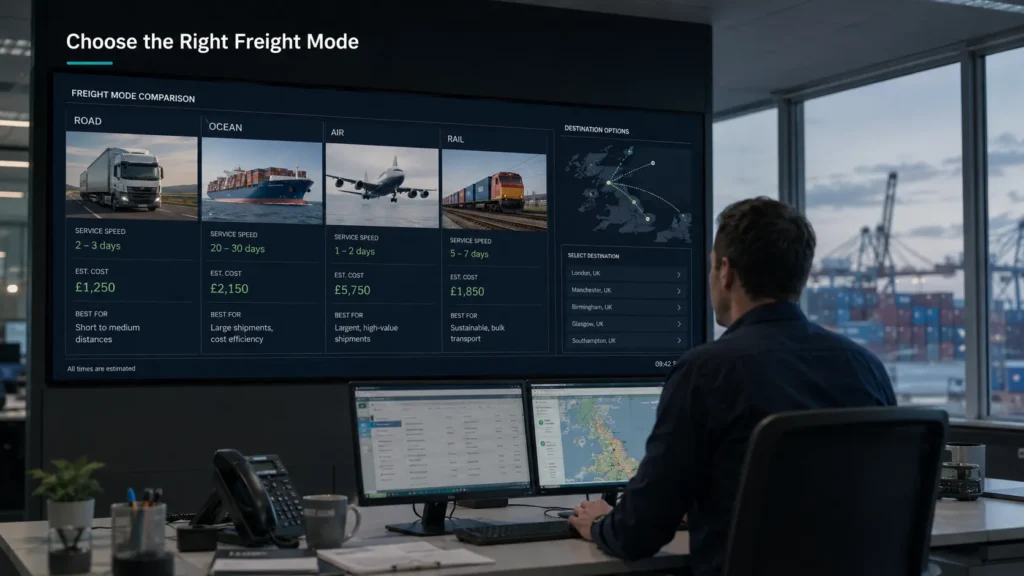
Freight cost management improves when logistics teams match mode to real need. Air freight offers speed, but costs more than ocean or road. Express parcel offers convenience, but economy services may suit non-urgent orders. A full truckload can beat a part-load when volume fills enough trailer space.
Freightos reported in late May 2026 that China–Europe air cargo prices eased 3% to less than $5.00 per kg, while South Asia–Europe rates rose 3% to more than $4.50 per kg. Southeast Asia–Europe rates increased by more than 10% to $5.20 per kg. These numbers show why air mode should be governed tightly. Small changes in air rates can move budgets fast.
Build mode rules into ordering
Teams should use rules, not guesswork. For example, orders under 2 kg can default to an economy parcel unless the customer pays for express. Orders over 500 kg can trigger a pallet or part-load review. International orders above 2 cubic metres can trigger an ocean freight comparison. These rules support shipping cost control because they reduce emotional decisions.
Mode rules should include customer promise, margin, stock cover, destination, and risk. A high-margin medical part may justify air freight. A low-margin, bulky product may not. Freight cost management works best when the system makes the low-cost option easy and makes premium freight visible.
Carrier Procurement and Tendering

Use lane-level tendering
Strong freight cost management depends on buying freight at the lane level. A national average rate hides the truth. A carrier may perform well from Manchester to Glasgow but poorly from Bristol to Kent. Lane-level tendering lets teams award freight where each carrier is strongest.
Build tender packs with exact data. Include lane, volume, weight, cube, pallets, delivery windows, access needs, seasonality, claims history, and forecast growth. Carriers price better when the data is clean. Vague tenders create risk premiums. They also create future disputes because the real freight profile differs from the bid.
Balance contract and spot freight
Contract rates bring budget control. Spot rates bring flexibility. A balanced strategy usually works better than choosing only one. For stable lanes, contract pricing protects service and cost. For irregular lanes, spot buying can avoid paying for capacity you do not need.
The right split depends on volatility. If a lane moves 200 pallets per week, contract it. If a lane moves 6 pallets per month, keep it flexible. If ocean rates swing sharply, review spot exposure every week. Freight cost management should track contract compliance and spot usage. Unplanned spot freight often signals poor forecasting, stock issues, or missed cut-offs.
Fuel Surcharges and Energy Cost Control
Audit the fuel formula
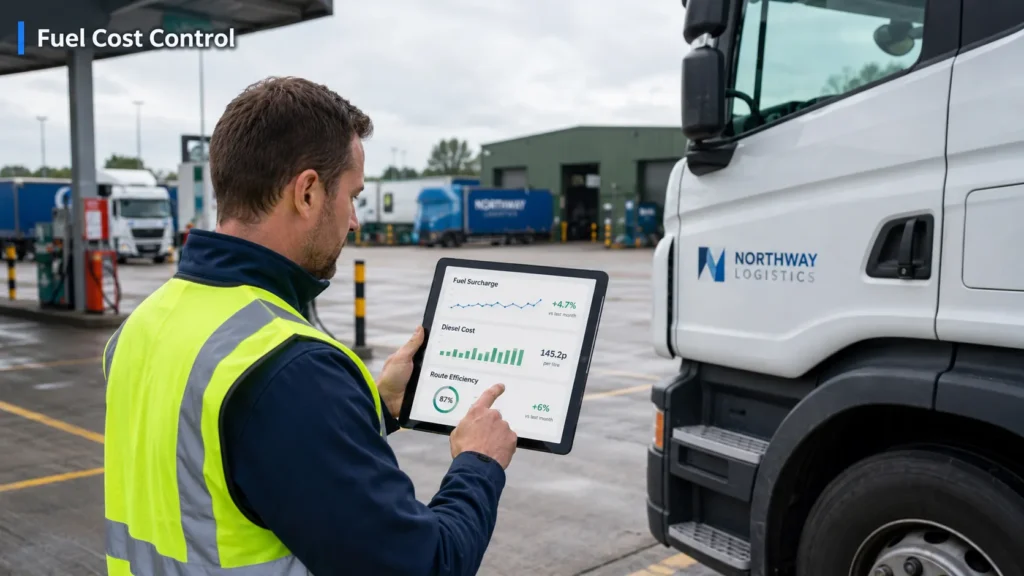
Fuel is one of the most visible cost drivers in road freight. UK diesel duty rates show how government policy affects haulage economics. The continued cut rate for diesel was listed at £0.5295 per litre, compared with the prior £0.5795 per litre level. A small per-litre change matters because heavy goods vehicles consume high volumes every week.
Freight cost management should check fuel surcharge formulas. Review the baseline fuel price, update frequency, index source, cap, floor, and calculation method. A surcharge that updates weekly may move faster than your customer pricing. A monthly formula may be smoother, but less responsive. The key is transparency.
Reduce fuel waste operationally
Fuel control is not only a procurement issue. Route planning, driver behaviour, tyre pressure, empty miles, waiting time, and vehicle fill all affect fuel burn. A lorry that waits 90 minutes at a loading bay wastes driver time and may increase fuel use. A route plan with avoidable backtracking creates cost without improving service.
Use three practical controls. First, measure empty running by lane. Second, track vehicle fill by weight and cube. Third, review loading and unloading dwell time. These metrics make shipping cost control visible. They also give carriers better conditions, which can support stronger freight pricing.
Accessorial Charges: The Hidden Freight Cost Leak
Track every extra charge
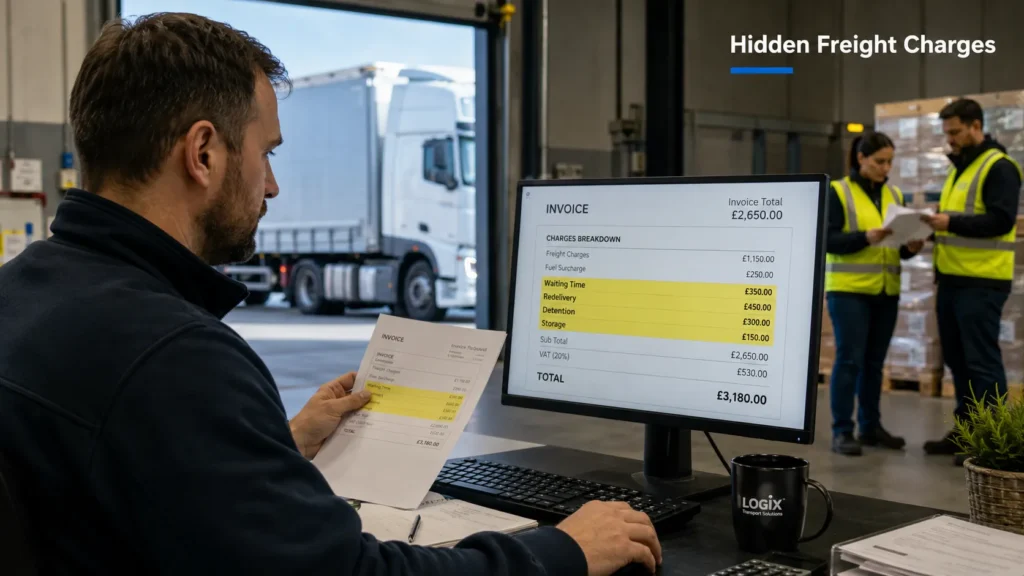
Accessorial charges are extra fees beyond the base freight rate. They include waiting time, failed delivery, tail-lift, detention, demurrage, redelivery, storage, address correction, and manual paperwork. These charges are often where freight budgets leak.
For ocean freight, demurrage and detention can be severe because ports and container lines apply time-based rules. For road freight, waiting time often appears when warehouses miss booking slots. For parcels, residential surcharges and address corrections can grow quickly. Freight cost management should code every accessorial by reason. Without reason codes, teams only see cost after damage is done.
Create a weekly accessorial review
A weekly review can reduce repeat problems. Group charges by carrier, site, customer, lane, and reason. Then assign actions. If one warehouse causes £1,200 in waiting-time charges per month, fix dock scheduling. If one customer causes 80 failed deliveries, improve address validation or delivery notification.
This work is not about blaming carriers. Many accessorials reflect operational friction. Freight cost management turns those charges into signals. When the same charge appears repeatedly, it is a process issue. Fixing it supports logistics cost reduction without renegotiating the whole network.
Freight Audit and Invoice Control
Check rates before payment
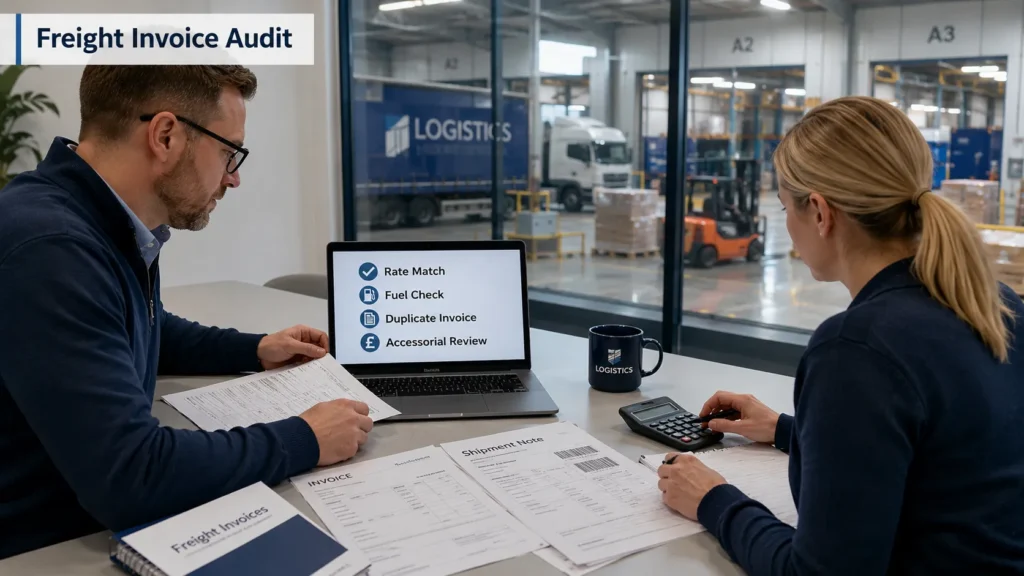
Freight audit is a core part of freight cost management. It checks whether invoices match agreed rates, fuel formulas, shipment details, and accessorial rules. Even small errors matter when volumes are high.
A practical audit should verify shipment ID, date, origin, destination, weight, dimensions, service level, base rate, fuel surcharge, VAT, and extra fees. The system should flag duplicate invoices, incorrect zones, wrong weights, late billing, and unauthorised accessorials. Finance should not pay freight invoices without transport validation.
Use tolerance rules
Manual invoice checking becomes slow when every small variance needs review. Tolerance rules make the process efficient. For example, auto-approve invoices within £2 or 1% of the expected cost. Flag anything above that threshold. For high-value shipments, set tighter controls.
This method gives teams speed and accuracy. It also creates better data. Over time, invoice exceptions show which carriers, lanes, or products create errors. Freight cost management then becomes proactive. The audit process stops being a finance chore and becomes a cost improvement tool.
Warehouse Decisions That Affect Freight Costs
Improve cube and pallet quality
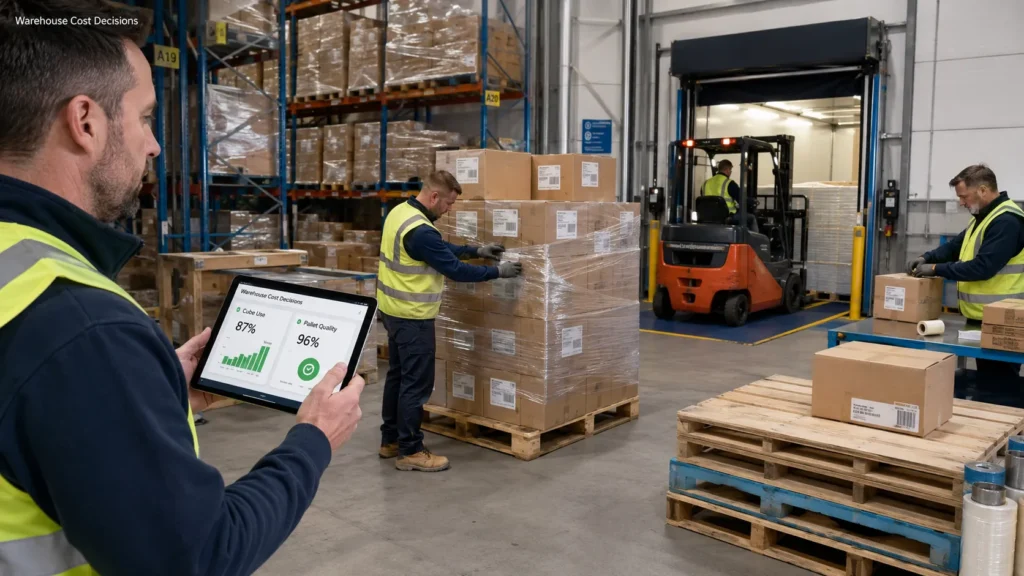
Warehouse teams directly affect freight cost. Poor pallet builds waste trailer space. Oversized cartons increase dimensional weight. Mixed pallets delay loading. Late picks create missed cut-offs. Every issue pushes cost into the transport budget.
Cube utilisation is especially important. If a trailer has 26 pallet spaces, shipping 20 poorly stacked pallets wastes 6 spaces. That is 23.1% unused pallet capacity. Better stacking, carton selection, and pallet height rules can reduce loads. Freight cost management must include warehouse standards because transport cannot fix poor load design after dispatch.
Align labour planning with transport cut-offs
Labour pressure also affects cost. The UK National Living Wage rose to £12.71 per hour from April 2026, increasing cost pressure across labour-intensive operations. PayScale listed average UK warehouse worker hourly pay at £10.57 in April 2026, based on its salary profiles. Different sources vary, but the direction is clear: labour planning matters.
If warehouse teams miss carrier cut-offs, transport teams buy premium services. A £45 economy pallet can become a £90 next-day pallet. The freight cost doubled because planning failed. Shipping cost control requires daily alignment between pick waves, packing capacity, loading slots, and carrier collection times.
Route Planning and Network Design
Cut miles before cutting rates
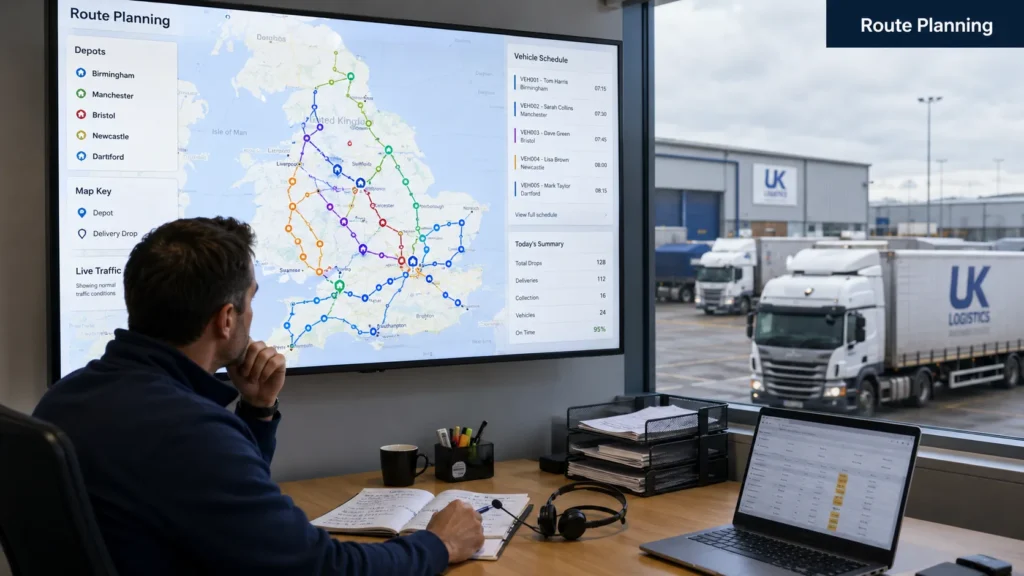
Logistics cost reduction often starts with rate negotiation, but network design can save more. If the network creates too many miles, even a great rate still wastes money. Route planning should reduce distance, empty running, duplicated deliveries, and depot imbalance.
Use delivery density as a key metric. A route delivering 50 drops over 80 miles usually costs less per drop than a route delivering 12 drops over 140 miles. The second route may need a different service promise, delivery day, or carrier model. Freight cost management should compare the actual route cost against the planned route cost every week.
Review depot and inventory placement
Inventory location affects freight cost. If fast-moving stock sits far from demand, shipments travel too far. If slow-moving stock sits in every depot, inventory cost rises. The best answer depends on product value, demand frequency, service promise, and storage cost.
A simple network review can compare two options. Option A ships from one national warehouse. Option B uses two regional locations. The second option may reduce final-mile cost but increase stock holding. Freight cost management should calculate the total cost, not the transport cost alone. The right network lowers cost while protecting service.
International Freight and Customs Cost Control
Prevent customs delays with clean data
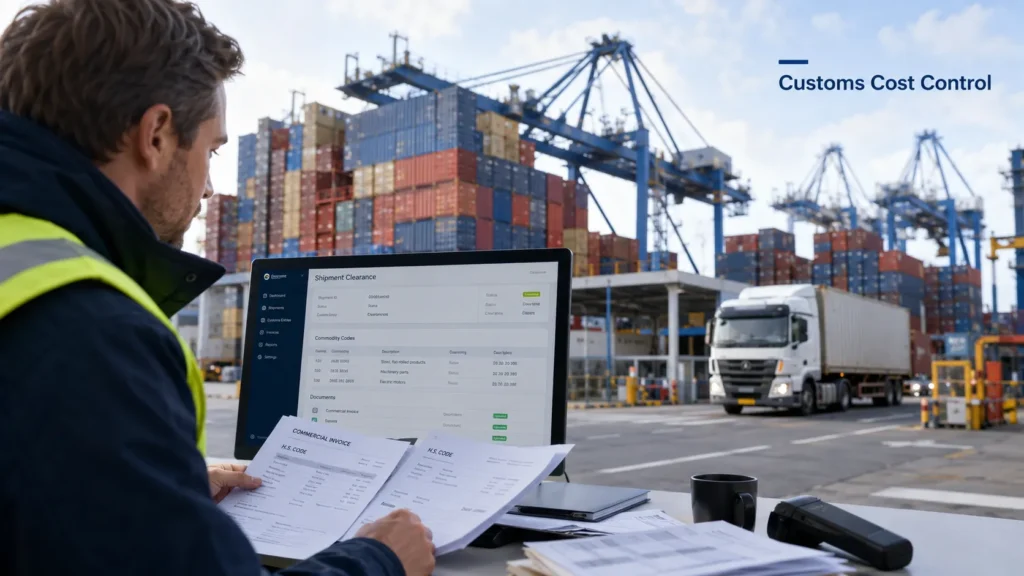
International freight adds customs, duties, documentation, and border risk. Poor data creates delays, storage charges, and missed delivery promises. Freight cost management should include customs data quality because transport costs rise when shipments stop at borders.
Key fields include commodity code, product description, country of origin, invoice value, Incoterms, EORI number, consignee details, and licence requirements. A vague product description like “parts” can trigger questions. A correct description speeds clearance. Customs accuracy is not paperwork. It is a direct shipping cost control measure.
Choose Incoterms carefully
Incoterms affect who pays for freight, insurance, customs clearance, duties, and risk. A buyer using EXW may control the main freight but inherit the collection risk. A seller using DDP may win customer trust but carry more cost exposure. Freight cost management should review Incoterms by lane and customer.
Do not choose terms only for convenience. Calculate freight, duties, brokerage, insurance, delay risk, and admin work. A DAP shipment with unclear importer responsibility can create disputes. A DDP shipment without duty recovery controls can destroy margin. International logistics cost reduction starts with commercial clarity.
Technology for Freight Cost Management
Use one source of truth
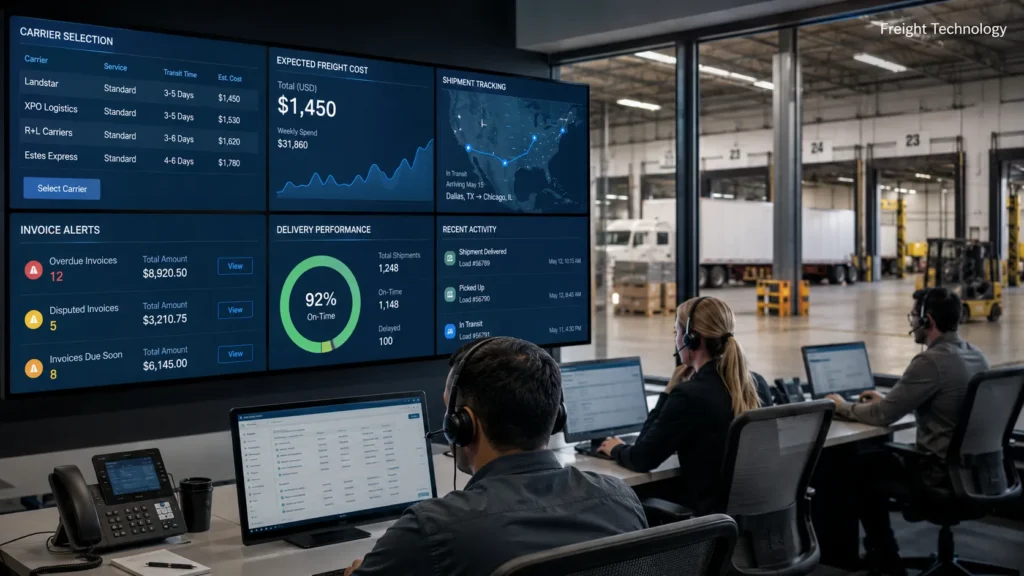
A transport management system helps teams control freight by combining rates, orders, carriers, tracking, documents, and invoices. Without one source of truth, teams rely on emails, spreadsheets, portals, and manual checks. That creates errors and weak visibility.
The system should hold contracted rates, fuel tables, carrier rules, service codes, cut-offs, and accessorial logic. It should select carriers based on cost and service. It should also produce the expected freight cost before shipment. Freight cost management improves when teams know the cost before the invoice arrives.
Automate alerts and reporting
Automation should target repeat decisions. Flag premium freight. Alert planners when consolidation is possible. Warn finance when the invoice cost exceeds the expected cost. Highlight lanes where spot usage exceeds 10% of total volume. Report customers where the freight cost exceeds 8% of the order value.
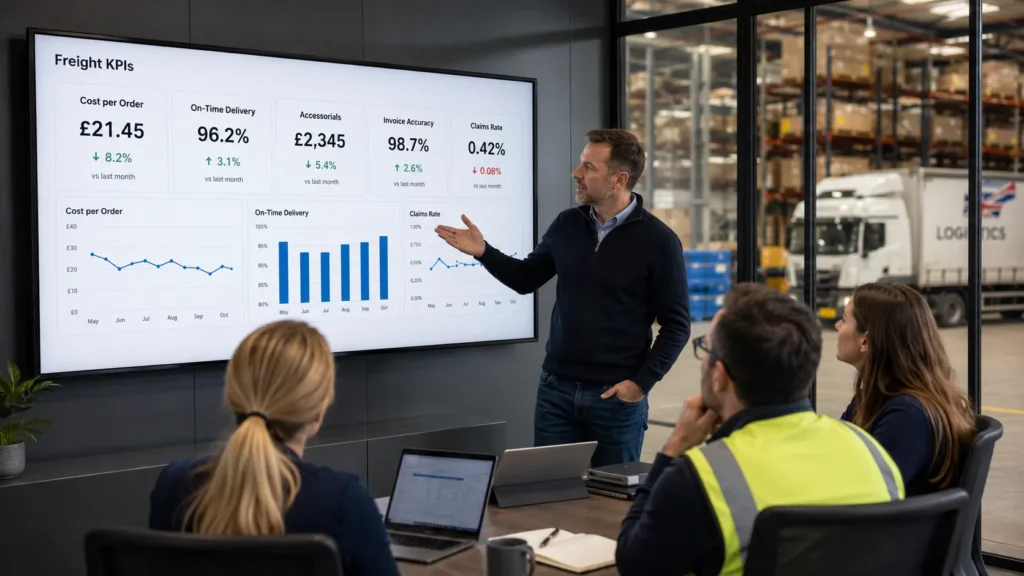
Good reporting turns data into behaviour. Weekly dashboards should show cost per shipment, cost per kilogram, cost per pallet, cost per order, accessorial rate, on-time delivery, claims rate, and invoice accuracy. These KPIs help teams link freight pricing, service, and cost control.
Real-World Freight Cost Management Example
Baseline cost model
Let us use a practical example. A UK distributor ships 8,000 orders per month. The mix includes 5,500 parcels, 2,000 pallets, and 500 international shipments. Monthly freight spend is £148,000. The team wants logistics cost reduction without reducing service.
| Cost Category | Monthly Cost | Share of Freight Spend |
|---|---|---|
| Parcel freight | £46,750 | 31.6% |
| Pallet freight | £62,000 | 41.9% |
| International freight | £24,500 | 16.6% |
| Accessorials | £8,250 | 5.6% |
| Premium freight | £6,500 | 4.4% |
| Total | £148,000 | 100.0% |
The first review shows three problems. Accessorials are high. Premium freight appears after missed warehouse cut-offs. Parcel dimensional weight charges rise because carton sizes are poor. Freight cost management gives the team a structured way to act.
Improvement plan and savings
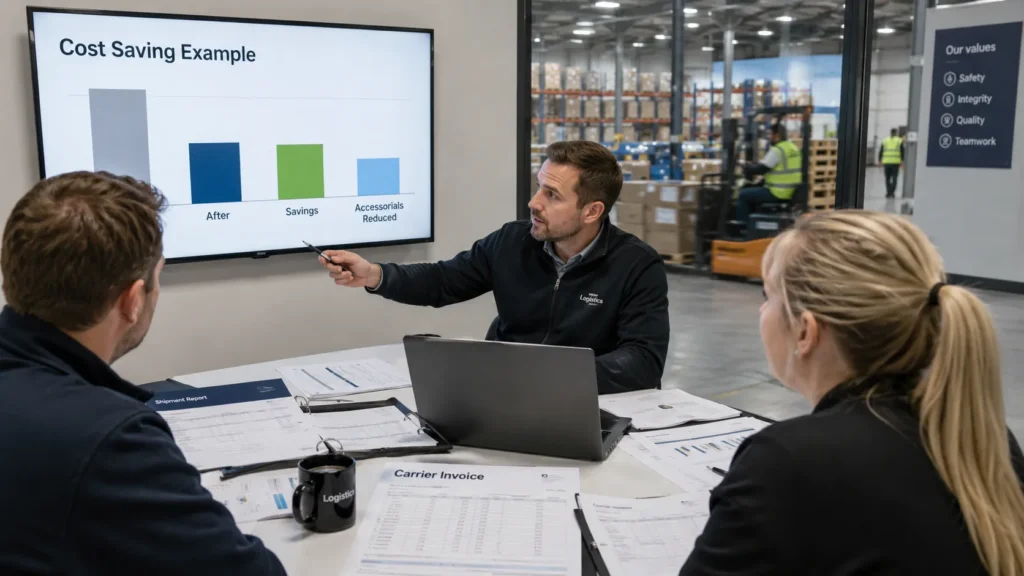
The team sets four actions. It adds carton logic, consolidates same-address parcel orders, changes pallet cut-off planning, and audits accessorials weekly. It also renegotiates two lanes where freight pricing is above benchmark.
| Action | Monthly Saving | How It Works |
|---|---|---|
| Carton right-sizing | £3,200 | Reduces dimensional parcel charges |
| Same-address consolidation | £2,450 | Combines repeat daily orders |
| Cut-off discipline | £3,900 | Reduces premium freight |
| Accessorial review | £2,100 | Cuts waiting and redelivery fees |
| Lane re-tendering | £4,600 | Improves pallet freight pricing |
| Total Monthly Saving | £16,250 | 11.0% of baseline spend |
The new freight spend becomes £131,750 per month. Annualised savings reach £195,000. Service stays stable because the team does not simply choose cheaper carriers. It changes the causes of waste.
KPIs That Matter Most
Track cost and service together
Freight cost management fails when teams track cost without service. A cheaper carrier that misses delivery windows may increase customer complaints, returns, and admin work. A premium carrier may be worth the cost on high-value lanes.
Use balanced KPIs. Track cost per order, cost per pallet, freight as a percentage of sales, accessorial cost per shipment, on-time in-full, claims rate, invoice accuracy, and premium freight percentage. These measures show whether shipping cost control improves the business or only moves costs elsewhere.
Set target ranges
Targets should match the business model. A low-margin wholesale business may need freight below 5% of sales. A bulky e-commerce business may accept 10% to 15% if pricing supports it. A spare-parts business may prioritise availability and speed over low freight percentage.
Set targets by segment, not only the company average. Compare parcel, pallet, full load, ocean, and air separately. Freight cost management becomes sharper when each mode has its own target. It also helps teams explain performance clearly to sales, finance, and senior leaders.
How Sales and Customer Policy Affect Freight Cost

Stop giving away expensive service
Sales teams often shape freight cost before logistics sees the order. Free delivery, urgent shipping, small minimum orders, remote locations, and special delivery windows all affect cost. If these promises are not priced correctly, logistics absorbs the loss.
Freight cost management should include clear commercial rules. Set free delivery thresholds. Charge for timed delivery. Add remote area surcharges where needed. Require minimum order values for low-margin products. These rules protect service quality and margin. They also help customers understand the cost of special requirements.
Build freight into pricing
Freight should not sit outside pricing decisions. Product margin must include expected delivery cost. A product with a £12 gross margin cannot absorb £9 freight unless repeat value supports it. A pallet order with a £180 margin can support a stronger service.
Sales and logistics should review cost-to-serve every month. Look at customers with high order frequency, low order value, failed deliveries, or unusual service needs. Freight cost management then becomes a commercial tool, not only an operations project.
Common Freight Cost Management Mistakes
Chasing the lowest rate only
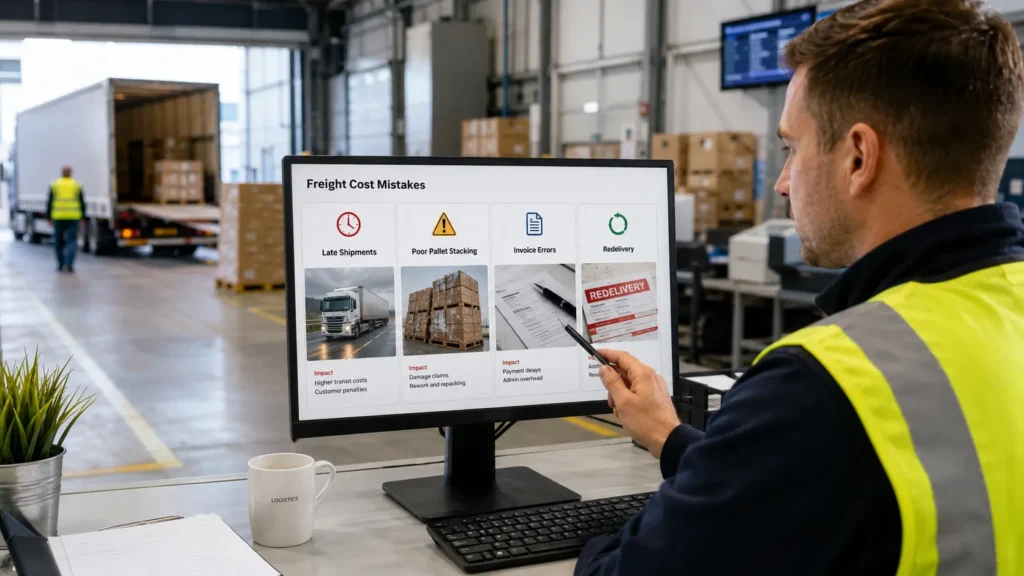
The lowest rate can create a higher total cost. Poor service causes redeliveries, claims, customer churn, and admin work. Cheap freight pricing may also exclude important fees. Teams should compare total cost, not rate cards alone.
Another mistake is ignoring data quality. Wrong weights, missing dimensions, weak product master data, and poor addresses all increase freight costs. Bad data makes carrier pricing less accurate. It also weakens invoice audit.
Reviewing freight only once per year
Annual reviews are not enough in volatile markets. Ocean rates can move weekly. Fuel changes regularly. Labour costs shift annually. Customer order patterns change by season. Freight cost management needs monthly governance and weekly exception checks.
Teams should not renegotiate everything every month. That creates instability. But they should monitor market indices, spot usage, service failures, and accessorials. Regular review keeps shipping cost control active.
Step-by-Step Freight Cost Management Plan
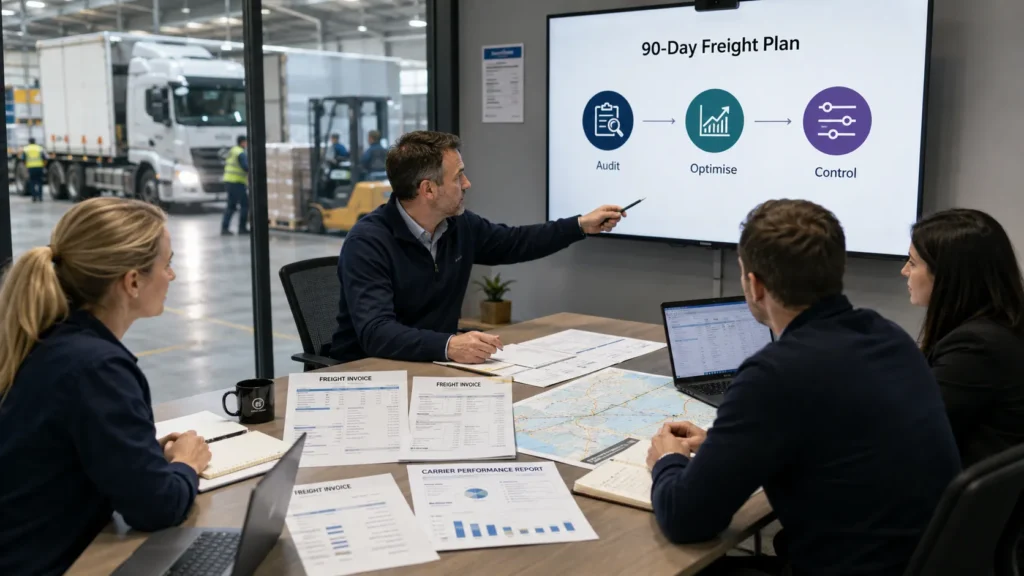
A 90-day action plan
A practical 90-day plan can improve freight control quickly. Start with visibility, then fix the biggest leaks, then improve procurement and systems.
| Timeline | Action | Output |
|---|---|---|
| Days 1–15 | Collect freight invoices and shipment data | Full spend baseline |
| Days 16–30 | Segment cost by mode, lane, customer, SKU | Cost-to-serve view |
| Days 31–45 | Audit accessorials and premium freight | Waste reduction list |
| Days 46–60 | Review carrier rates and service | Tender priorities |
| Days 61–75 | Fix packaging, consolidation, cut-offs | Operational savings |
| Days 76–90 | Build dashboard and governance rhythm | Ongoing control |
This plan works because it avoids random cost-cutting. It uses data first. Then it ranks actions by financial value and service risk. Freight cost management becomes repeatable.
Ownership model
Each cost area needs an owner. Procurement owns freight pricing. Transport owns carrier performance. Warehouse owns the loading quality and dispatch timing. Finance owns audit and payment controls. Sales owns customer delivery promises. IT owns system rules and reporting.
A monthly freight review should include all these teams. Review spend, service, exceptions, savings, and next actions. Without shared ownership, logistics cost reduction becomes temporary. With shared ownership, freight cost management becomes part of daily business control.
Expert Freight Cost Management Checklist
Use this before the next review
A good checklist keeps the process practical. Teams should review these points every month.
- Are contracted rates loaded correctly in the system?
- Is spot freight above the agreed threshold?
- Are fuel surcharges calculated from the agreed index?
- Are accessorials coded by reason and owner?
- Are invoice variances reviewed before payment?
- Are premium shipments approved by the right manager?
- Are carton sizes increasing dimensional weight charges?
- Are pallets built to standard height and stability rules?
- Are delivery promises aligned with margin?
- Are carrier scorecards reviewed with cost and service together?
This checklist supports freight cost management because it connects daily decisions to financial outcomes. It also helps teams find repeat issues before they become budget problems.