Table of Contents
Fleet Management Systems are transforming how UK transport companies manage vehicles, drivers, and logistics operations. Modern transport fleets rely on GPS tracking, telematics, and cloud software to improve safety, reduce fuel costs, and optimise route planning. As of 2026, the UK logistics sector operates more than 500,000 registered heavy goods vehicles (HGVs) and over 4.5 million commercial vans, making efficient fleet oversight essential.
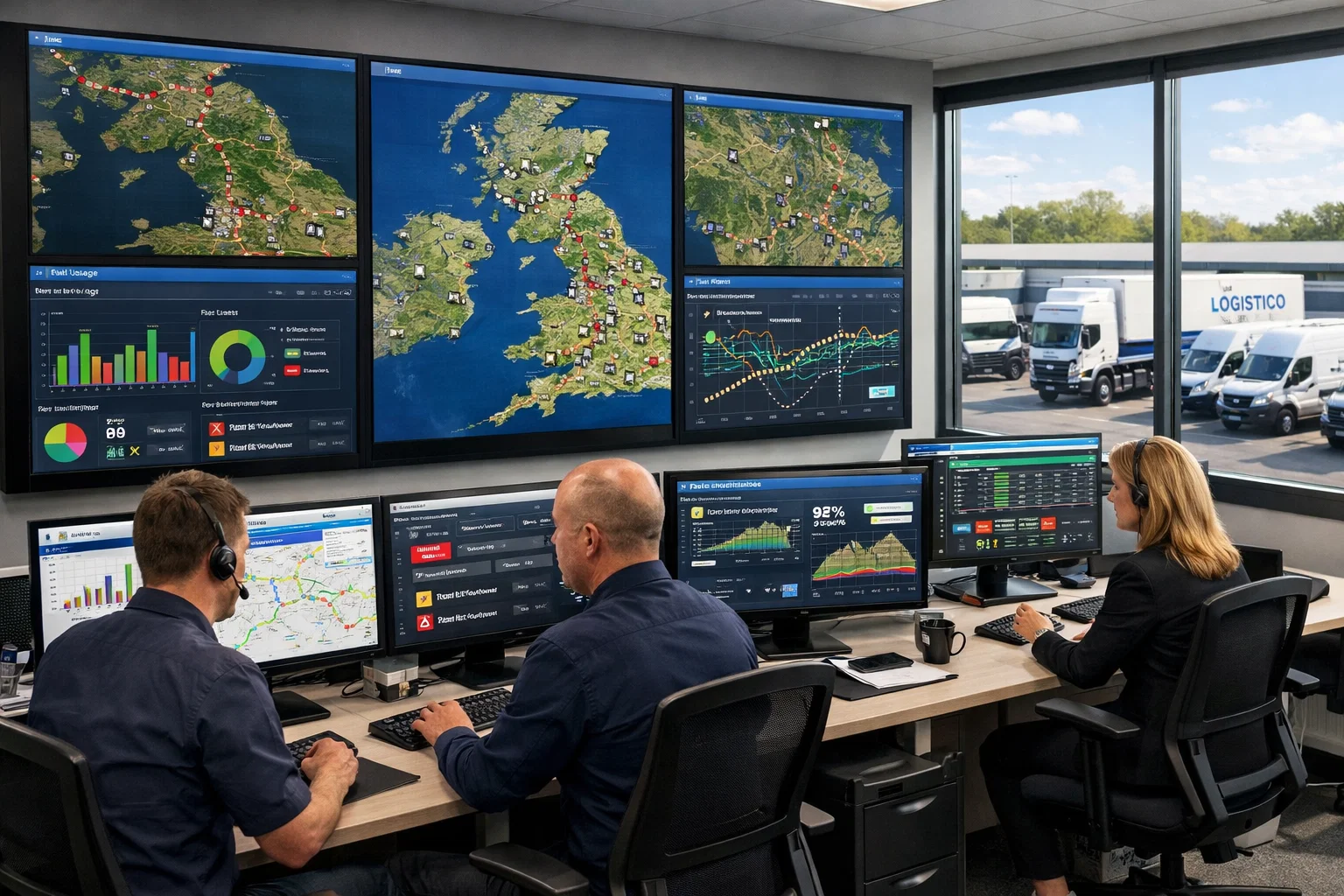
Fleet operators face growing challenges. Rising fuel prices, stricter emissions regulations, and driver shortages increase operational pressure. Fleet Management Systems provide real-time visibility into vehicles, helping businesses track location, monitor driver behaviour, and reduce downtime. These tools combine GPS tracking, vehicle diagnostics, compliance monitoring, and maintenance scheduling in one platform.
Companies using fleet telematics can reduce fuel consumption by up to 15% and improve vehicle utilisation by 10–20%. Platforms such as Webfleet, FleetCheck, and Fleetio offer cloud-based dashboards that simplify fleet monitoring.
Understanding Fleet Management Systems in UK Transport
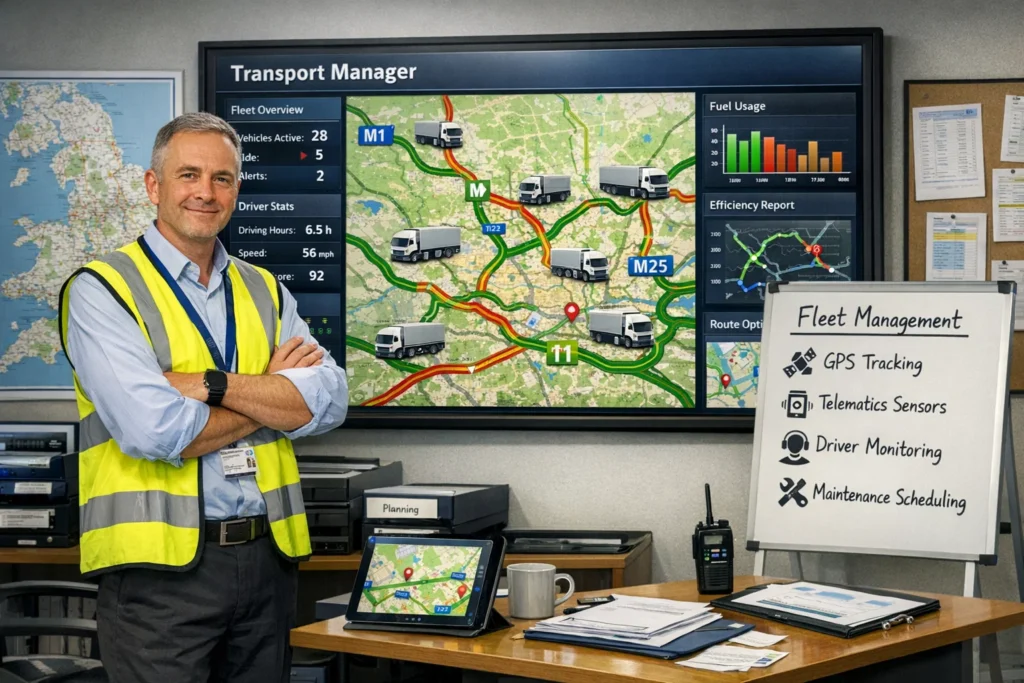
Fleet Management Systems integrate software, telematics devices, and GPS tracking to monitor commercial vehicles. The system collects data from vehicles and drivers and sends it to a central dashboard.
Transport managers use this data to make informed operational decisions.
Key Components of Fleet Management Systems
Several technologies combine to form a complete fleet management platform.
- GPS vehicle tracking
- Telematics sensors
- Driver behaviour monitoring
- Fuel consumption analysis
- Maintenance scheduling
- Compliance and reporting tools
These technologies create real-time visibility across the entire fleet.
How GPS Tracking Supports Fleet Operations
GPS tracking devices installed in vehicles transmit location data every few seconds. Fleet managers can view vehicle movements on digital maps.
Benefits include:
- Real-time vehicle location tracking
- Accurate estimated arrival times
- Faster response to route disruptions
- Theft prevention and vehicle recovery
Telematics Technology and Real-Time Vehicle Data
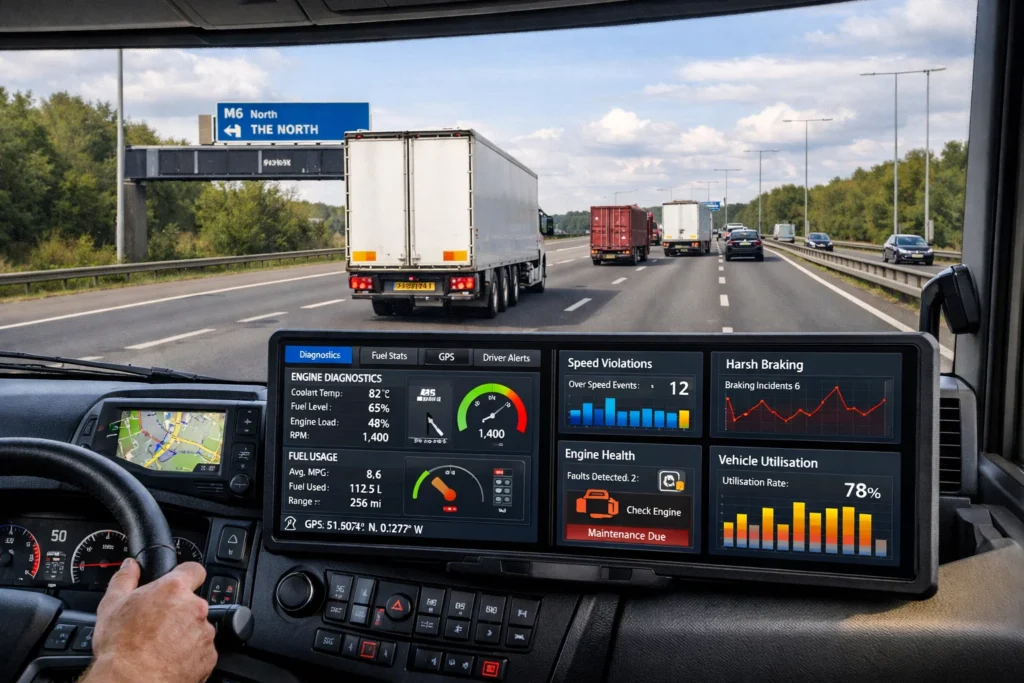
Telematics combines telecommunications and vehicle data systems. Sensors installed in vehicles collect information about engine performance, driving behaviour, and fuel use.
This data flows into Fleet Management Systems dashboards.
Vehicle Data Captured by Telematics
Telematics systems monitor multiple vehicle parameters.
| Data Category | Information Collected | Operational Benefit |
|---|---|---|
| Location Tracking | GPS coordinates, routes | Route optimisation |
| Driver Behaviour | Speeding, braking, cornering | Improved road safety |
| Engine Diagnostics | Fault codes, temperature | Preventive maintenance |
| Fuel Usage | Fuel burn rate, idle time | Lower fuel costs |
| Vehicle Utilisation | Active vs idle hours | Better asset management |
Impact on Fleet Safety
Driver behaviour monitoring is one of the biggest benefits of Fleet Management Systems.
Telematics alerts managers when drivers exceed speed limits or brake harshly. Training programmes can then target high-risk driving behaviour.
UK fleets using telematics report measurable safety improvements:
- 22% fewer accident claims
- 15% reduction in insurance costs
- 20% improvement in driver performance scores
Compliance and Legal Requirements for UK Fleets
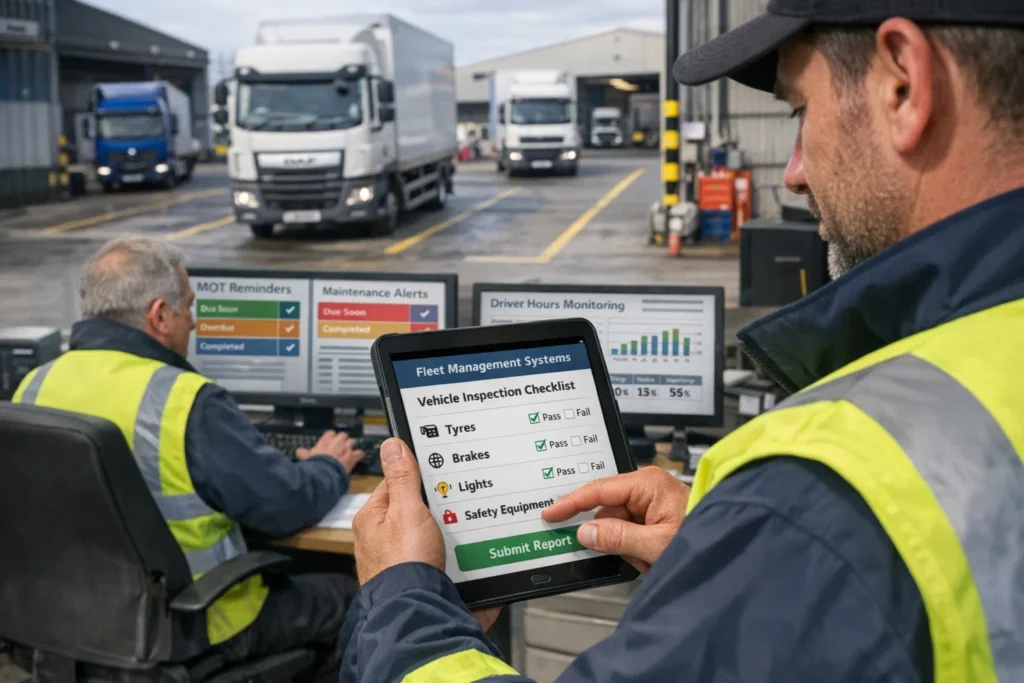
Compliance is a major responsibility for transport operators. Fleet Management Systems help businesses meet regulatory requirements set by UK transport authorities.
Digital records simplify audits and compliance reporting.
Key Compliance Areas Managed by Fleet Systems
Fleet software helps manage several legal obligations.
- Driver hours monitoring
- Vehicle inspection records
- Maintenance schedules
- MOT and servicing reminders
- Operator licence compliance
Digital Vehicle Inspection Reporting
Daily vehicle inspections are mandatory for commercial fleets. Fleet Management Systems allow drivers to submit inspection reports using mobile apps.
Digital inspection benefits include:
- Instant defect reporting
- Faster maintenance scheduling
- Automatic compliance documentation
- Reduced paperwork errors
Cost Savings and Efficiency Gains
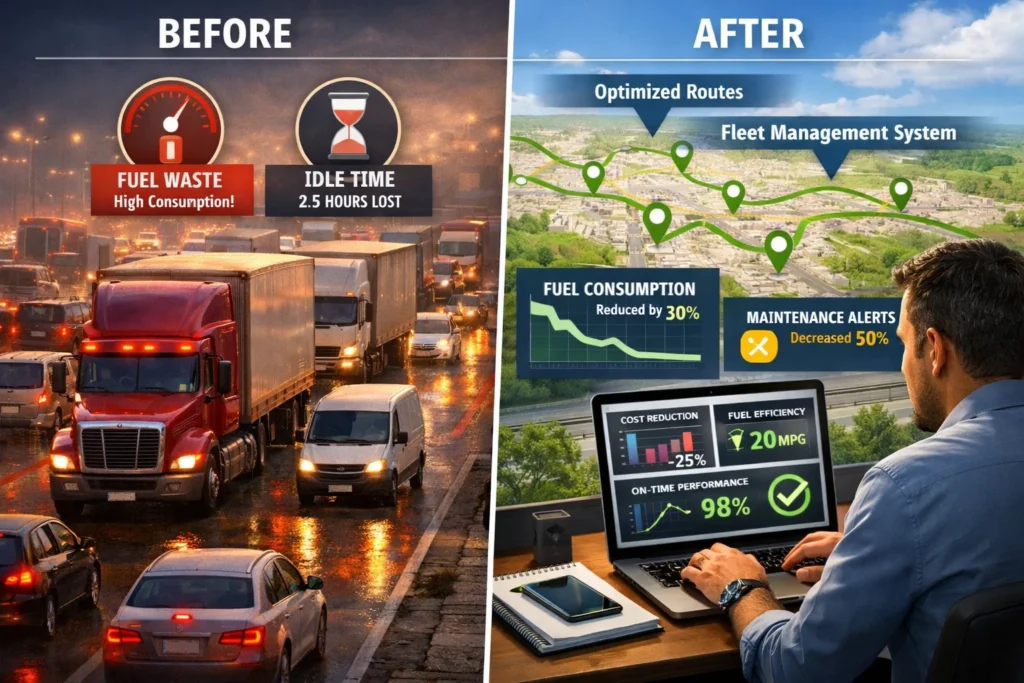
Fleet Management Systems deliver measurable cost savings across transport operations. Fuel management, route optimisation, and maintenance monitoring reduce operational expenses.
Transport companies adopting telematics frequently see ROI within the first year.
Major Cost Reduction Areas
Fleet technology reduces costs across several operational areas.
Fuel Efficiency
Fuel represents one of the highest costs for transport fleets. Telematics reduces waste through route optimisation and idle time monitoring.
Maintenance Costs
Predictive maintenance alerts managers before mechanical failures occur.
Insurance Premiums
Safer driving behaviour lowers accident claims and insurance risk.
Example Cost Savings from Fleet Software
| Cost Category | Typical Reduction |
|---|---|
| Fuel consumption | 10–15% |
| Maintenance costs | 8–12% |
| Insurance claims | 20% |
| Idle time | 15–18% |
Choosing the Right Fleet Management System
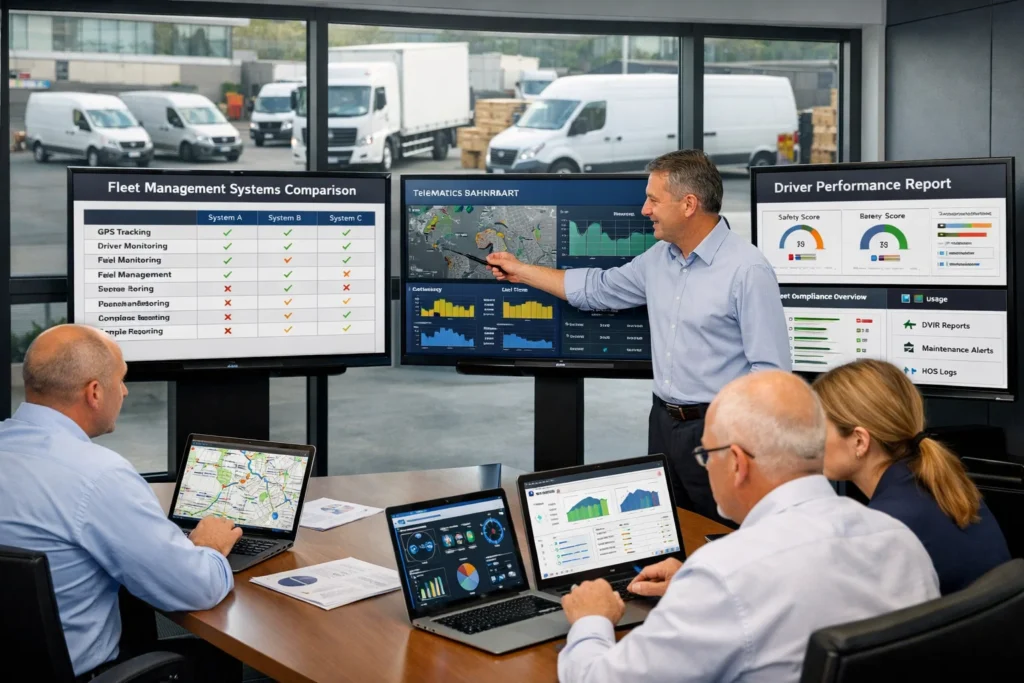
Selecting the right platform depends on fleet size, vehicle type, and operational complexity.
UK transport companies typically evaluate software based on functionality, scalability, and integration capability.
Features to Evaluate
Before adopting Fleet Management Systems, companies should assess several factors.
- GPS tracking accuracy
- Real-time telematics data
- Driver behaviour analytics
- Compliance reporting tools
- Mobile app availability
- Integration with logistics software
Implementation Considerations
Successful implementation requires planning and training.
Important steps include:
- Install telematics hardware across the fleet.
- Train drivers on mobile reporting tools.
- Integrate fleet data with logistics platforms.
- Establish performance monitoring dashboards.
Transport managers must also communicate how telematics improves safety rather than simply monitoring drivers.
Bottom Line
Fleet Management Systems have become essential infrastructure for UK transport companies. GPS tracking, telematics data, and compliance automation provide real-time operational control.
These systems improve safety, reduce fuel consumption, and streamline maintenance scheduling. UK fleets using telematics commonly achieve 10–20% efficiency improvements within the first year.