
Table of Contents
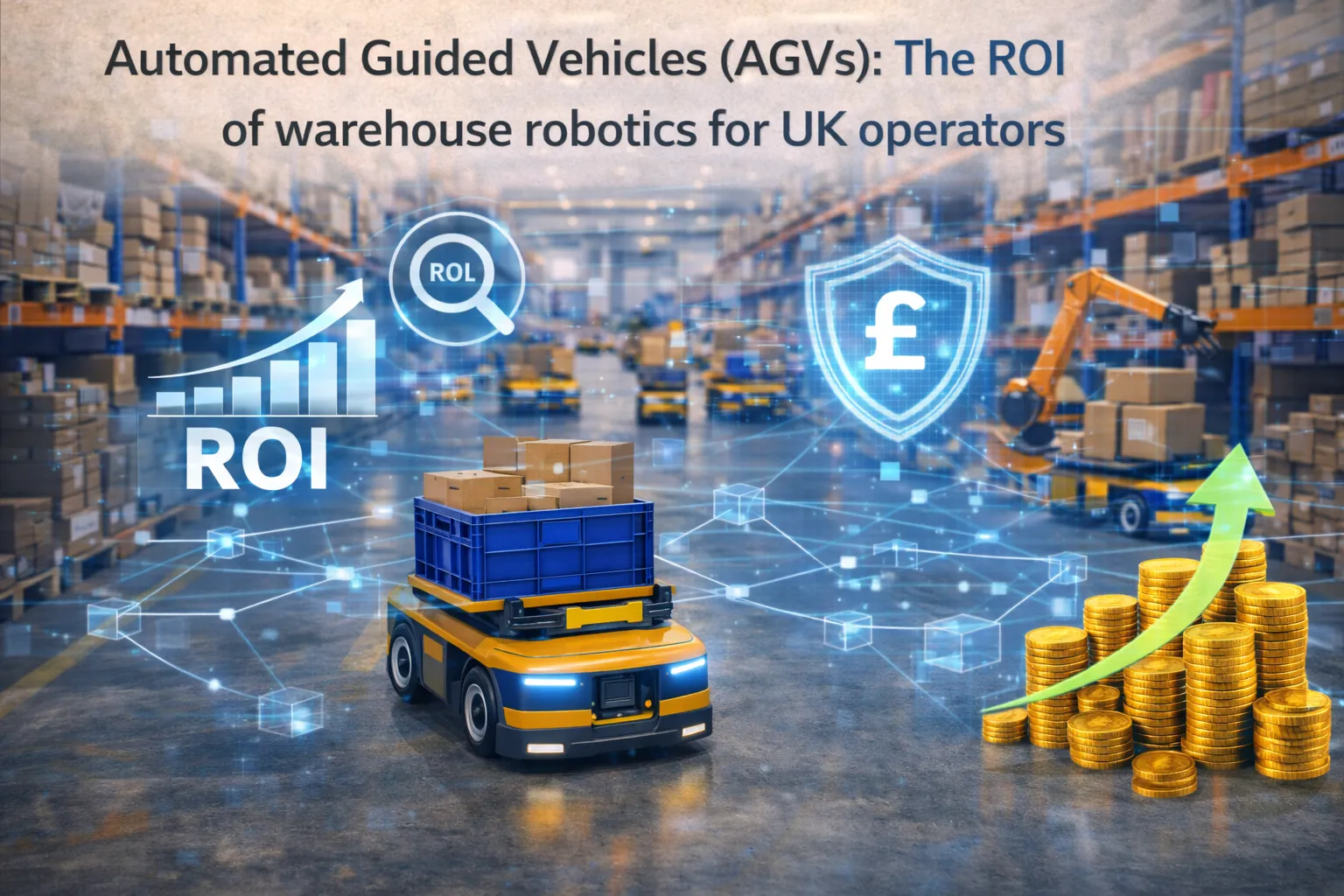
Automated Guided Vehicles are reshaping UK warehousing economics in 2026. Labour shortages, rising National Living Wage rates, and stricter compliance rules are pushing operators towards automation. From April 2026, the National Living Wage stands at £11.44 per hour for workers aged 21 and over, according to GOV.UK. That increase directly impacts warehouse operating costs across England, Scotland, Wales, and Northern Ireland.
We now see Automated Guided Vehicles deployed across retail, FMCG, and third-party logistics sites. The UK warehouse robotics market continues to expand, supported by e-commerce growth and next-day delivery demands. According to NextMSC, the global warehouse robotics market is forecast to exceed USD 20 billion by 2030, with Europe contributing significant growth. UK operators are investing to protect margins and improve resilience.
Automated Guided Vehicles reduce manual travel time, improve picking accuracy, and stabilise output. The result is a measurable return on investment within defined payback periods.
The UK Cost Pressure Driving Automation

Labour, Energy and Throughput Demands
Warehouse costs in the UK rose sharply between 2022 and 2025. Energy prices remain volatile despite moderation from 2023 peaks. At the same time, vacancy rates in logistics remain above the UK average across several regions. The Office for National Statistics reported over 100,000 transport and storage vacancies during the 2024 peaks.
Automated Guided Vehicles directly target travel-intensive tasks. In a typical 200,000 sq ft warehouse, staff spend up to 50% of their time walking or transporting goods. AGVs eliminate that non-value movement. Productivity per labour hour can increase by 25% to 40%, depending on layout and SKU profile.
We also see pressure from same-day and next-day fulfilment. Retailers require later cut-off times and higher order accuracy. Automated Guided Vehicles provide consistent cycle times without fatigue risk. That consistency strengthens service-level agreements and reduces penalty costs. You might also like to read our detailed guide on Blockchain in Shipping.
Calculating ROI for Automated Guided Vehicles

Capital Cost vs Operational Savings
Automated Guided Vehicles typically cost between £25,000 and £70,000 per unit in the UK market. Final pricing depends on payload, navigation system, and integration complexity. A mid-sized operation may deploy 10 to 20 units in phase one.
Let us examine a simplified ROI example.
Scenario:
- 15 AGVs at £40,000 each = £600,000 capital investment.
- Reduction of 12 full-time equivalents at a £28,000 annual cost each.
- Annual labour saving = £336,000.
- Maintenance and software cost = £60,000 per year.
Net annual saving: £276,000.
Payback period: Approximately 2.2 years.
Additional gains include:
- 99.9% navigation accuracy.
- Reduced product damage rates by up to 30%.
- Improved inventory traceability.
The table below summarises typical ROI components for UK operators.
| Cost / Benefit Area | Typical Impact | Financial Effect |
|---|---|---|
| Labour reduction | 20–40% travel time cut | £200k–£400k yearly |
| Picking accuracy | Up to 99.9% | Lower returns cost |
| Damage reduction | 20–30% | Reduced write-offs |
| Throughput gain | 15–35% | Higher revenue capacity |
| Energy efficiency | Optimised routes | Lower forklift fuel cost |
Compliance and Safety in the UK

Regulatory Alignment and Risk Reduction
UK operators must comply with the Health and Safety at Work etc. The Act of 1974 and guidance from the Health and Safety Executive. Forklift incidents remain a key warehouse risk. According to HSE data, transport-related accidents account for a significant share of serious workplace injuries.
Automated Guided Vehicles operate using mapped routes, LiDAR sensors, and collision avoidance systems. That design reduces human-vehicle interaction risk. Lower accident rates reduce insurance premiums and compensation claims.
Traceability also supports compliance with the Environment Act 2021. Digital movement records improve audit readiness. Operators can generate time-stamped logs of pallet transfers. That documentation strengthens governance and reduces manual reporting errors. Don’t miss our recent post about forecast demand in the UK.
Market Outlook for 2026 and Beyond
Growth Trends in UK Warehouse Robotics
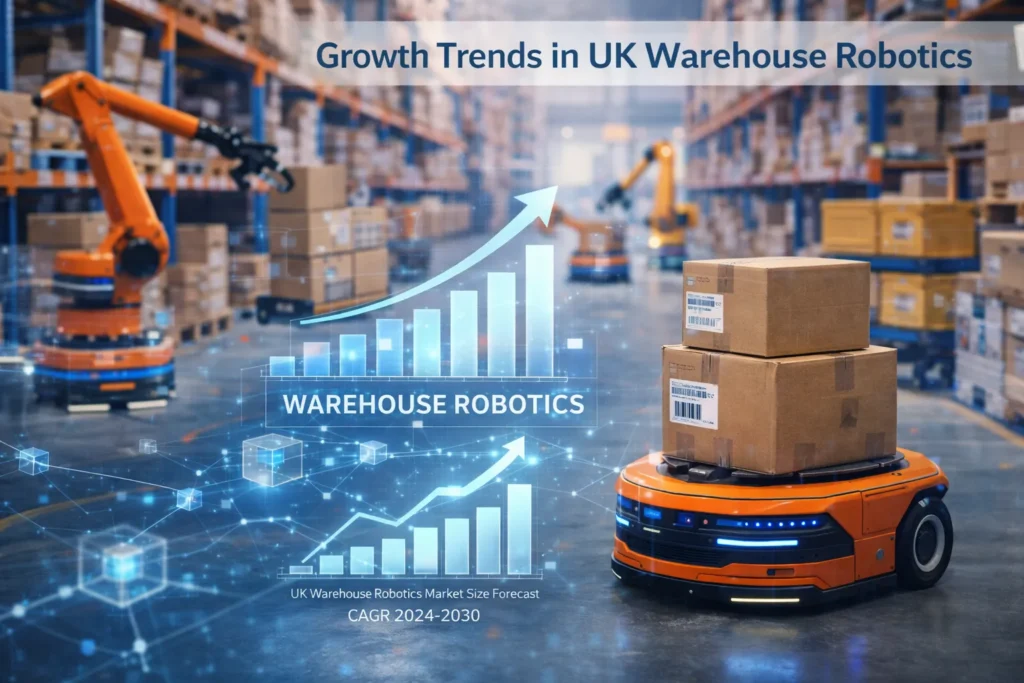
The UK continues investing in robotics as part of supply chain resilience. According to industry market analysis from NextMSC, the warehouse robotics sector shows strong compound annual growth through 2030.
We observe three clear trends:
- Integration with warehouse management systems.
- Hybrid fleets combining AMRs and Automated Guided Vehicles.
- Robotics-as-a-Service subscription models.
Operators are shifting from capital-only models towards flexible financing. That reduces upfront cash exposure and shortens decision cycles. We’ve covered this in detail in our blog on Digital Transformation: How AI and IoT are Reshaping UK Logistics.
Bottom Line
Automated Guided Vehicles now offer measurable ROI for UK warehouse operators. Labour cost growth, compliance pressure, and service expectations demand structured automation. With typical payback periods of two to three years, AGVs provide both financial and operational resilience.
We recommend starting with a workflow audit. Identify travel-heavy processes and quantify labour hours. Model phased deployment rather than full-site transformation. Align automation with compliance and safety objectives.