
Table of Contents
Most people see a long-distance move as a single chaotic event: a truck shows up, things get loaded, and a few days later, it arrives at the new address. In reality, a cross-state move is a logistics operation closer to small-scale freight shipping than to a casual weekend task. Every detail, from how the truck is loaded to which route it takes, is planned days in advance.
Understanding what actually happens behind the scenes helps you choose the right mover, set realistic expectations, and avoid the surprises that make long-distance moves stressful.
Days 10–14 Before the Move: Inventory and Routing
The process starts long before the truck arrives. A professional mover sends an estimator in person or via video walk-through to inventory everything that will travel. This isn’t just for quoting. The inventory determines truck size, crew count, packing materials needed, and how long loading will take.
At the same time, the dispatcher plans the route. Long-distance trucks don’t just drive straight through; they’re routed around weight-restricted roads, low bridges, and regions with weather or fuel concerns. A move from Maryland to Michigan, for example, follows different routes in January than in July.
Days 3–5 Before: Materials and Crew Assignment
Packing materials are delivered to your home two to three days before loading: specialty boxes for dishes, wardrobes, TV crates, mattress bags, furniture blankets, and stretch wrap. A crew is assigned based on the inventory size, typically two to four movers for a standard three-bedroom home, more for larger loads.
If you’ve paid for full packing service, the packers usually arrive the day before loading. Full packing is the single biggest time-saver for long-distance moves, but it doubles the handling of each item, so it’s only worth it for loads with significant fragile contents.
Loading Day: The Art of the Truck
Loading a long-distance truck is fundamentally different from loading a local move. In a local move, items stay on the truck for hours. In a long-distance move, they’re on the road for days and experience constant vibration and shifting.
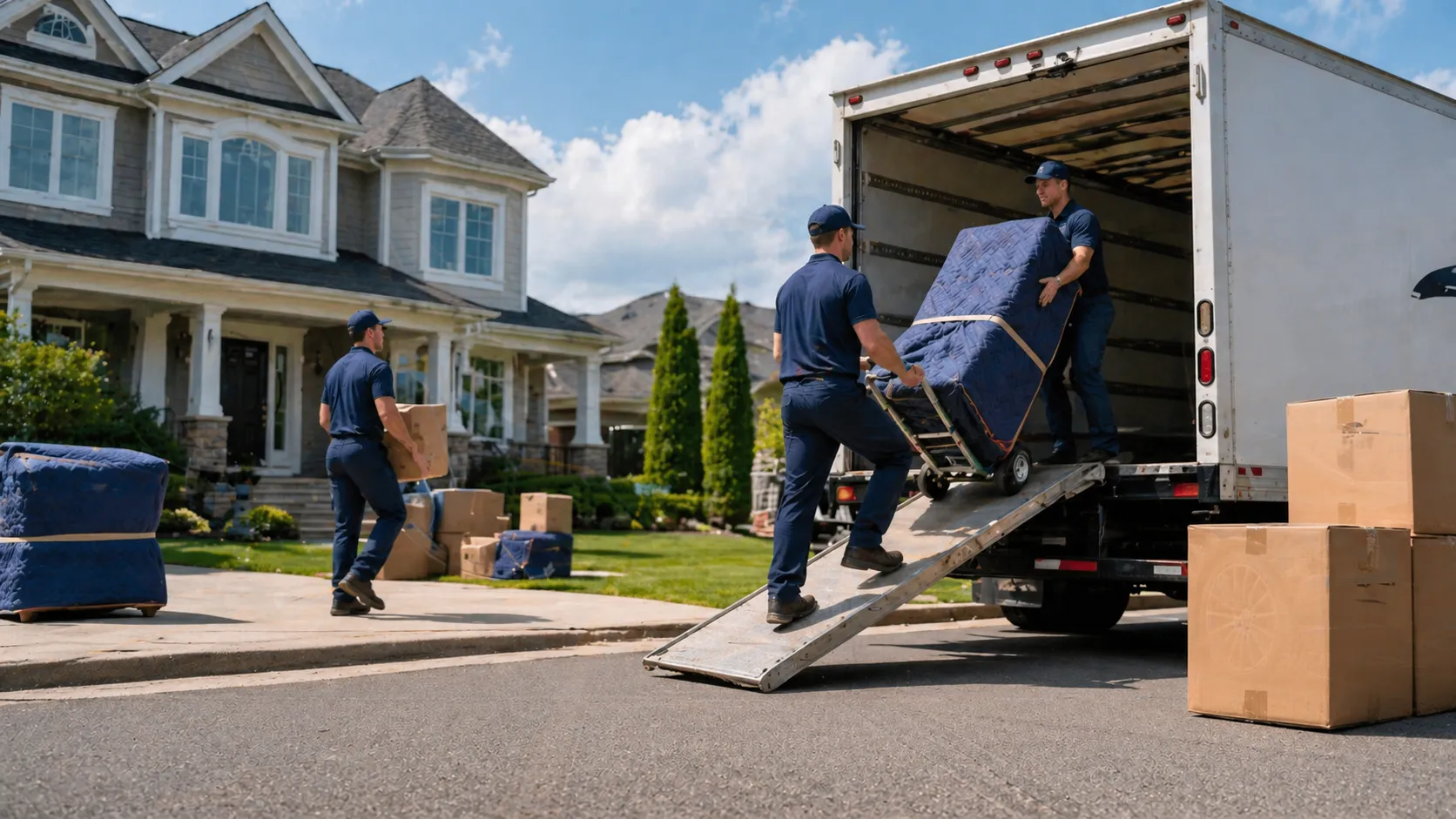
Experienced crews load in a specific sequence: large appliances and heavy furniture go first at the nose of the truck, creating a stable base. Boxes fill the middle layer, stacked heaviest-to-lightest. Fragile items and irregular pieces, such as lamps, artwork, and bicycles, fill gaps and are secured with straps. The goal is a load so tight that nothing moves during transit.
Each item is also tagged with a numbered inventory sticker. This matters more than most customers realize: on delivery, the crew checks every sticker against the inventory list, and any missing or damaged item is documented immediately for claims.
Transit: What Happens on the Road
For moves under 500 miles, a dedicated truck typically drives direct, with one or two overnight stops for driver rest. For longer hauls, there are two models:
- Exclusive use: your belongings are the only load on the truck. Faster, more predictable delivery windows, but more expensive.
- Consolidated shipping: your shipment shares truck space with one or two other customers heading in the same direction. Lower cost, but delivery windows can span 3–10 days, depending on how the other stops align.
Reputable carriers provide GPS tracking throughout transit, and the driver typically calls 24 hours ahead of delivery to confirm timing.
Delivery Day: Unloading Is the Reverse of Loading
At the destination, the crew unloads in roughly the reverse order: fragile items first off the truck (they were loaded last), then boxes, then heavy furniture. Each inventory sticker is checked off as items come off the truck.
If the customer has paid for full-service delivery, the crew also reassembles furniture, places items in their assigned rooms, and removes packing debris. Basic delivery leaves everything stacked in the garage or front room for you to unpack. For a detailed breakdown of how this works, read our full guide on Empty Return in Container Shipping: Meaning, Process, and Optimization.
Why Local Knowledge Still Matters
Even with the most polished logistics operation, the last mile is where long-distance moves succeed or fail. Trucks need access to the street, the driveway, and the building’s loading dock. HOAs may restrict hours. High-rise buildings require elevator reservations. Narrow historic streets may not accommodate a 53-foot trailer.
This is why even national carriers often partner with local crews for the delivery leg. A crew that knows the neighborhood where to park a truck in Montgomery County’s townhouse developments, how to handle a tight turn on a cul-de-sac in Germantown, or Gaithersburg saves hours on delivery day. For customers relocating to the Maryland suburbs of Washington, D.C., working with a company like Pro100Movers (Germantown) for the local portion of the move is often what makes the final day go smoothly.
The Takeaway
A long-distance move is less about strength and more about planning. The companies that do it well aren’t necessarily the ones with the biggest trucks; they’re the ones with the tightest inventory process, the most disciplined loading technique, and a reliable hand-off at the destination. When you’re comparing quotes, ask how each step above is handled. The answer tells you everything.