

Table of Contents
The UK Customs Clearance Checklist for Small Importers is essential for businesses bringing goods into the United Kingdom. Since the UK left the European Union, customs procedures have become stricter and more documentation-driven. The UK processed more than 255 million customs declarations in 2025, a 14% increase compared with 2022.
For small importers, missing even one document can delay shipments, trigger inspections, or cause financial penalties. Import VAT, customs duty, commodity codes, and safety declarations must all align before goods are released at the border. HMRC requires every importer to maintain accurate records for at least six years, ensuring transparency and traceability.
We created this UK Customs Clearance Checklist for Small Importers to simplify the process. The checklist outlines every step required before, during, and after shipment arrival. By following a structured approach, small businesses reduce clearance delays and protect their margins.
Essential Documents for UK Customs Clearance
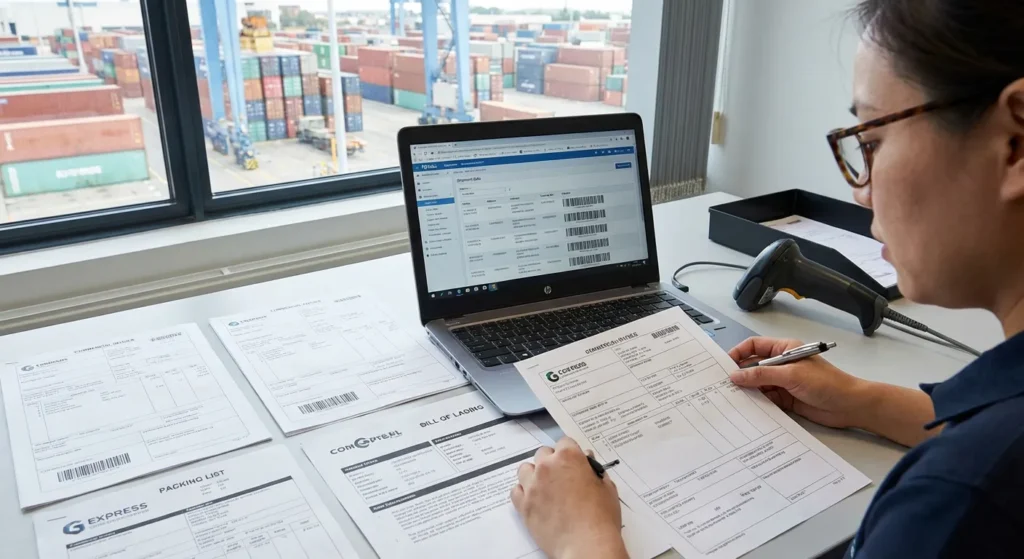
Commercial Invoice Requirements
Every shipment entering the UK must include a commercial invoice. This document confirms the value, origin, and description of imported goods. HMRC uses it to calculate duty and VAT liabilities.
A compliant invoice should contain:
- Seller and buyer details
- Product description and quantity
- Unit price and total value
- Currency used in the transaction
- Country of origin
- Incoterms (e.g., CIF, FOB, DDP)
Incorrect invoice values trigger inspections and penalties. HMRC estimates that over 18% of customs delays in 2024 resulted from inaccurate commercial invoices. Clear and precise invoices ensure faster clearance.
Packing List and Transport Documents
A packing list details how goods are packed within the shipment. It helps customs officials verify cargo during inspections. The list normally includes weight, packaging type, carton numbers, and dimensions.
Transport documents confirm how goods move internationally. Examples include:
- Bill of lading (sea freight)
- Air waybill (air freight)
- CMR note (road freight)
Without these documents, customs officers cannot validate shipment movement. Proper documentation ensures transparency throughout the supply chain.
Registering Your Business for Importing
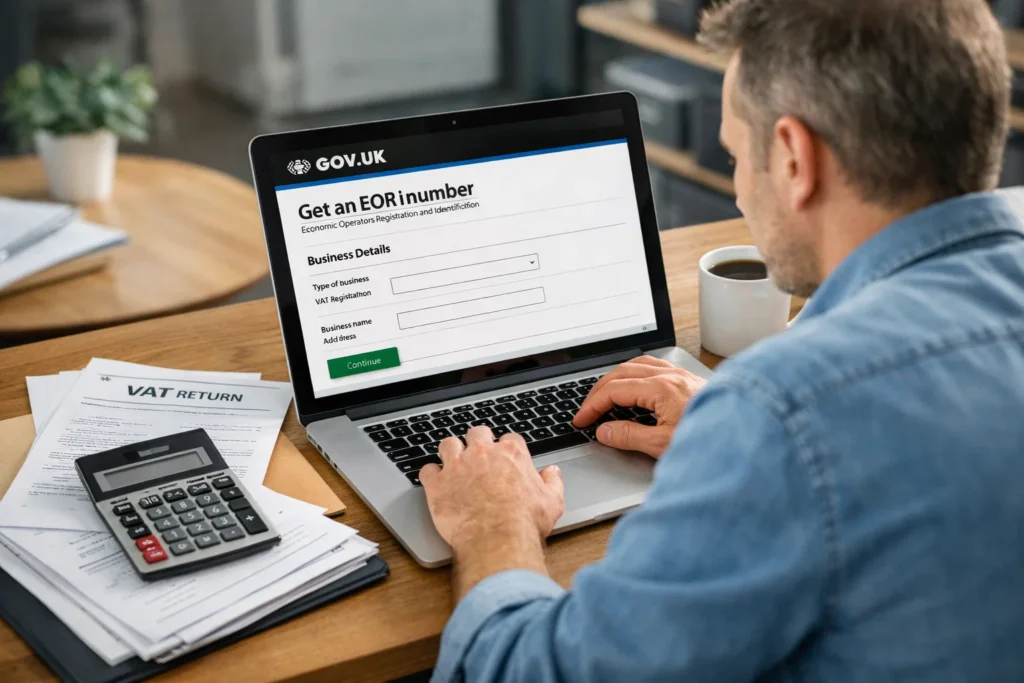
Obtaining an EORI Number
Every UK importer must have an Economic Operators Registration and Identification (EORI) number. HMRC uses this number to track customs declarations and payments.
Small businesses can apply online through the UK Government portal. Most applications receive approval within 48 hours. The EORI number begins with GB for businesses operating in Great Britain.
Without an EORI number, customs authorities cannot process import declarations. Shipments remain held at the border until the importer provides this registration.
VAT Registration and Import VAT
Import VAT applies to most goods entering the UK. The standard VAT rate remains 20% in 2026. Businesses registered for VAT can use Postponed VAT Accounting (PVA) to delay VAT payment until their VAT return.
Key benefits of PVA include:
- Improved cash flow
- Reduced upfront tax payments
- Simplified accounting processes
HMRC confirms that over 78% of UK importers now use postponed VAT accounting, reflecting its popularity among SMEs.
Classifying Goods Correctly
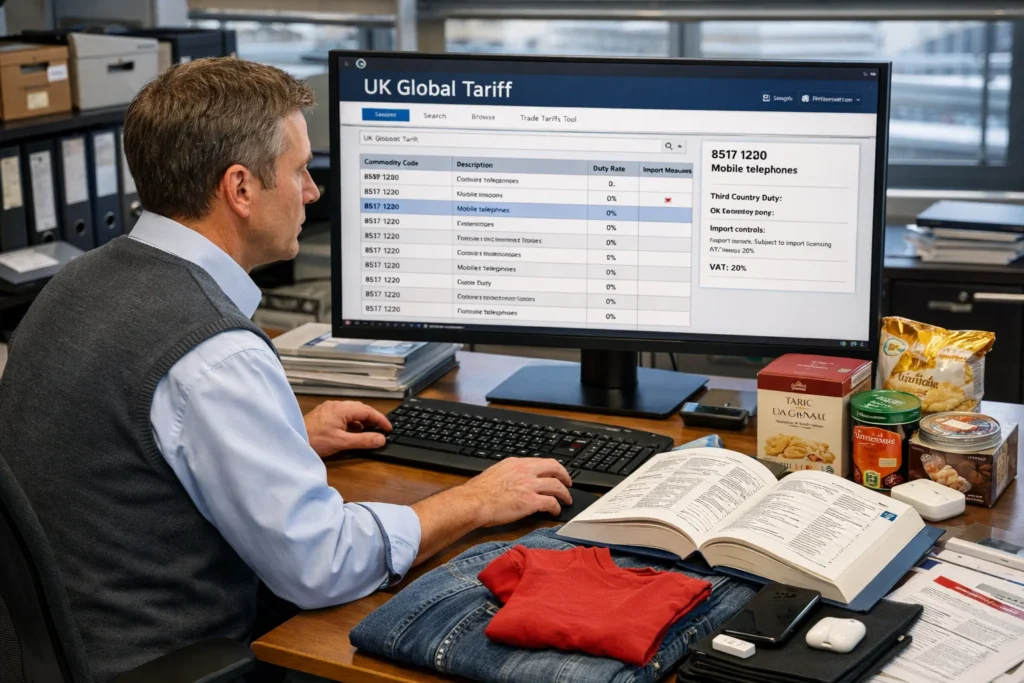
Using the UK Global Tariff
Correct classification ensures accurate duty calculation. The UK Global Tariff contains more than 16,000 commodity codes covering imported products.
Each commodity code determines:
- Duty rate
- Import restrictions
- Licensing requirements
- Anti-dumping measures
Selecting the wrong code can lead to duty overpayment or compliance penalties.
Example Duty Rates by Product Category
| Product Category | Commodity Code Example | Duty Rate (2026) |
|---|---|---|
| Clothing | 6203.42 | 12% |
| Electronics | 8471.30 | 0% |
| Furniture | 9403.60 | 2.7% |
| Footwear | 6403.99 | 16% |
| Food products | 2005.70 | 8% |
Small importers should confirm codes using the UK Trade Tariff database. Correct classification prevents disputes during customs audits.
Submitting Customs Declarations
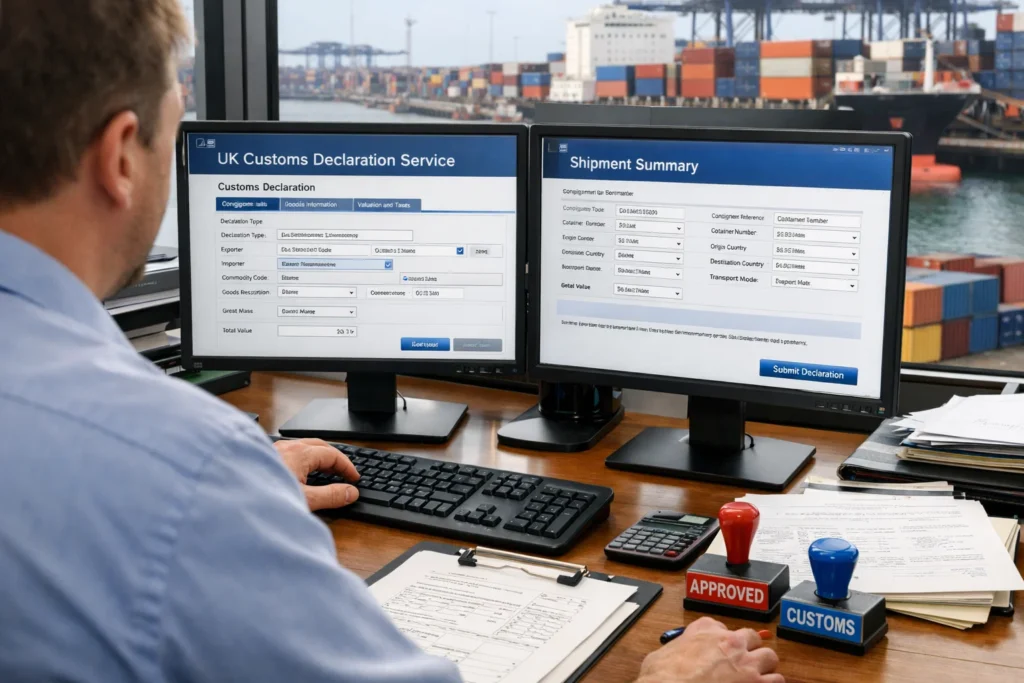
Import Declarations via CDS
The Customs Declaration Service (CDS) replaced the old CHIEF system in 2024. All UK import declarations now pass through CDS.
A declaration includes over 70 data fields, covering shipment value, tariff code, and origin details. Most small businesses submit declarations through customs brokers or freight forwarders.
CDS allows HMRC to process declarations faster while reducing manual paperwork. Electronic submissions also enable real-time tracking of shipment status.
Safety and Security Declarations
Safety declarations confirm that the cargo does not present a security risk. Importers must submit an Entry Summary Declaration (ENS) before goods arrive in the UK.
Typical submission deadlines include:
- 2 hours before arrival for air freight
- 24 hours before loading for sea freight
Failure to submit ENS forms may lead to shipment holds or financial penalties. Understand UK Tachograph Rules Explained to ensure accurate driver hours tracking, legal compliance, and safer fleet operations across UK transport networks.
Working with Customs Brokers
Why Small Importers Use Brokers
Customs brokers specialise in regulatory compliance and documentation. Many small importers rely on brokers to manage declarations and duty payments.
Brokers provide several advantages:
- Faster clearance times
- Reduced compliance risks
- Expert tariff classification
- Direct communication with HMRC
Industry data shows more than 65% of UK SMEs use third-party customs brokers to manage import procedures.
Broker Fees and Cost Structure
Brokerage fees vary depending on shipment complexity. Typical UK charges in 2026 include:
| Service | Average Cost |
|---|---|
| Standard customs entry | £40 – £75 |
| Complex classification | £90 – £150 |
| Duty deferment handling | £20 – £45 |
| Compliance advisory | £120+ per hour |
UK Customs Clearance Checklist for Small Importers
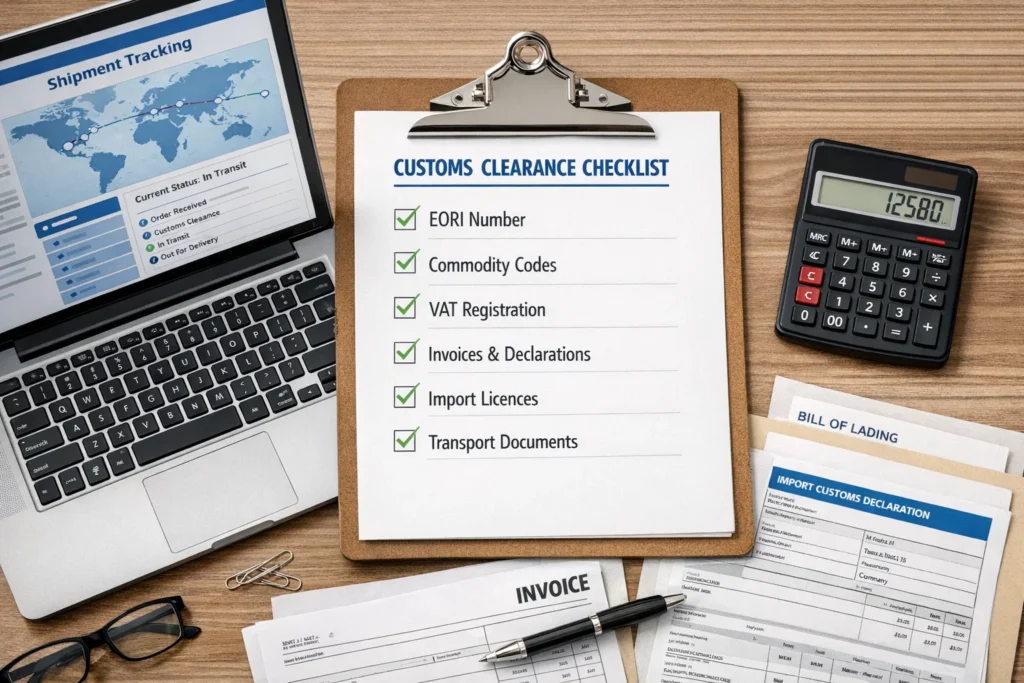
A structured checklist helps importers avoid delays and penalties. Before every shipment arrives, confirm these steps.
Pre-Shipment Preparation
- Obtain a valid EORI number
- Confirm VAT registration status
- Verify commodity codes for each product
- Confirm Incoterms with suppliers
- Prepare a commercial invoice and packing list
Shipment Documentation
- Transport document (bill of lading or airway bill)
- Accurate product description and HS codes
- Correct declared value and currency
- Country of origin certification
Customs Processing
- Submit CDS import declaration
- Pay customs duty and import VAT
- Provide a safety and security declaration
- Ensure broker documentation accuracy
Following this UK Customs Clearance Checklist for Small Importers ensures goods move smoothly through UK ports and airports.
Bottom Line
The UK Customs Clearance Checklist for Small Importers helps businesses manage complex border procedures with confidence. Since Brexit, customs requirements have increased significantly, making accurate documentation essential for every shipment. Importers must prepare commercial invoices, classify goods correctly, and submit declarations through the CDS system.
Small businesses benefit from registering for postponed VAT accounting and working with experienced customs brokers. These strategies reduce financial pressure while ensuring compliance with HMRC regulations. Accurate commodity codes, complete documentation, and early declaration submissions prevent costly delays at UK ports.
Stay compliant and protect your team by understanding UK Warehouse Safety Regulations, the key rules every warehouse operator must follow for a safer workplace.