
Table of Contents
The most common mode of freight transportation remains a core topic in global logistics planning in 2026. Freight transport connects manufacturers, warehouses, retailers, and consumers across continents. According to the International Transport Forum, global freight demand is expected to reach 160 billion tonne-kilometres by 2050, nearly doubling from 2015 levels. Efficient transport modes are therefore essential for supply chain reliability and cost control.
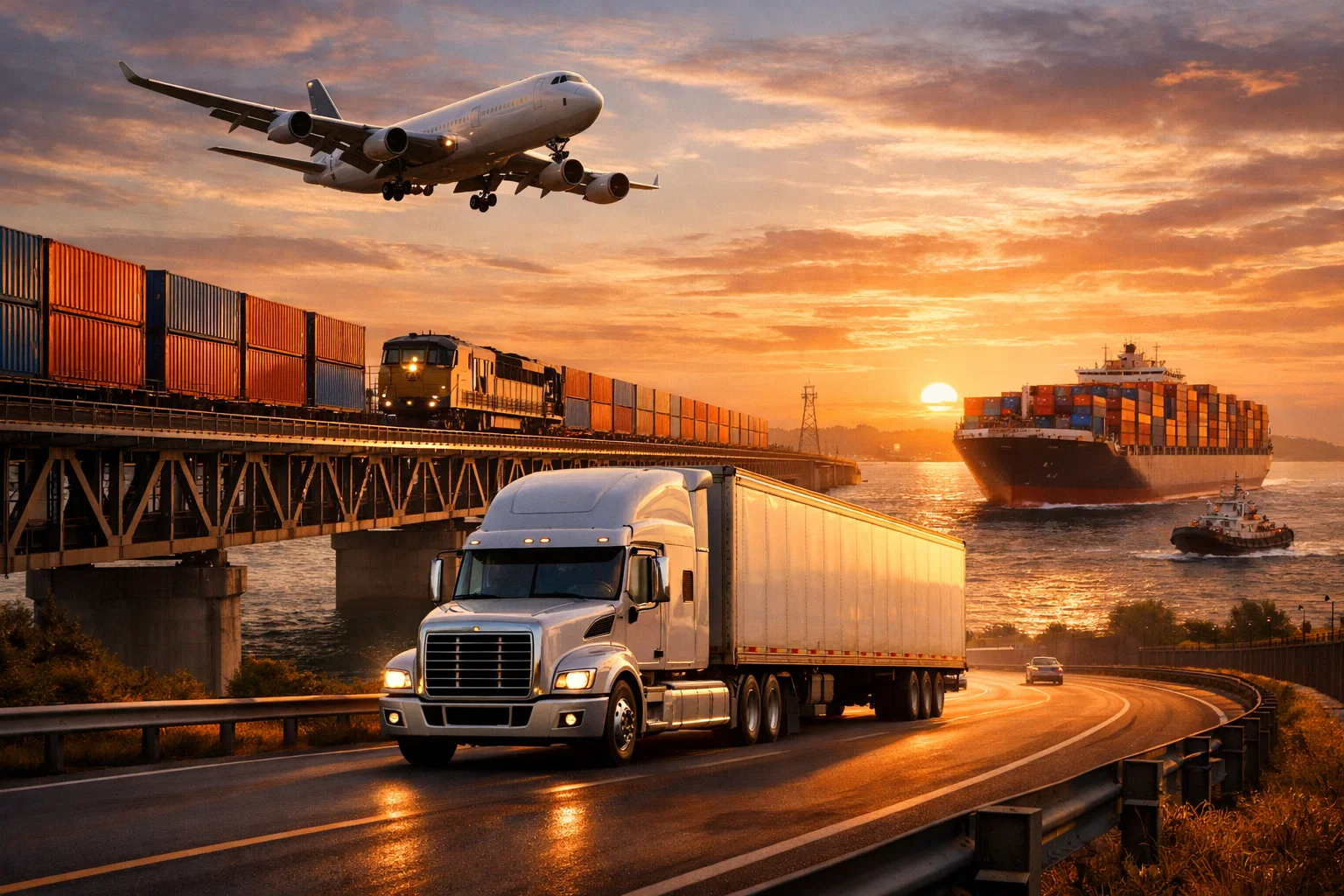
Businesses today rely on four primary freight transport modes: road, rail, ocean, and air. Each serves a distinct role depending on distance, cost sensitivity, cargo value, and delivery speed. Road freight currently carries the largest share of inland cargo worldwide. Meanwhile, ocean freight dominates international trade by volume.
Choosing the right mode affects delivery timelines, carbon emissions, and logistics costs. For example, road transport provides flexibility, while rail improves bulk efficiency. Ocean shipping moves heavy goods cheaply across continents, while air freight delivers speed for high-value products.
Understanding the most common mode of freight transportation helps businesses design resilient supply chains. This guide explains how each mode works, where it performs best, and why logistics planners often combine them through multimodal networks.
Road Freight: The Most Widely Used Mode
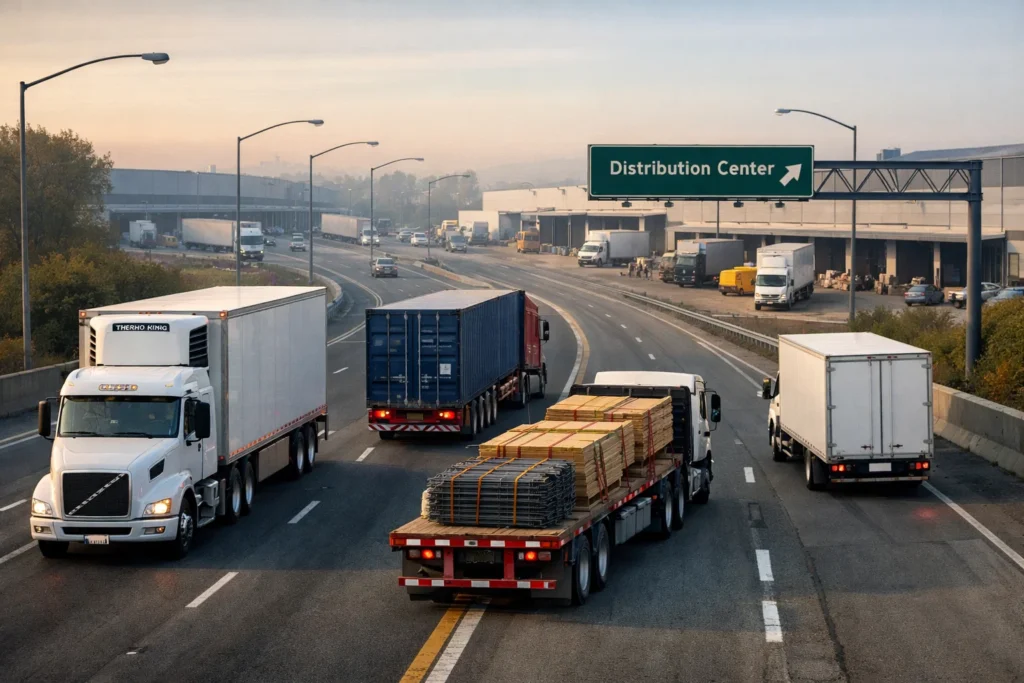
Road freight is widely recognised as the most common mode of freight transportation for domestic logistics. Trucks deliver goods directly between factories, distribution centres, ports, and retailers. This door-to-door capability gives road transport unmatched flexibility.
According to the International Road Transport Union, road transport moves over 70% of inland freight in Europe and roughly 72% of domestic freight in the United States. The dominance comes from the extensive global highway network and adaptable truck fleets.
Why Road Transport Dominates Freight Logistics
Several operational advantages make road freight indispensable for supply chains:
- Door-to-door delivery without cargo transfers
- Faster transit for short- and medium-distance routes
- Flexible scheduling and route optimisation
- Lower infrastructure dependency than rail or ports
These benefits explain why logistics companies rely on trucks for last-mile delivery and regional distribution. Even when goods travel internationally by ship or rail, trucks complete the final stage of transport.
Typical Cargo Transported by Road
Road freight commonly carries:
- Retail and consumer goods
- Food and agricultural products
- Construction materials
- Industrial equipment
The widespread use of trucks confirms road transport as the most common mode of freight transportation for inland logistics operations.
Rail Freight: Efficient for Bulk Cargo
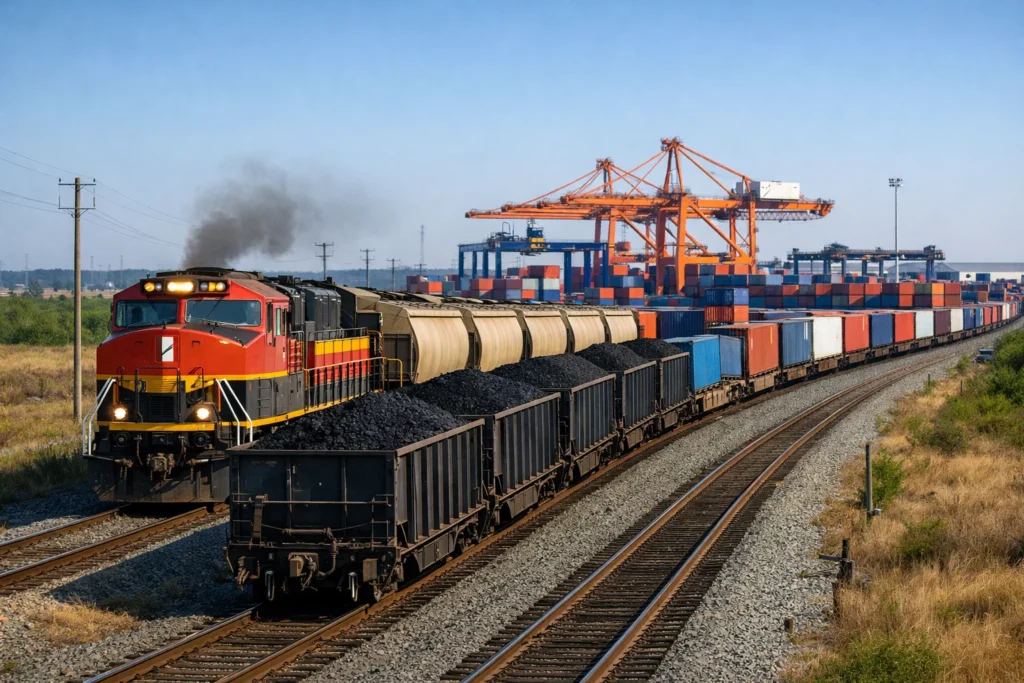
Rail transport plays a major role in moving heavy cargo over long inland distances. Railways offer high capacity and improved energy efficiency compared with road transport. One freight train can replace around 40 to 50 heavy trucks, significantly reducing congestion and emissions.
Advantages of Rail Freight Transport
Rail freight is widely used when businesses need reliable bulk transport. Key advantages include:
- Lower fuel consumption per tonne-kilometre
- Reduced carbon emissions compared with road transport
- High capacity for minerals, grain, and chemicals
- Predictable schedules on fixed rail networks
Rail is particularly important in large economies such as the United States, China, Canada, and Russia. These countries rely on rail to move commodities between production regions and ports.
Rail Freight Use Cases
Common cargo transported by rail includes:
- Coal and iron ore
- Agricultural grains
- Petroleum products
- Automotive components
Although rail cannot replace road transport entirely, it complements it. Many supply chains combine rail with trucks to create cost-effective multimodal freight systems.
Ocean Freight: Backbone of Global Trade
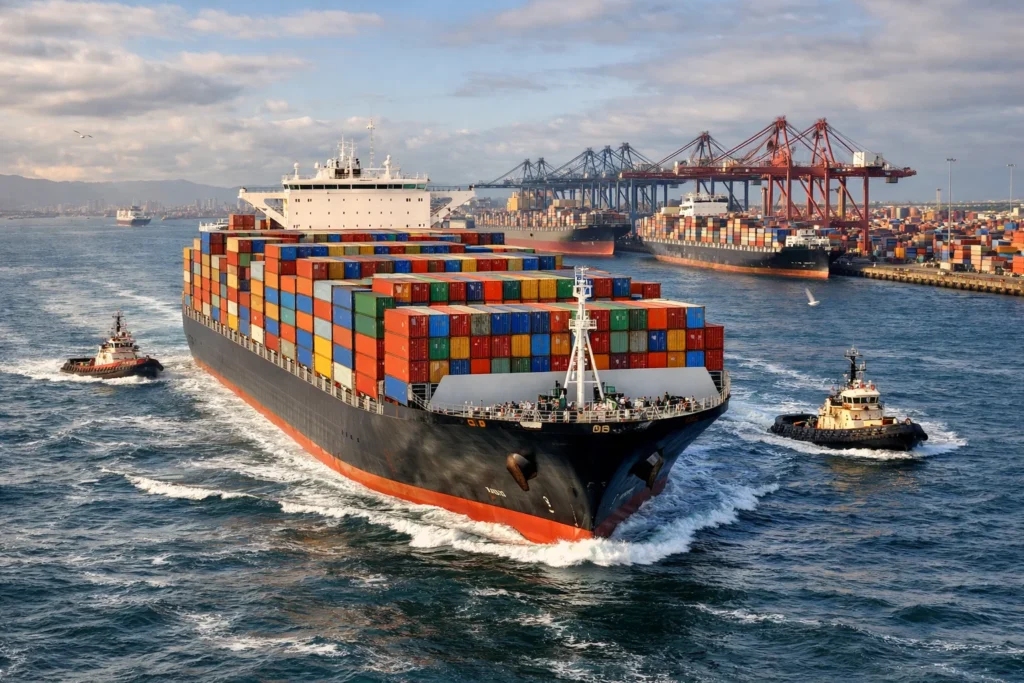
Ocean shipping remains the dominant method for international cargo movement. Approximately 90% of global trade volume moves by sea, according to the United Nations Conference on Trade and Development (UNCTAD).
This scale makes ocean shipping the most economical option for transporting large quantities of goods across continents.
Why Ocean Freight Handles Most Global Cargo
Ocean freight dominates global logistics because it offers unmatched capacity and low shipping costs. A single container vessel can carry over 20,000 TEU containers, enabling large-scale international trade.
Key benefits include:
- Lowest cost per tonne for long-distance shipments
- Massive cargo capacity
- Reliable global shipping routes
- Essential for intercontinental trade
Shipping routes link major ports across Asia, Europe, and North America. Ports such as Shanghai, Singapore, and Rotterdam handle millions of containers each year. Businesses moving goods internationally often compare sea and air freight shipping options to balance cost, transit time, and cargo value.
Types of Ocean Freight Cargo
Ocean freight commonly transports:
- Electronics and manufactured goods
- Industrial machinery
- Raw materials and commodities
- Retail imports and exports
Air Freight: Fastest Transport for High-Value Cargo
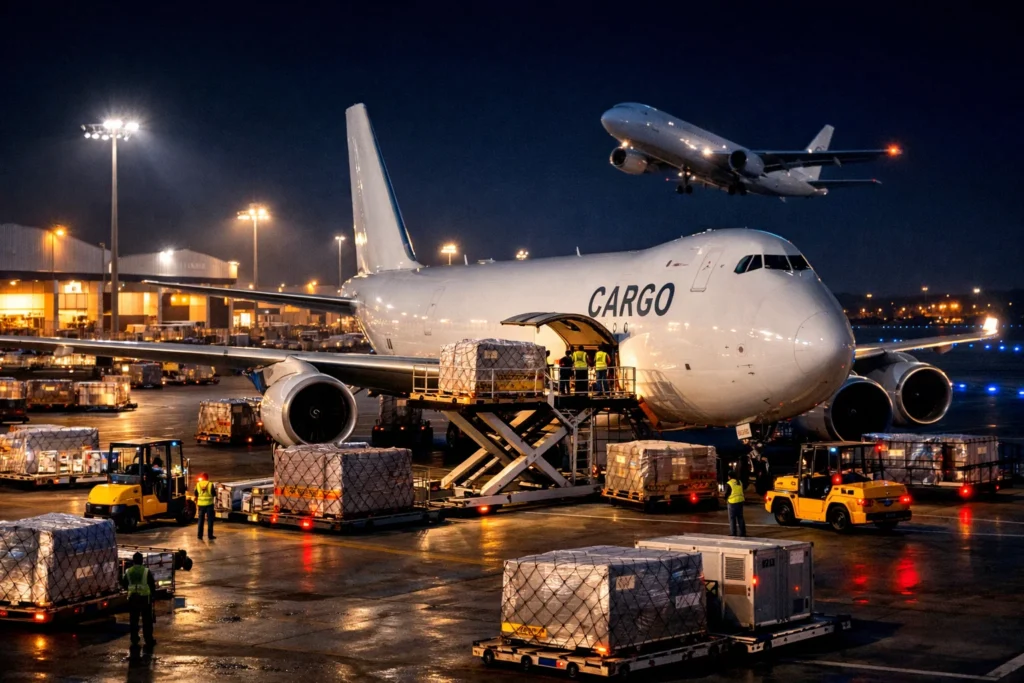
Air transport is the fastest freight option available. Airlines move cargo across continents within hours rather than weeks. However, speed comes with higher shipping costs.
Air freight represents less than 1% of global freight volume, but accounts for around 35% of world trade value due to high-value products.
When Air Freight Becomes Essential
Businesses choose air transport when delivery speed outweighs cost considerations. Typical scenarios include urgent shipments or perishable goods.
Air freight is widely used for:
- Medical supplies and pharmaceuticals
- Electronics and semiconductors
- Luxury goods and fashion
- Time-critical spare parts
Major cargo airports such as Hong Kong, Memphis, and Doha handle millions of tonnes annually.
Although air freight is not the most common mode of freight transportation, it remains critical for high-value supply chains.
Comparison of Major Freight Transportation Modes
The table below summarises how each freight mode compares across speed, cost, and typical use cases.
| Transport Mode | Typical Speed | Cost Level | Cargo Capacity | Best Use Case |
|---|---|---|---|---|
| Road Freight | Moderate | Medium | Medium | Domestic and regional deliveries |
| Rail Freight | Moderate | Low | High | Bulk inland cargo |
| Ocean Freight | Slow | Lowest | Very High | International shipping |
| Air Freight | Fastest | Highest | Low | Urgent or high-value cargo |
This comparison highlights why trucks remain the most common mode of freight transportation, while other modes support specific logistics needs.
Key Factors When Choosing a Freight Mode
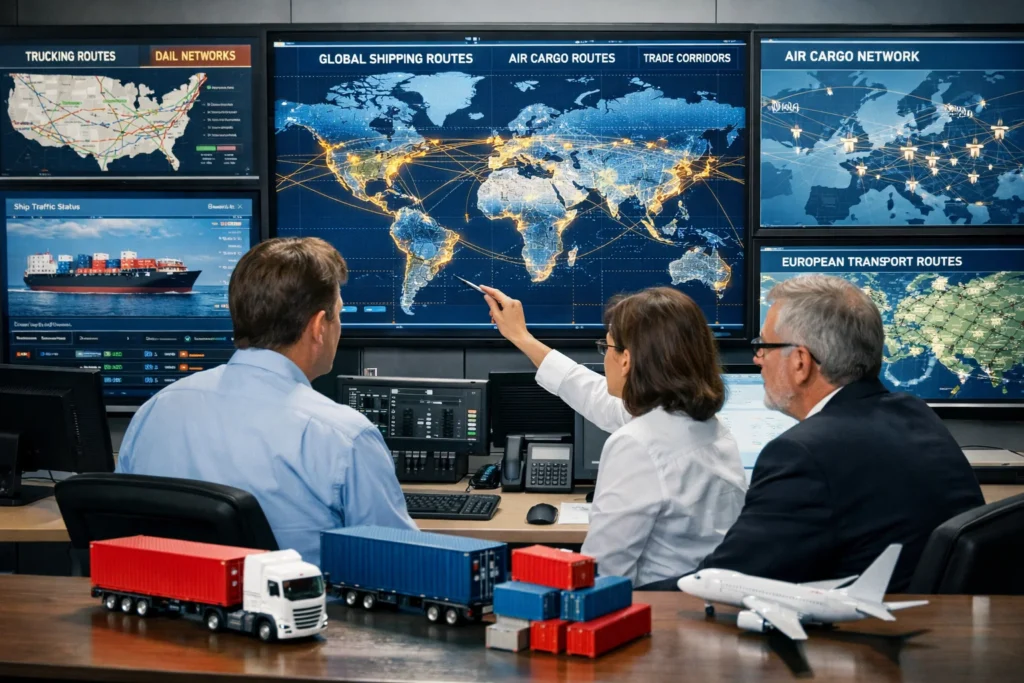
Logistics planners rarely choose transport modes randomly. Several operational factors influence the final decision.
Important considerations include:
- Delivery urgency
- Cargo size and weight
- Shipping distance
- Infrastructure availability
- Environmental impact
For example, a retailer importing electronics from Asia may use ocean freight first. Trucks then deliver the containers to regional warehouses. Choosing the international freight forwarding process in the UK becomes easier when businesses understand how different freight modes support global trade routes and supply chains.
Wrapping Up
The most common mode of freight transportation depends on geography, cargo type, and delivery requirements. However, road freight remains the dominant mode for domestic distribution due to its flexibility and accessibility.
Rail transport complements road logistics by moving heavy goods efficiently across long inland routes. Ocean shipping carries the majority of international cargo thanks to its enormous capacity and low cost. Air freight, while expensive, ensures rapid delivery for high-value goods.