
Table of Contents
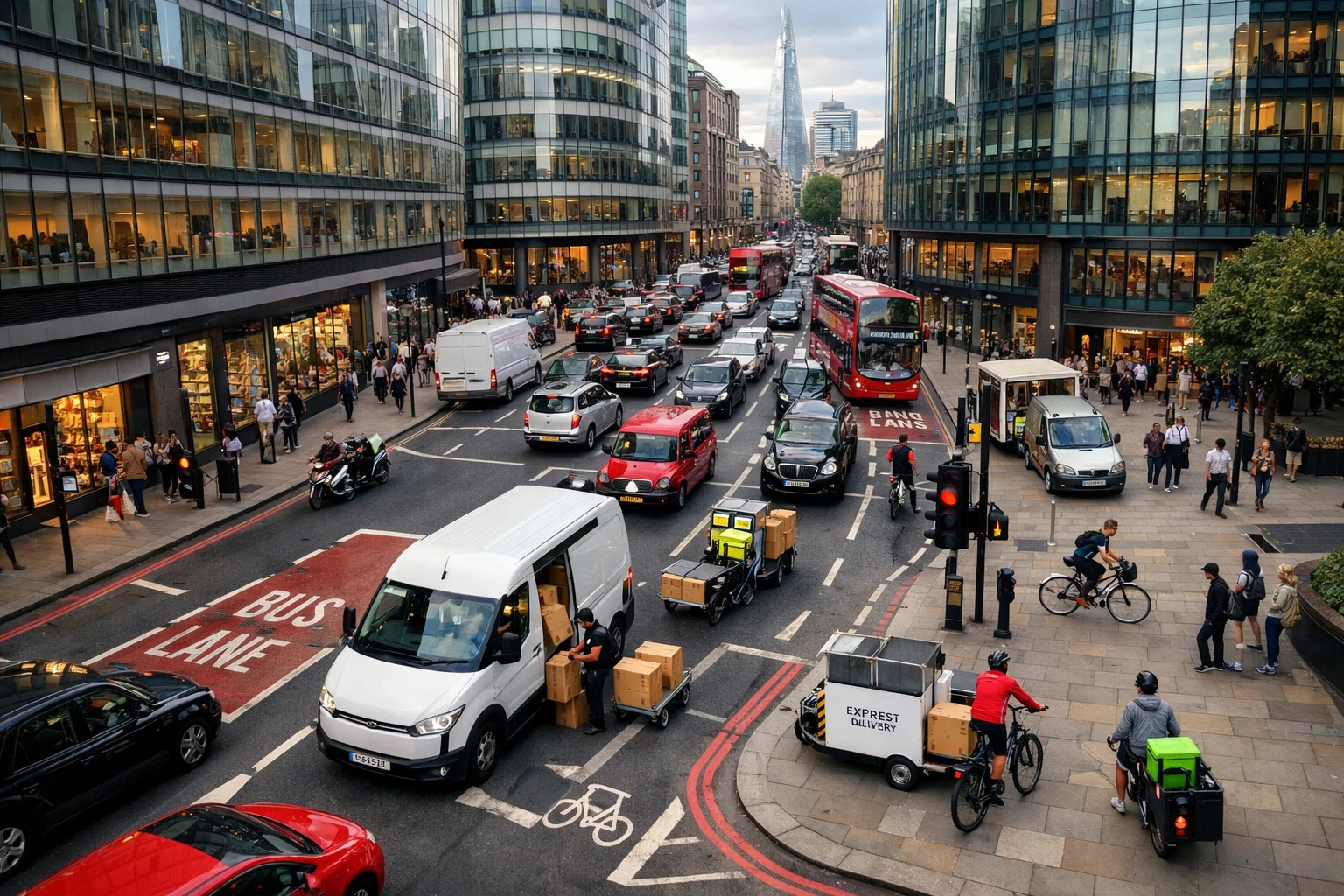
Urban Logistics in the UK has become a critical challenge as cities grow denser and online retail continues to expand. In 2025, UK e-commerce sales exceeded £148 billion, driving a surge in urban deliveries across London, Manchester, Birmingham, and other major cities. This growth places heavy pressure on roads already constrained by congestion, emissions regulations, and limited kerb space. Businesses now face the complex task of delivering goods quickly while meeting sustainability and regulatory requirements.
City authorities and logistics operators increasingly collaborate to modernise last-mile transport systems. Urban freight vehicles account for 15–20% of traffic in large UK cities, yet they generate nearly 30% of urban transport emissions.
Urban freight strategies now combine consolidation centres, electric fleets, and smarter route planning to manage city congestion. London’s Ultra Low Emission Zone (ULEZ), expanded in August 2023, accelerated the shift toward cleaner delivery fleets and efficient urban logistics models.
Urban Logistics Challenges in UK Cities
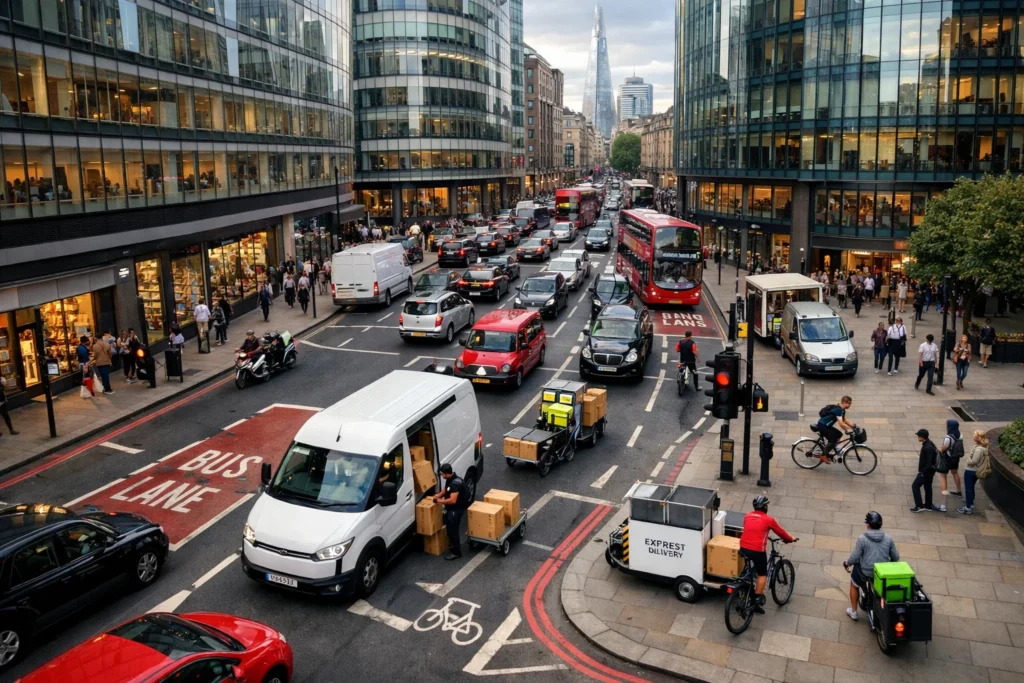
Urban freight operations face structural constraints that affect efficiency, costs, and sustainability. The pressure on city transport systems continues to increase every year.
Rising Urban Congestion
Delivery vehicles compete with private cars, buses, and taxis for limited road capacity. This congestion increases delivery times and fuel consumption.
Key congestion drivers include:
- Growth in e-commerce deliveries
- Roadworks and infrastructure upgrades
- Limited urban road capacity
- Increased ride-hailing and taxi services
Environmental Regulations
UK cities enforce strict emissions rules to reduce air pollution. London’s ULEZ charges £12.50 per non-compliant vehicle daily, while Birmingham and Bath operate Clean Air Zones.
These policies directly affect urban freight operations. Companies must transition to cleaner fleets or pay daily charges.
Environmental requirements shaping urban logistics include:
- Low-emission delivery vehicles
- Carbon reporting for logistics operations
- Restricted delivery hours in city centres
- Noise regulations for night deliveries
Key Strategies Improving Urban Logistics
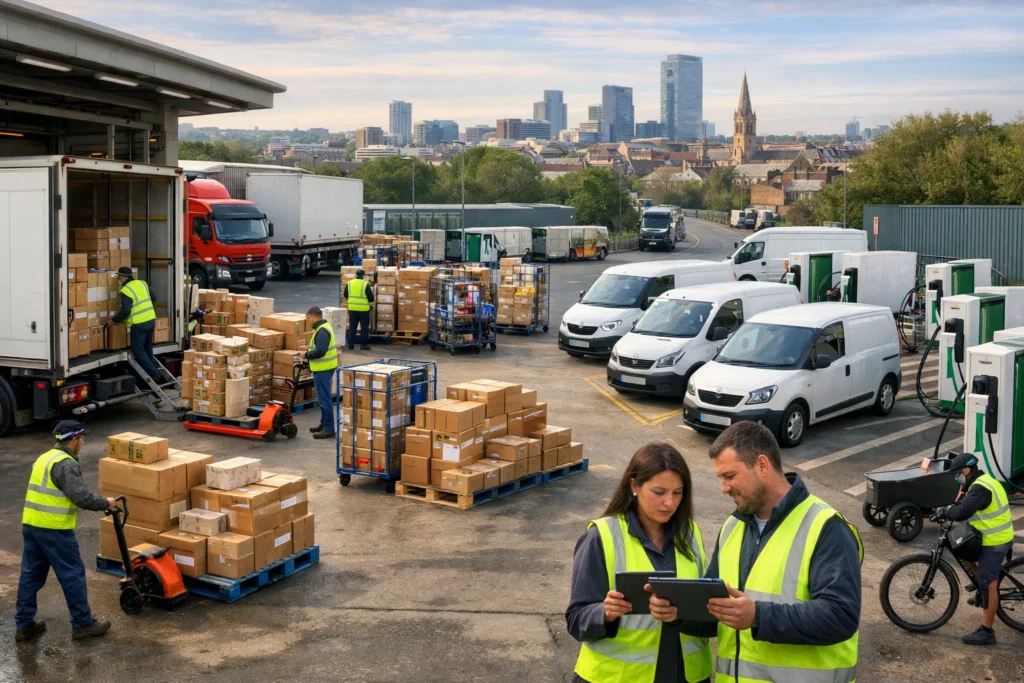
Businesses are adopting several strategies to make city deliveries more efficient and sustainable.
Urban Consolidation Centres
Urban consolidation centres (UCCs) reduce delivery traffic inside cities. Goods arrive at a central hub outside the city before smaller vehicles deliver them locally.
This model improves efficiency by combining shipments from multiple suppliers.
Benefits of consolidation centres include:
- Reduced vehicle trips into city centres
- Lower emissions and fuel consumption
- Improved delivery scheduling
- Better use of electric delivery vehicles
London has tested several consolidation hubs serving retail districts and construction sites.
Electric Delivery Fleets
Electric vans and cargo bikes are rapidly expanding in UK cities. The UK government aims to end sales of new petrol and diesel vans by 2035.
Many logistics companies now deploy electric fleets for last-mile deliveries.
Advantages include:
- Zero tailpipe emissions
- Lower operating costs per mile
- Reduced noise for night deliveries
- Compliance with Clean Air Zone rules
Major operators like Royal Mail and DHL already operate thousands of electric delivery vehicles.
Smart Technology in Urban Delivery Systems
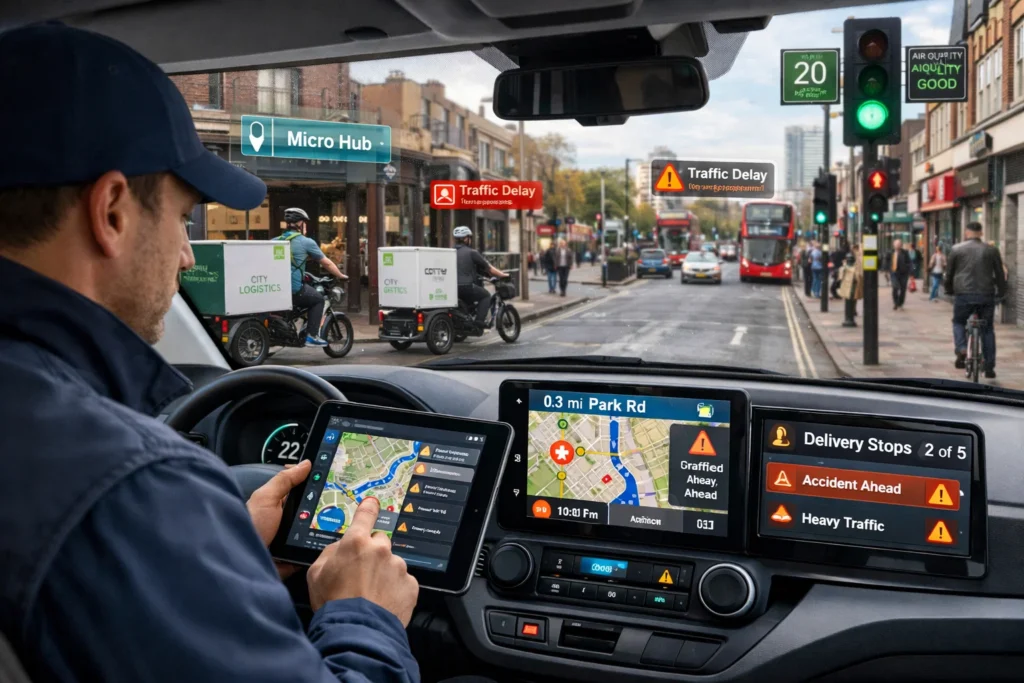
Digital technology is transforming how Urban Logistics in the UK operates. Advanced data systems help companies manage complex city deliveries more efficiently.
Route Optimisation Software
Modern logistics platforms analyse real-time traffic, delivery windows, and road restrictions.
These systems reduce travel time and improve delivery accuracy.
Typical benefits include:
- Up to 20% reduction in delivery miles
- Faster route adjustments during congestion
- Improved vehicle utilisation
- Lower fuel consumption
Digital route planning also supports electric fleet operations by monitoring battery range and charging needs.
Micro-Distribution Hubs
Micro-hubs located within cities allow companies to store goods closer to customers. Small vehicles or cargo bikes then complete final deliveries.
These hubs shorten delivery distances and reduce traffic impact.
Examples of micro-hub benefits include:
- Faster same-day deliveries
- Reduced congestion in busy areas
- Better use of sustainable transport options
- Improved urban freight efficiency
Market Growth Urban Logistics in the UK
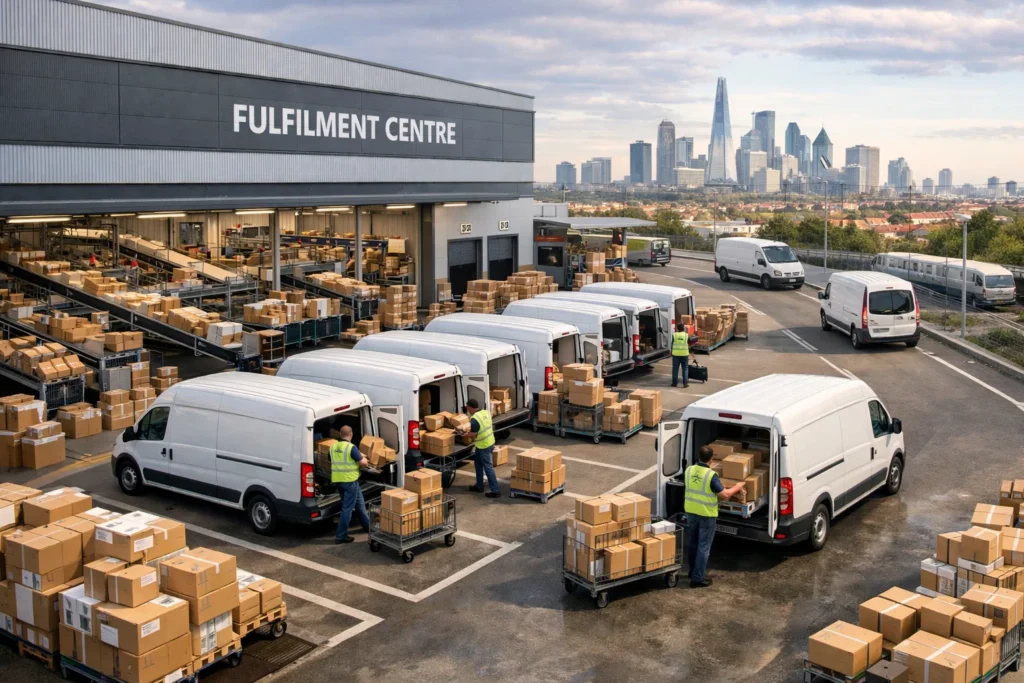
The urban logistics sector continues to expand rapidly due to online retail growth and changing consumer expectations.
The UK urban logistics market exceeded £14 billion in 2025 and is projected to grow steadily through 2030.
Key Growth Drivers
Urban logistics demand is rising due to several market factors:
- Growth of same-day delivery services
- Expanding urban populations
- Increased online shopping activity
- Retail shift toward fulfilment-centre distribution
These drivers require logistics companies to invest in infrastructure, technology, and cleaner vehicles.
Urban Logistics Market Overview
| Metric | Data (2025) |
|---|---|
| UK urban logistics market size | £14.2 billion |
| Annual e-commerce sales | £148 billion |
| Urban freight traffic share | 15–20% of city traffic |
| Emissions from urban freight | ~30% of transport emissions |
| Average congestion delay (London) | 99 hours per driver annually |
Policy and Collaboration in Urban Freight
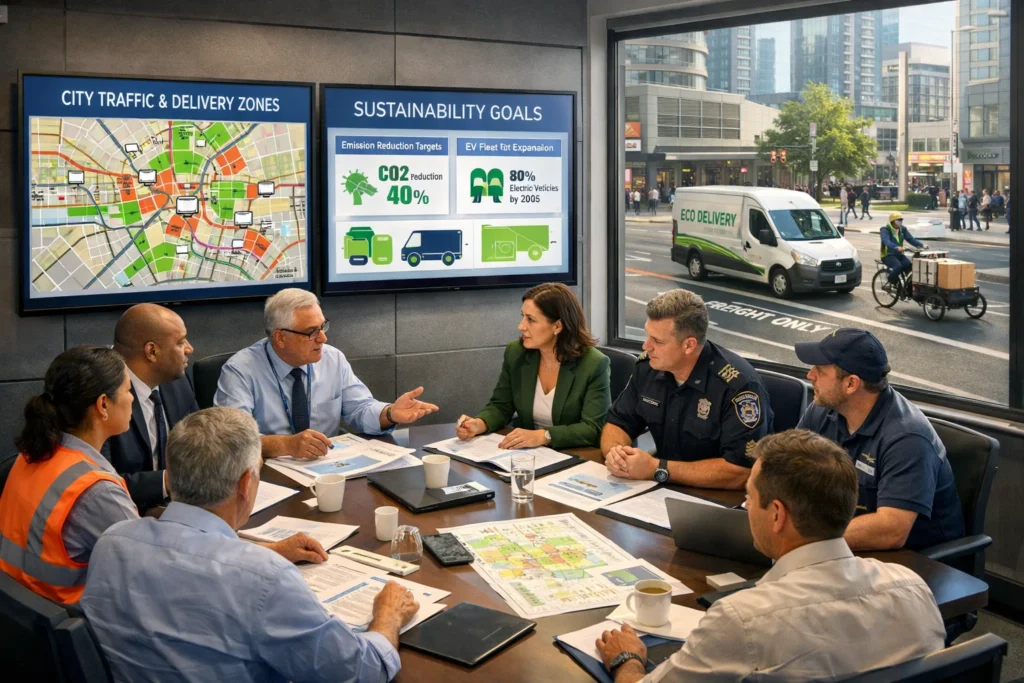
Government agencies and industry organisations are working together to improve Urban Logistics in the UK.
The industry body Logistics UK promotes sustainable freight planning through its Urban Logistics programme.
Public-private partnerships help cities design freight strategies that balance economic activity with environmental goals.
Examples of Urban Freight Initiatives
Several UK programmes are shaping the future of city logistics:
- London Freight Lab innovation programme
- Consolidation hubs for construction logistics
- Cargo bike delivery networks
- Smart kerbside management systems
Bottom Line
Urban Logistics in the UK sits at the centre of modern city supply chains. Rapid e-commerce growth and strict environmental regulations have transformed how companies manage urban deliveries. Congestion, emissions limits, and limited infrastructure now require smarter logistics planning.
Businesses increasingly rely on consolidation centres, electric fleets, and advanced routing software to maintain delivery efficiency. These solutions reduce traffic impact while meeting sustainability targets.