
Table of Contents
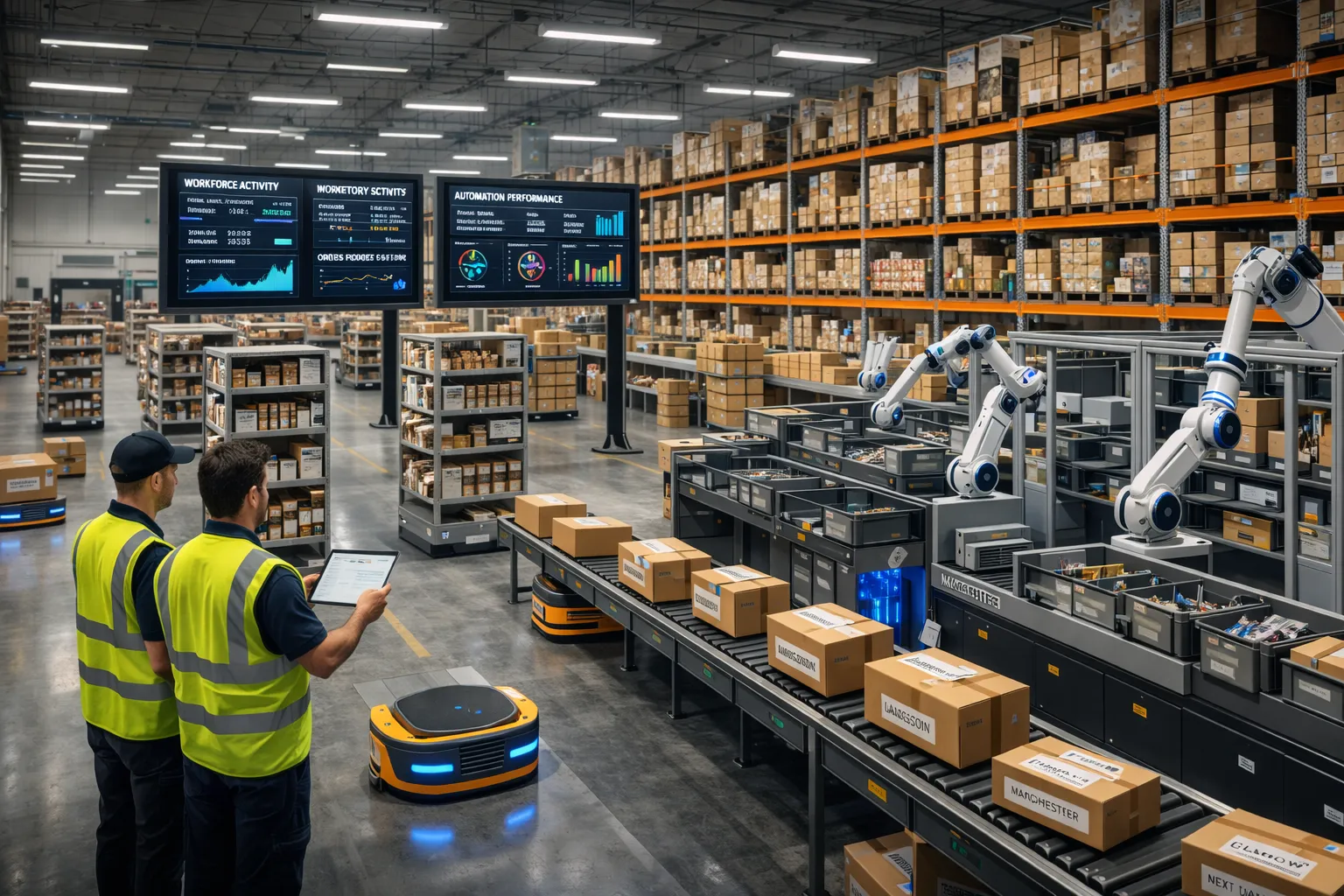
Warehouse Automation in the UK is rapidly reshaping logistics operations across Britain. Warehouses now rely on robotics, artificial intelligence, and smart fulfilment systems to handle rising e-commerce demand. In 2026, the UK logistics sector processes more than 4.4 billion online orders annually, according to data from the UK Office for National Statistics. Manual operations alone cannot meet this scale efficiently.
Automation allows warehouses to move goods faster, reduce labour shortages, and improve accuracy. Technologies such as robotic picking systems, automated storage and retrieval systems (AS/RS), and intelligent warehouse management software now support daily operations. According to Logistics UK, automation can reduce picking errors by up to 99.9% and increase fulfilment speed by 300% in high-volume facilities.
British logistics hubs in Birmingham, Manchester, London Gateway, and the Midlands’ “Golden Triangle” increasingly adopt these technologies. Retail giants, grocery chains, and third-party logistics providers lead the transformation. Companies are investing millions to modernise fulfilment centres and distribution warehouses.
This guide explains how Warehouse Automation in the UK works, which technologies lead the industry, and how robotics is shaping the future of fulfilment operations.
The Rise of Warehouse Automation in the UK
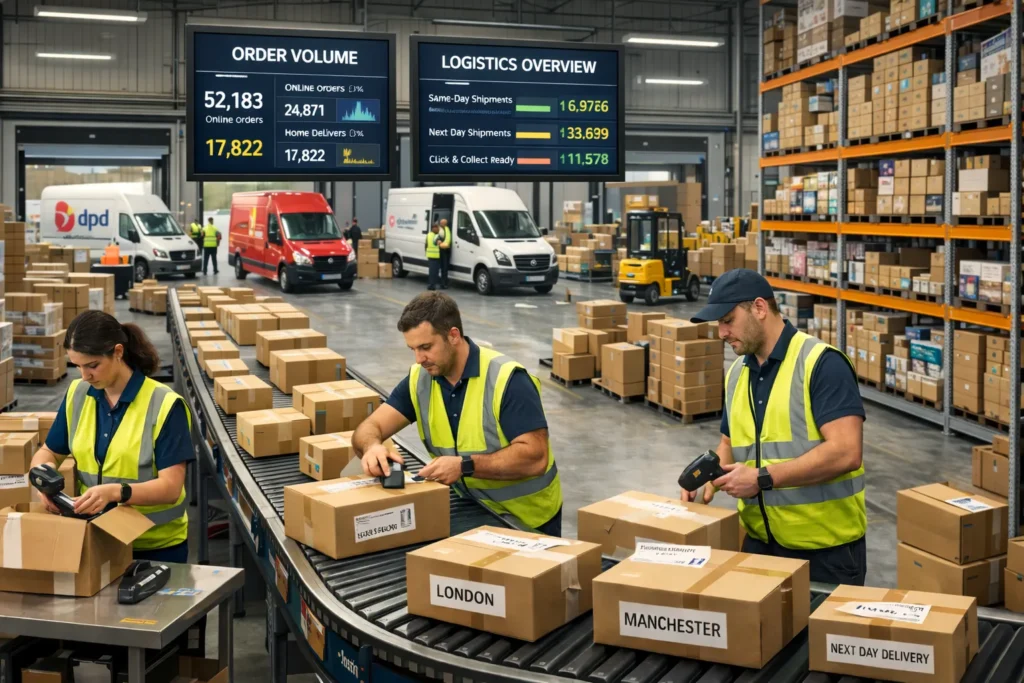
The demand for Warehouse Automation in the UK systems has grown dramatically since the pandemic-driven e-commerce boom. UK online retail sales reached £128.6 billion in 2025, representing 29% of total retail sales, according to the Office for National Statistics. Warehouses must now process thousands of orders every hour to remain competitive.
Automation helps operators handle this surge without significantly increasing labour costs. Robotics, conveyor sorting systems, and AI-powered warehouse management software optimise workflows. These tools reduce manual handling while increasing operational speed and accuracy.
Key Drivers Behind Automation Adoption
Several structural trends push UK warehouses toward automation technologies.
• Labour shortages across logistics and transport sectors.
• Rising same-day and next-day delivery expectations.
• Increased warehouse rents and operating costs.
• Greater need for inventory visibility and accuracy.
Automation provides a practical solution to these challenges. Robots and intelligent systems perform repetitive tasks efficiently while human workers manage complex decision-making roles.
UK Logistics Growth and Automation Demand
The UK logistics market continues to expand rapidly.
| Metric | UK Logistics Data (2026) |
|---|---|
| UK warehousing space | 695 million sq ft |
| E-commerce orders yearly | 4.4 billion |
| Average warehouse worker shortage | 8% across sector |
| Automation investment growth | 14% annually |
Robotics Transforming Smart Fulfilment Centres
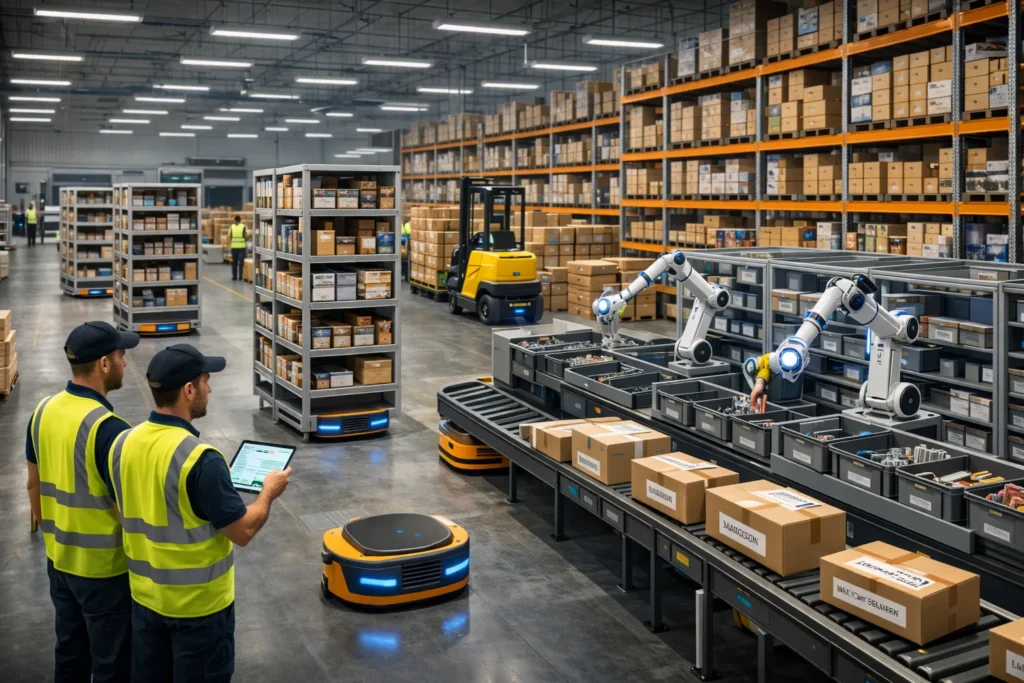
Robotics now plays a central role in Warehouse Automation in the UK operations. Modern fulfilment centres deploy mobile robots, robotic picking arms, and autonomous forklifts to streamline workflows. These machines operate continuously with minimal downtime.
Many UK warehouses use Autonomous Mobile Robots (AMRs) to move inventory across fulfilment zones. These robots transport shelves, pallets, or individual bins between storage areas and picking stations. Workers no longer walk miles daily across large facilities.
Common Warehouse Robots in the UK
Several robotic technologies dominate automated warehouses.
• Autonomous Mobile Robots (AMRs).
• Automated Guided Vehicles (AGVs).
• Robotic picking arms with AI vision.
• Autonomous pallet movers.
These systems integrate with warehouse management software to coordinate tasks efficiently. Robots receive instructions automatically and adjust routes in real time.
Efficiency Gains from Robotics
Robotics significantly improves operational productivity.
• Picking speeds increase by 2–3 times compared with manual operations.
• Warehouse travel time reduces by up to 70%.
• Order accuracy improves to 99.9%.
• Labour productivity increases by 25–40%.
These performance improvements explain why robotics adoption continues to accelerate across the UK logistics sector. Fulfilment centres increasingly combine robotics with human supervision to maximise operational efficiency.
Smart Technologies Powering Automated Warehouses
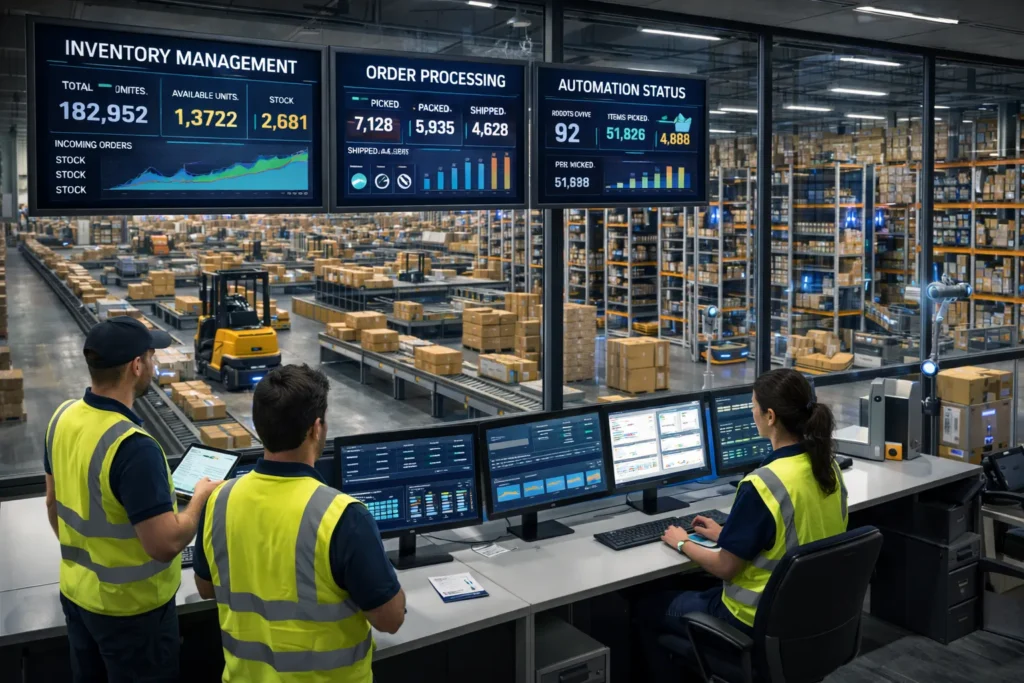
Automation extends beyond robotics. Warehouse Automation in the UK also relies on advanced digital technologies that coordinate operations in real time. These systems ensure inventory accuracy, order routing, and workforce optimisation.
Warehouse Management Systems (WMS) now integrate artificial intelligence and predictive analytics. Managers gain real-time insights into stock levels, equipment usage, and fulfilment performance. Smart dashboards allow faster operational decisions.
Core Technologies Behind Warehouse Automation
Several technologies form the foundation of automated warehouses.
• AI-powered Warehouse Management Systems.
• Automated Storage and Retrieval Systems (AS/RS).
• Conveyor sorting systems.
• Internet of Things (IoT) sensors.
These tools collect and process large volumes of operational data. Managers use this information to optimise storage layouts and improve order fulfilment speed.
Automated Storage Systems Explained
Automated Storage and Retrieval Systems maximise vertical warehouse space. Robotic shuttles move through racking systems to retrieve items automatically.
AS/RS technology delivers several advantages.
• Storage density increases by 40–60%.
• Picking accuracy improves significantly.
• Inventory tracking becomes fully digital.
• Labour requirements decrease.
These systems allow warehouses to store more goods in smaller footprints. This benefit is crucial because UK warehouse space remains expensive and limited.
Benefits of Warehouse Automation in the UK for Businesses
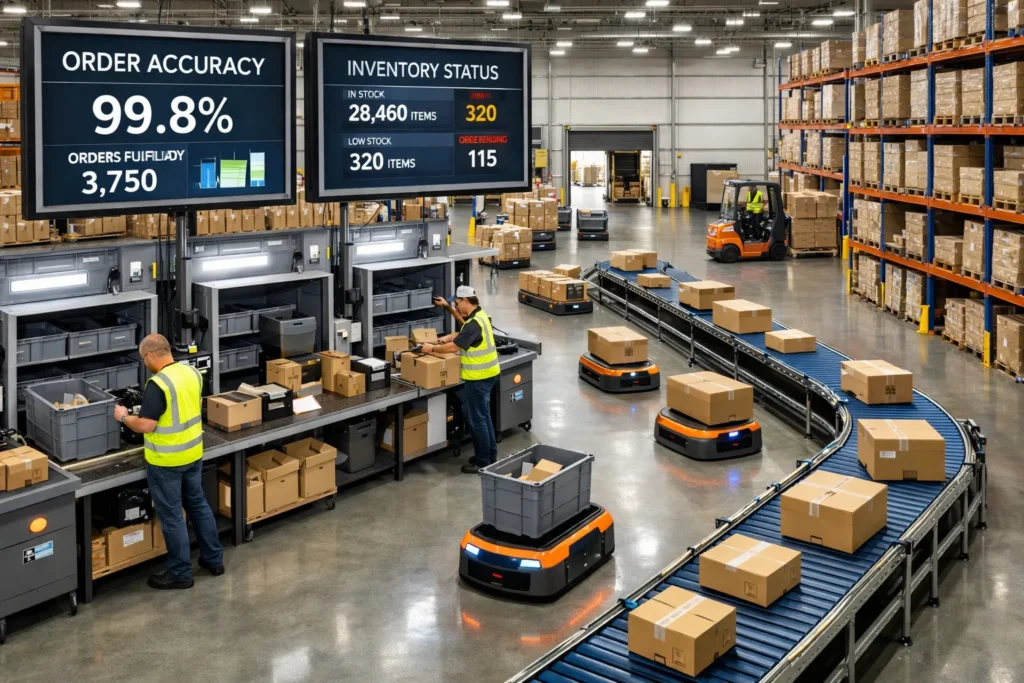
Businesses adopt Warehouse Automation in the UK primarily to increase efficiency, reduce costs, and meet modern delivery expectations. Automated facilities operate faster while maintaining consistent performance levels.
Automation also improves workplace safety. Robots handle heavy lifting and repetitive tasks that traditionally caused injuries or fatigue. Human workers focus on supervision, quality control, and system management roles.
Operational Advantages
Warehouse automation provides measurable improvements across several operational areas.
• Faster order processing times.
• Reduced fulfilment errors.
• Lower labour dependency.
• Better inventory visibility.
These advantages allow companies to scale operations without dramatically increasing workforce size. Automation also helps maintain consistent service levels during peak demand periods.
Cost Savings from Automation
Automation reduces long-term operational costs.
| Cost Category | Manual Warehouse | Automated Warehouse |
|---|---|---|
| Picking accuracy | 95–97% | 99.9% |
| Average order time | 30 minutes | 8–12 minutes |
| Labour dependency | High | Moderate |
| Storage density | Standard | 40–60% higher |
Although automation requires upfront investment, the long-term savings often justify the expense. Many warehouses recover automation costs within 3–5 years, depending on operational scale.
Challenges and Future Outlook for Warehouse Automation in the UK
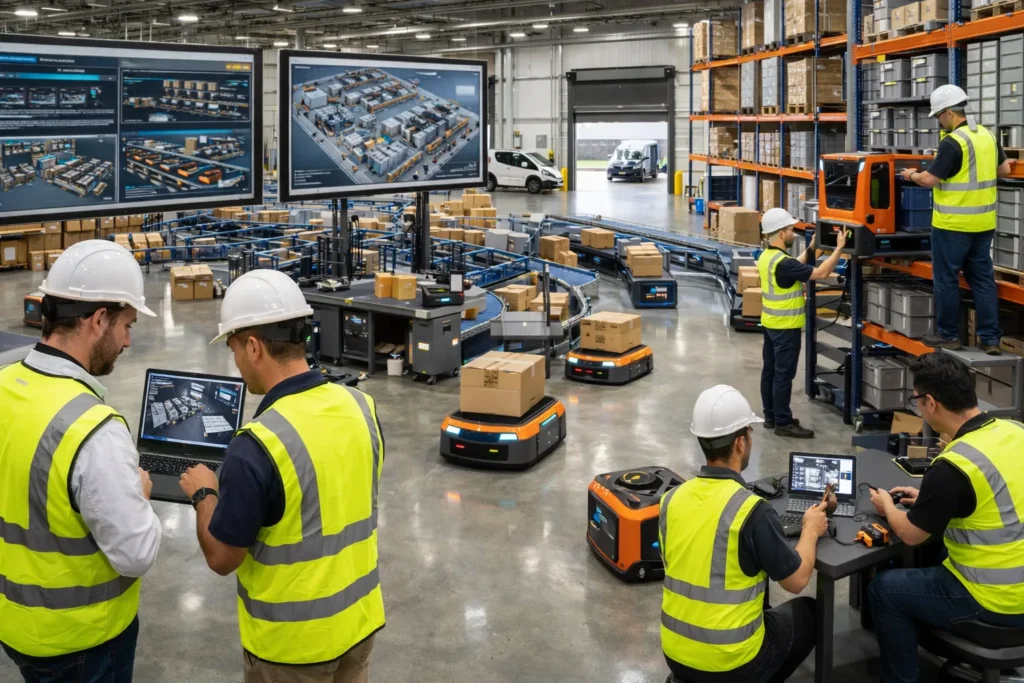
Despite its advantages, Warehouse Automation in the UK adoption still faces practical challenges. High initial investment remains the most significant barrier. Fully automated fulfilment centres may cost £5 million to £50 million, depending on facility size and complexity.
Integration with existing warehouse infrastructure also requires careful planning. Older buildings may need structural modifications to support automated systems. Skilled technicians are necessary to maintain robotics and software platforms.
Key Challenges
Automation projects often encounter several operational hurdles.
• High capital investment requirements.
• Integration with legacy warehouse systems.
• Staff training and change management.
• Ongoing maintenance costs.
Future Trends in UK Warehouse Automation
Several emerging technologies will shape the next phase of warehouse automation.
• AI-powered robotic picking improvements.
• Fully autonomous warehouse fleets.
• Digital twin warehouse simulations.
• Sustainable electric robotics systems.
Industry analysts expect automation adoption to accelerate across smaller warehouses and regional distribution centres. The UK logistics sector will likely see automation penetration exceed 45% by 2030.
Bottom Line
Warehouse Automation UK is transforming how goods move through Britain’s logistics network. Robotics, intelligent software, and automated storage systems now enable faster and more accurate fulfilment. These technologies help warehouses manage the massive growth in online retail orders.
Automation improves productivity, reduces operational errors, and lowers long-term costs. Warehouses also gain better inventory visibility and safer working environments. These advantages make automation increasingly attractive for logistics operators.