

Table of Contents
Over recent years, the nature of the load on server infrastructure has changed fundamentally. Where CPU, memory, and networking were once the primary bottlenecks, GPUs are now increasingly playing a central role. Online gaming, streaming, rendering, machine learning, and data analytics all require high levels of parallel performance and predictable behavior from compute resources.
Against this backdrop, the GPU has become a full-fledged component of server architecture, directly influencing service quality, data processing speed, and the stability of operational workflows. This is especially evident in scenarios where workloads are continuous and sensitive to latency.
GPU dedicated hosting, including configurations built around a hosted GPU server, emerged in response to these demands. Rather than prioritizing maximum flexibility at any cost, it focuses on control, resource isolation, and stable performance. As a result, GPU infrastructure is no longer an experimental add-on, but a foundational element for gaming and computational platforms.
How workloads in gaming and computational systems have changed
Even in gaming, GPUs are no longer used solely for rendering. They are increasingly involved in video processing, streaming, simulations, and auxiliary services. In computational workloads, the shift is even more pronounced. Machine learning models, big data analytics, visualization, and scientific computing require prolonged and stable access to GPU resources without performance degradation.
The key changes can be summarized as several factors:
- growth of workloads with a high degree of parallelism;
- longer and more continuous computation cycles;
- sensitivity to performance fluctuations;
- The need for strict resource isolation between workloads.
Under these conditions, approaches based on shared GPUs or fully ephemeral resources begin to introduce limitations that are difficult to compensate for at the application level.
GPUs are significantly more sensitive to resource sharing than CPUs. Even limited contention for compute units or memory can lead to noticeable performance drops and unstable task execution times. GPU dedicated hosting addresses this issue by fully allocating a graphics accelerator to a specific workload.
What GPU dedicated hosting means in practice
GPU dedicated hosting is a deployment model in which one or more graphics accelerators are fully assigned to a specific project or task and are not shared with other clients or workloads. In this setup, the GPU, video memory, drivers, and related compute resources are used exclusively by a single system.
This is not simply about having a GPU installed in a server. The defining characteristic is the absence of resource contention at the accelerator level. All compute units, memory, and bandwidth are available in a fixed and predictable capacity.
GPU dedicated hosting can be deployed in traditional data centers, hybrid models, or within cloud infrastructure. The decisive factor is not the deployment format, but the degree of isolation and control over the graphics accelerator.
How GPU dedicated hosting differs from alternatives
In practice, GPU infrastructure is typically implemented in several formats, each with its own limitations.
The main approaches include:
- shared GPU, where a single accelerator is divided between multiple tasks or clients;
- cloud GPU instances with dynamic resource allocation;
- GPU dedicated hosting with full assignment of the accelerator to a single workload.
Shared GPU lowers the entry cost but introduces unpredictability. Performance can fluctuate depending on the activity of neighboring workloads, which is critical for long-running or time-sensitive processes.
Cloud GPU instances provide flexibility and rapid scaling, but often suffer from performance variability, runtime limitations, and complex cost models under sustained load.
GPU dedicated hosting stands apart by allowing accelerator characteristics to be fixed in advance and system architecture to be built around stable parameters rather than averaged expectations.
GPU dedicated hosting for gaming workloads
Within gaming platforms, GPUs are increasingly used beyond traditional client-side rendering. Modern gaming services shift a significant portion of visual and computational tasks to server infrastructure, making graphics accelerators a critical component of backend architecture.
GPU dedicated hosting makes it possible to build a stable environment for these scenarios by eliminating the impact of external workloads and ensuring predictable service behavior under sustained load.
Server-side rendering and cloud gaming
Cloud gaming and server-side rendering impose some of the most demanding requirements on GPU infrastructure. Latency, unstable performance, or degradation in image quality are directly felt by the end user.
Dedicated GPUs make it possible to:
- maintain a stable frame rate on the server;
- minimize latency during video processing and encoding;
- deliver consistent streaming quality across sessions;
- avoid performance drops when multiple users are active simultaneously.
In these systems, GPU predictability is more important than peak performance, as even brief disruptions are noticeable to players.
Supporting game servers and auxiliary services
While traditional game servers are primarily CPU-oriented, an increasing number of auxiliary components rely on GPUs. These may include video processing, anti-cheat mechanisms, simulations, or player behavior analytics.
GPU dedicated hosting allows such workloads to be isolated from core game servers, ensuring that compute-intensive tasks do not compete for resources with other services.
Streaming, recording, and video processing
Gaming platforms are increasingly integrating features for recording, replaying, and live streaming of gameplay. These tasks actively use GPUs for video encoding and post-processing.
In a dedicated GPU environment:
- Video encoding is performed at a consistent quality.
- CPU load is reduced.
- scaling of streaming services becomes simpler;
- The impact of unrelated workloads on stream quality is eliminated.
This makes GPU dedicated hosting a logical choice for gaming services that prioritize a stable and consistent visual experience.
GPU dedicated hosting for computational workloads
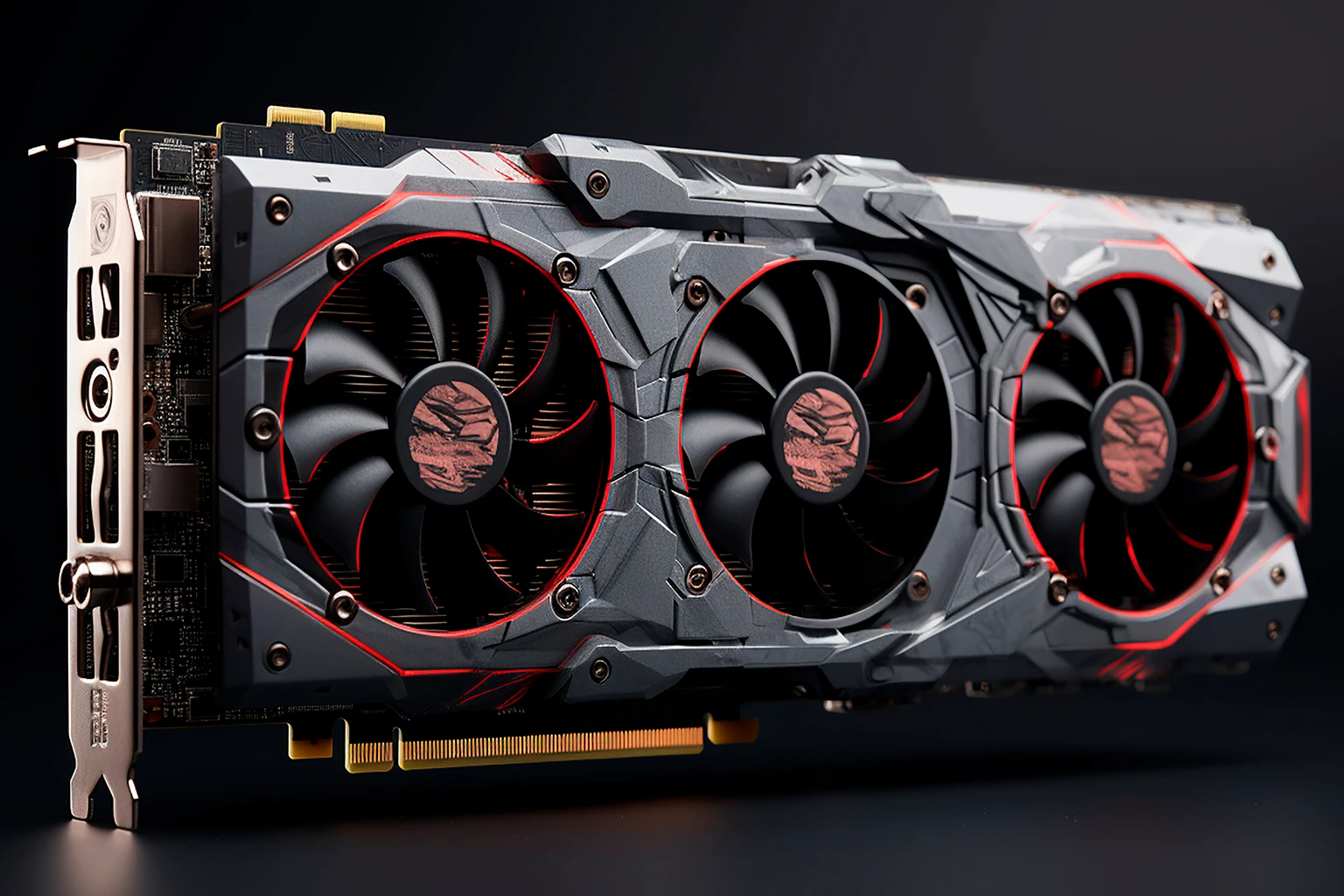
Beyond the gaming industry, GPU dedicated hosting is widely used in computational scenarios where high parallelism, stable performance, and predictable execution times are critical requirements. In such tasks, any fluctuation in available resources directly affects data processing speed and the accuracy of results.
Dedicated GPUs make it possible to build computational pipelines without having to account for external resource contention, which is especially important for long-running and resource-intensive processes.
Machine learning and artificial intelligence
Training and inference for machine learning models require consistent access to GPU resources. Performance instability can increase training time, complicate experiment planning, and distort comparative results.
GPU dedicated hosting makes it possible to:
- run long training sessions without the risk of interruption;
- achieve reproducible results across repeated runs;
- accurately evaluate model architectures and hyperparameters;
- Optimize the use of video memory and compute units.
This is particularly important for teams working with large models and continuous experimentation.
Data analytics and high-performance computing
GPUs are widely used for processing large data sets, visualization, and numerical computation. In these scenarios, stable memory bandwidth and compute throughput are more important than short-term performance peaks.
Dedicated GPUs simplify the design of systems where task execution times can be predicted and incorporated into operational planning, without needing to account for the impact of external workloads.
Rendering, simulations, and visualization
Rendering, physical simulation, and visualization tasks are often executed in batch mode and can run for hours or even days. Any interruptions or resource degradation lead to time loss and inefficient infrastructure usage.
GPU dedicated hosting ensures that computations run in a stable environment, without unexpected stops or performance degradation during execution.
Predictable performance as a core advantage
For both gaming and computational workloads, maximum peak GPU performance is less important than stability over time. When an accelerator operates in a dedicated environment, its behavior can be accurately predicted and incorporated into architectural and operational decisions.
GPU dedicated hosting removes the primary source of uncertainty — resource contention. This makes it possible to design systems based on actual performance characteristics rather than averaged expectations, and to avoid situations where real execution times deviate significantly from projections.
Predictability is especially important for:
- long-running computations and training sessions;
- real-time services with latency sensitivity;
- systems where workloads are planned;
- projects with strict SLA requirements for service quality.
In these scenarios, GPU stability becomes not a technical bonus but a prerequisite for reliable operation.
Scaling without quality degradation
Scaling GPU workloads differs significantly from scaling CPU-based services. GPU tasks are often difficult to partition and are sensitive to delays caused by context switching or resource reallocation.
GPU dedicated hosting enables controlled scaling by adding new accelerators or servers without affecting processes that are already running. This is particularly important for systems where workloads are continuous and cannot tolerate interruptions.
Unlike dynamic models with shared GPUs, this approach reduces the risk of performance degradation as load increases and simplifies infrastructure expansion planning.
Cost control under sustained workloads
With long-running and stable workloads, the cost of GPU infrastructure becomes a critical factor. In hourly or dynamically priced models, expenses can grow disproportionately to actual utilization.
GPU dedicated hosting offers a more transparent cost model. Fixed configurations and predictable resource usage make it easier to estimate budgets accurately and align expenses with the actual utilization of accelerators.
Security and isolation of GPU workloads
When working with GPUs, tasks often process sensitive data game sessions, user-generated content, machine learning models, or computational results. In such environments, isolation becomes just as important as performance.
GPU dedicated hosting provides both physical and logical isolation of accelerators. When a GPU is fully assigned to a single system, access by external processes to video memory, compute streams, and the internal state of the accelerator is eliminated.
This simplifies the implementation of security measures:
- access control for GPUs and related drivers;
- hardware-level data isolation;
- auditing and monitoring of resource usage;
- compliance with internal and external security requirements.
In shared or virtualized environments, achieving a comparable level of control requires additional security layers and significantly complicates the architecture.
Workload separation and operational resilience
Another key advantage of GPU dedicated hosting is clear workload separation. Computational, gaming, and auxiliary processes do not compete for the same accelerator, reducing the risk of cascading failures.
With this approach:
- failures in one workload do not affect other processes;
- issues are easier to isolate and resolve;
- Updates and changes can be deployed independently.
- The system becomes more resilient to peak loads.
For projects that run multiple types of GPU workloads, this separation is critical for operational stability.
Comparison with shared GPU and cloud GPU instances
Choosing a GPU infrastructure model always involves trade-offs between flexibility, cost, and control.
When comparing the main approaches:
- Shared GPUs are suitable for irregular or auxiliary tasks, but suffer from performance variability.
- Cloud GPU instances offer rapid scaling, but can be inefficient under sustained workloads.
- GPU dedicated hosting focuses on stability, isolation, and long-term usage.
As a result, the dedicated model most often prevails in scenarios where predictability and control matter more than instant elasticity. For more insights, check out Industrial Mobility Solutions for Efficient Workspaces.
When GPU dedicated hosting may be excessive

Despite its clear advantages, GPU dedicated hosting is not suitable for every scenario. In some cases, more flexible or simplified models are sufficient and economically justified.
As a rule, dedicated GPUs are not the optimal choice when:
- workloads are irregular or experimental in nature;
- GPUs are used intermittently rather than under constant load.
- Rapid scalability without long-term commitments is the priority.
- The project is at an early stage and is frequently changing its architecture.
In such conditions, shared GPUs or cloud-based GPU instances make it easier to test hypotheses and adapt to evolving requirements.