
Table of Contents
WMS vs TMS is a critical decision for any growing UK logistics firm in 2026. As warehousing costs rise and transport regulations tighten, choosing the right system shapes profitability and compliance. The UK logistics sector employs over 2.7 million people and contributes more than £170 billion to the economy, according to Logistics UK. Digital systems now underpin that scale.
We are operating in a post-Brexit regulatory environment with full customs controls in place since 2024. The UK also enforces updated safety and emissions standards across fleets and warehouses. At the same time, same-day and next-day delivery expectations keep rising. In this context, software is no longer optional. It is infrastructure.
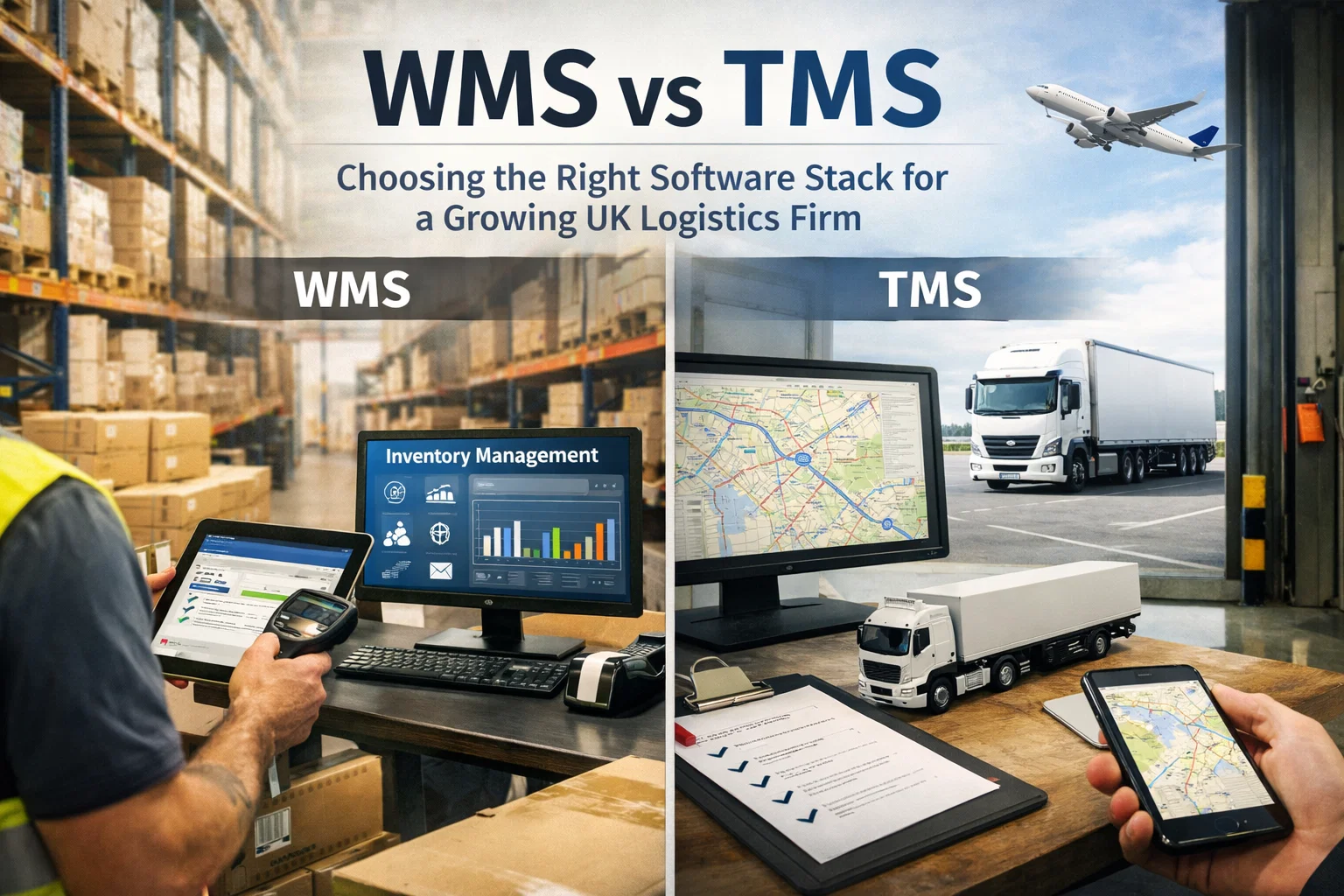
The WMS vs TMS debate centres on operational control. A Warehouse Management System drives stock accuracy and warehouse efficiency. A Transport Management System controls routing, compliance, and freight cost. For growing firms, the right stack ensures legal compliance, lower operating costs, and scalable service delivery.
Understanding WMS vs TMS in the UK
What a WMS Does in a UK Warehouse
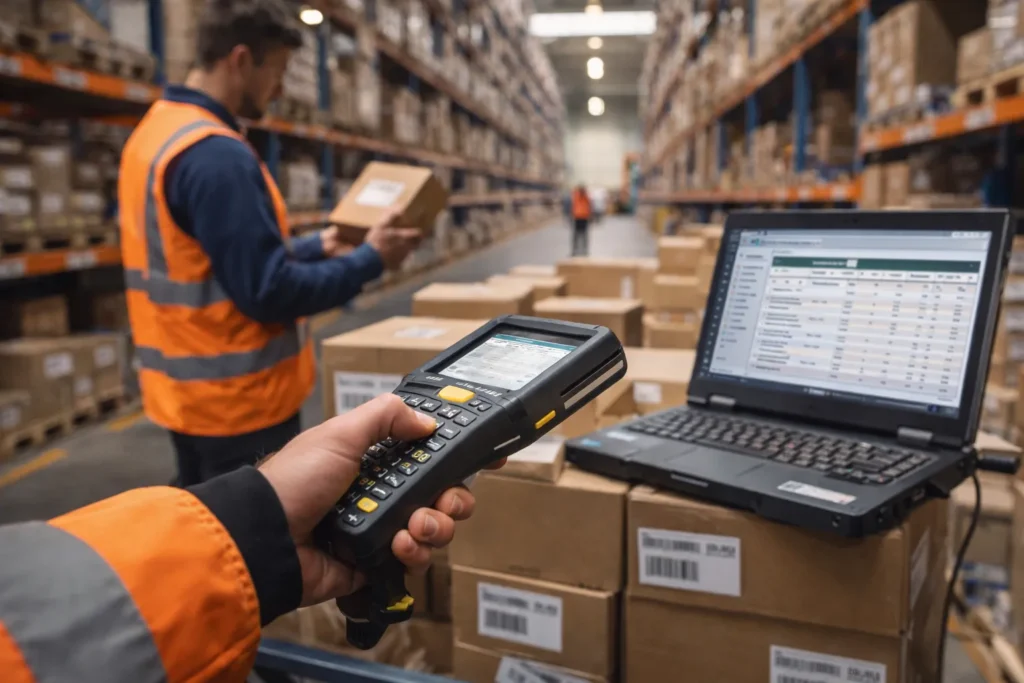
A Warehouse Management System controls inventory, picking, replenishment, and labour management. In the UK, stock accuracy expectations exceed 99.5 percent in modern fulfilment centres. A WMS supports barcode scanning, real-time stock updates, and automated pick routes. These functions reduce errors and protect the margin.
We also see rising warehouse rents across major hubs. According to Savills, prime UK logistics rents rose by 6.7 percent in 2025. When space costs more, stock visibility becomes essential. A WMS improves slotting efficiency and reduces wasted space. That improvement directly lowers the cost per pallet stored.
Compliance is another driver. The Health and Safety Executive enforces strict workplace safety standards. Accurate stock control reduces congestion and accident risk. A WMS supports audit trails and reporting.
What a TMS Does in UK Transport Operations
A Transport Management System manages planning, routing, carrier selection, and freight billing. UK fuel prices averaged 143.2 pence per litre for diesel in January 2026, according to the Department for Energy Security and Net Zero. Fuel volatility makes route optimisation essential.
We also face strict driver regulations. The Driver and Vehicle Standards Agency enforces tachograph rules and working time limits. A TMS integrates compliance checks, reducing penalty risk. Fines for breaches can exceed £300 per offence, which damages reputation and margin.
Carbon reporting is now central. The UK requires large companies to report emissions under Streamlined Energy and Carbon Reporting rules. A TMS tracks vehicle emissions and mileage. That data supports sustainability reporting and tender compliance.
WMS vs TMS: Operational Impact Comparison
Where Each System Adds Measurable Value
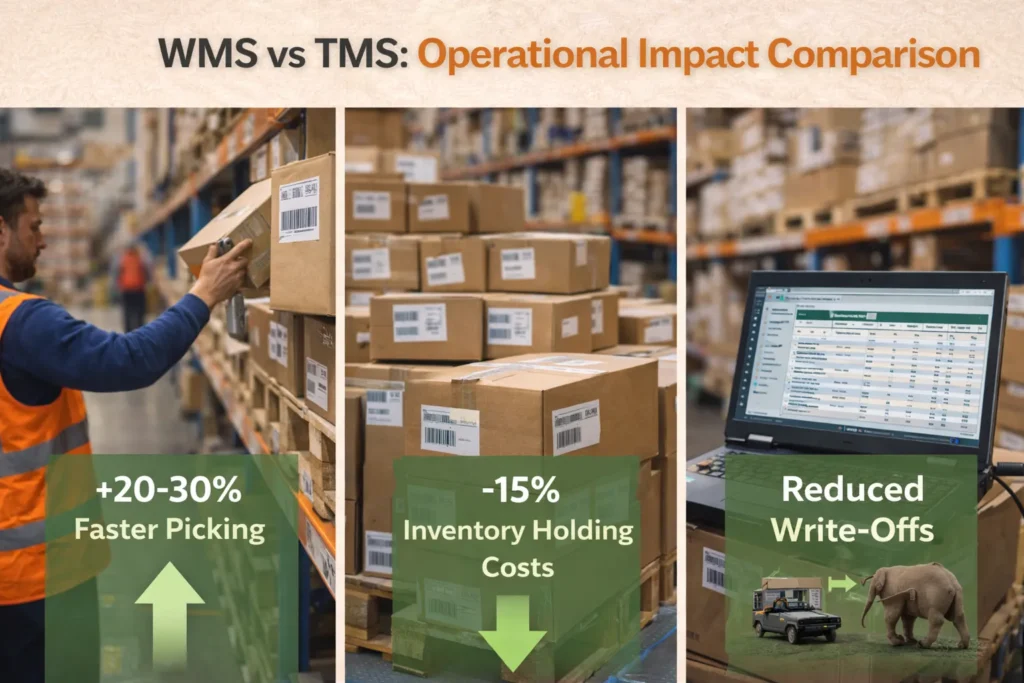
The WMS vs TMS comparison becomes clear when we measure operational impact. Each system solves different bottlenecks.
WMS drives value through:
- 20–30 percent faster picking times with optimised routes.
- 15 percent lower inventory holding costs through accurate forecasting.
- Reduced write-offs from stock discrepancies.
TMS drives value through:
- 8–15 percent lower transport costs via route optimisation.
- Improved on-time delivery above 98 percent.
- Reduced empty miles and better carrier utilisation.
Both systems reduce manual administration. However, they operate at different stages of the supply chain. A WMS controls what happens inside the building. A TMS controls what happens on the road. That distinction clarifies investment priorities.
Quick Comparison Table
| Function Area | WMS | TMS |
|---|---|---|
| Inventory control | Real-time stock visibility | Not core function |
| Picking & packing | Optimised pick paths | Not applicable |
| Route planning | Limited | Advanced route optimisation |
| Driver compliance | No | Yes |
| Freight cost tracking | Limited | Detailed carrier analytics |
| Carbon reporting | Warehouse energy data | Fleet emissions tracking |
This table highlights how WMS vs TMS decisions depend on operational gaps. Don’t miss our recent post about IoT in the Cold Chain.
Integration Strategy for Growing UK Firms
When to Choose WMS First
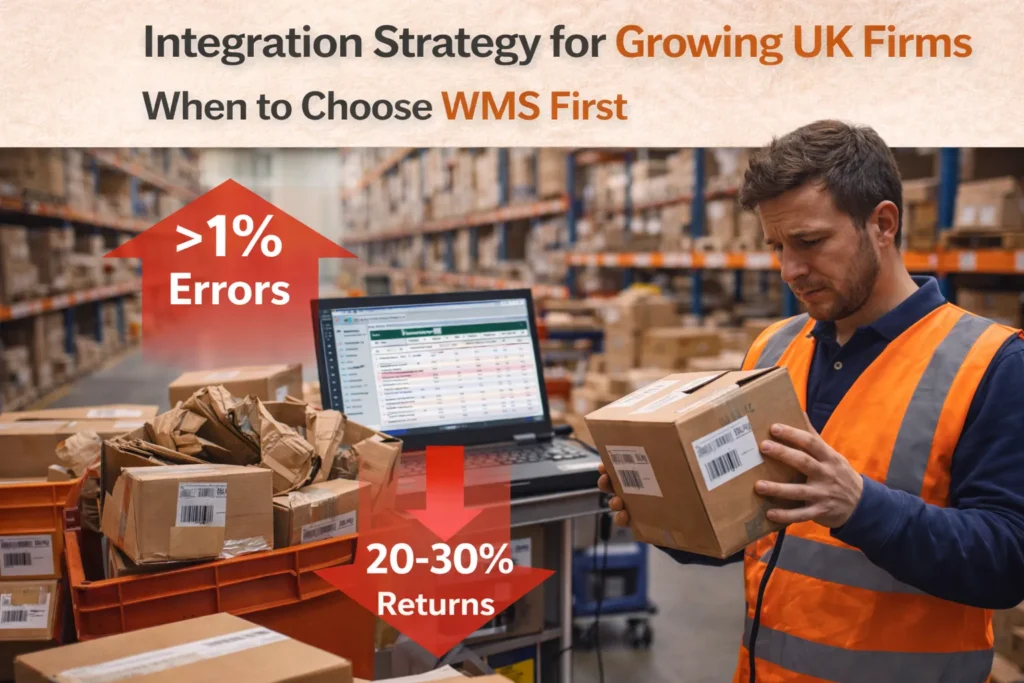
We recommend implementing WMS first when warehouse errors exceed 1 percent. High stock variance increases returns and chargebacks. In e-commerce, return rates in the UK average 20–30 percent. Inventory accuracy directly protects profit.
A WMS is also critical when SKU counts exceed 5,000 items. Manual systems struggle at that scale. Real-time dashboards improve planning and reduce stockouts. That reliability strengthens client confidence.
When to Prioritise TMS
We prioritise TMS when transport represents over 40 percent of operating cost. Many UK road freight operators face tight margins below 5 percent. Route inefficiencies erode that margin quickly.
Cross-border operators also benefit from TMS adoption. Since January 2024, full customs declarations have applied to EU imports. Digital documentation within TMS platforms reduces border delays. That efficiency improves delivery performance and client satisfaction.
Why Integration Matters
The strongest strategy links both systems through ERP integration. When WMS and TMS share data, dispatch aligns with pick completion. That integration reduces dwell time at loading bays.
According to the UK Government’s digital trade strategy published in 2025, supply chain digitisation improves competitiveness. Firms using integrated platforms report faster decision cycles. Integration creates visibility from goods-in to the final mile. You might also like to read our detailed guide on Digital Transformation.
Regulatory and Compliance Considerations in 2026

UK logistics firms operate under evolving compliance rules. The Environment Act 2021 continues shaping waste and emissions reporting. Warehouses must document energy consumption accurately. A WMS supports audit logs and stock traceability.
Transport operators must meet Euro VI emissions standards. Non-compliant vehicles face restrictions in Clean Air Zones, including Birmingham and London. A TMS supports vehicle tracking and compliance reporting.
We also see rising expectations around digital customs data. HM Revenue and Customs requires accurate commodity codes and declarations. Errors cause costly delays. Integrated systems reduce documentation mistakes. Compliance reduces operational risk and protects contracts.
Bottom Line
The WMS vs TMS decision defines how a UK logistics firm scales in 2026. A WMS improves warehouse accuracy, labour efficiency, and space utilisation. A TMS reduces transport cost, ensures regulatory compliance, and strengthens delivery reliability. Both systems solve different operational challenges.
We recommend auditing current cost drivers before investing. If warehouse inefficiencies dominate, prioritise WMS. If fuel, routing, or compliance issues drive losses, prioritise TMS. Ultimately, integration delivers the strongest long-term value.