Table of Contents
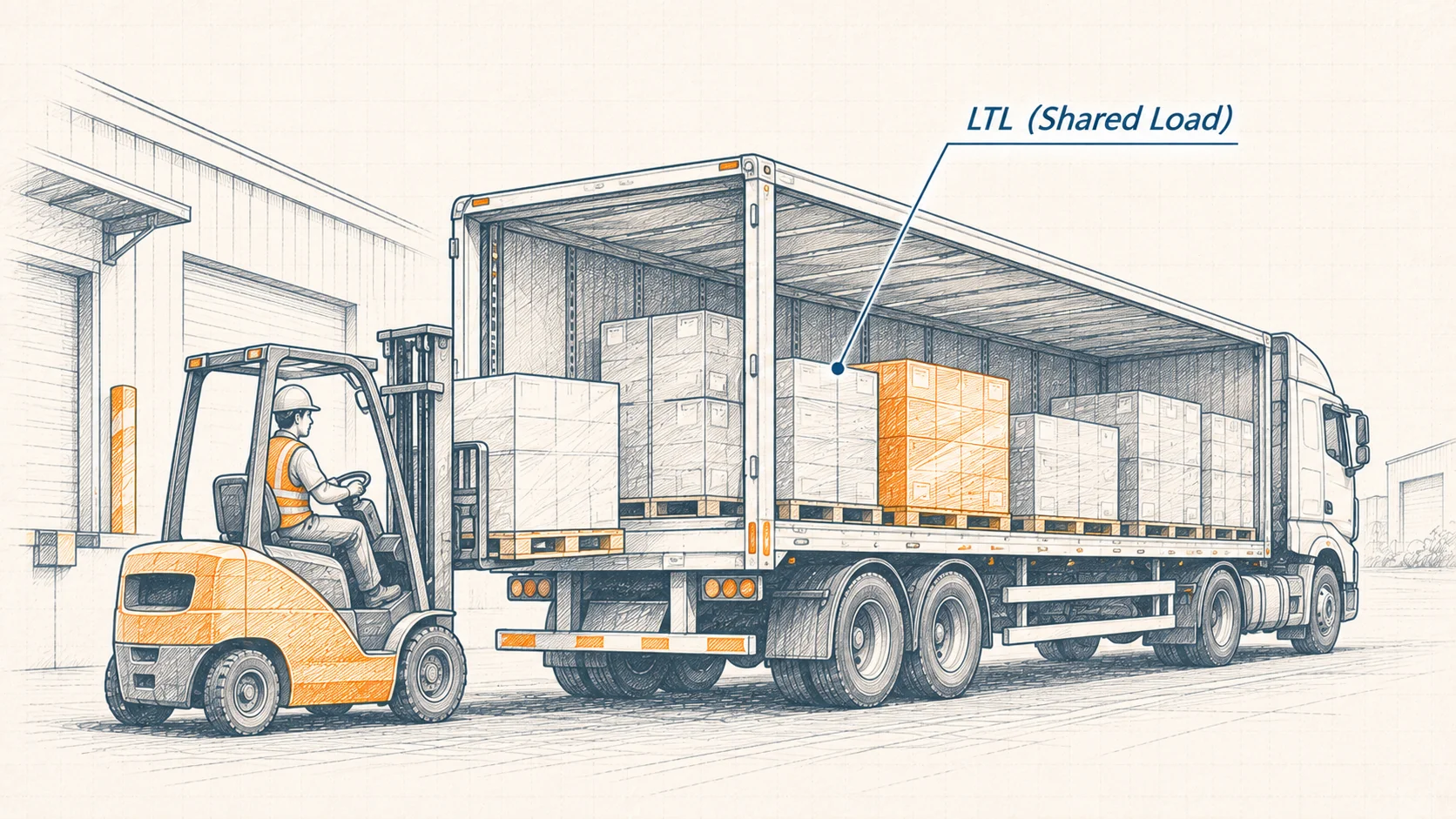
Less-than-truckload (LTL) shipping moves your freight in a trailer that also carries goods from other shippers. Consider it when your goods are better shipped as freight than as separate packages and can share trailer space. To compare quotes, give both providers the same packed dimensions, weight, pickup and delivery details, and any extra services you need.
How does LTL freight move?
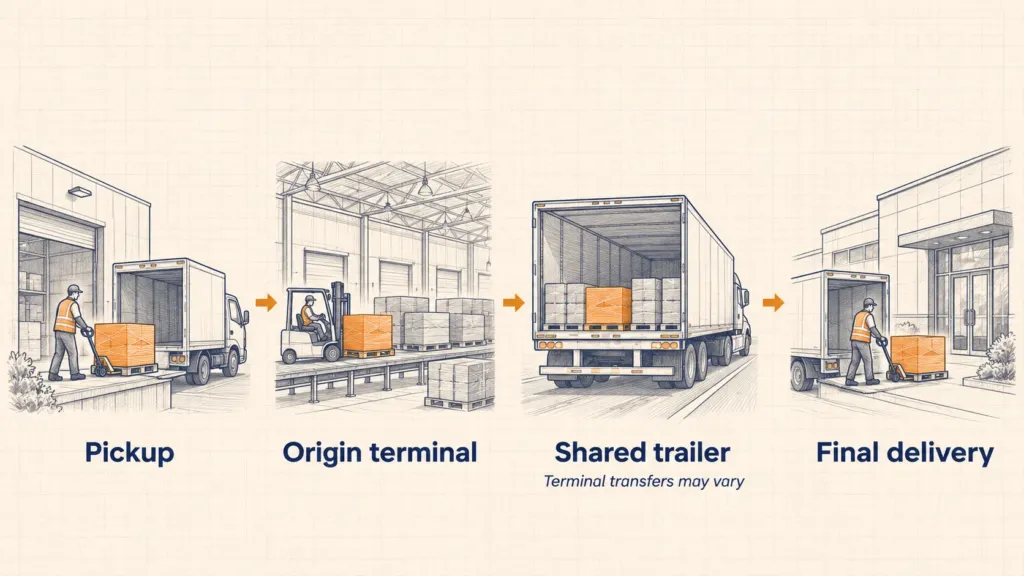
A local driver picks up your freight and takes it to a terminal, where the carrier sorts shipments by destination. Your pallets travel with other freight headed in the same direction. They may move through another terminal before a local truck takes them to the delivery address.
That shared trip lets you ship a small load without booking a trailer just for your goods. It can also mean more transfers along the way. If delivery timing matters, check the carrier’s estimate and ask whether it offers a guaranteed service for your route.
When should you use parcel, LTL, or full truckload?
Start with how the goods need to travel. A few boxes might go by parcel. The same boxes might make more sense on a pallet if you want them handled together. With full truckload (FTL), you book a trailer for your freight even if you leave some space empty.
| Mode | When to price it | What to check |
|---|---|---|
| Parcel | You can ship each packed box on its own. | Each box meets the service’s size and weight limits. |
| LTL | You have pallets or other freight that can share a trailer. | The carrier accepts the packed dimensions and weight. Check how the freight will be loaded and unloaded. |
| Full truckload (FTL) | Your load needs a dedicated trailer because of its size or handling needs. | Confirm the trailer type and loading arrangements at both ends. |
What affects an LTL freight quote?
A US LTL quote starts with the route, what you’re shipping, and the size and weight of the load. Measure and weigh the freight after packing it. Include the pallet and packaging so both providers quote on what they’ll pick up. Measure the widest points of the packed load, including anything that sticks out past the pallet. If the pallets differ in size or weight, list them separately so the provider sees what each one needs.
Some providers ask for freight class, a category used to price freight. The National Motor Freight Classification (NMFC) considers how heavy the freight is for its size, how it fits beside other goods, how it must be handled, and the risk of loss or damage. If the quote requires a class, check the current entry for your goods and the carrier’s rules.
Example of two pallets going to a site with no loading dock
Say you’re sending two pallets of boxed paper goods from a warehouse to a business. In this hypothetical shipment, the warehouse has a dock. The receiver has neither a dock nor a forklift. Enter the same details on both quote forms:
- Pallets: Two packed pallets, each 48 × 40 × 42 inches and 500 pounds, including the pallet and packaging. Enter the dimensions and weight for each pallet and 1,000 pounds as the total.
- Pickup: Use the same origin ZIP code and pickup date. Note that the warehouse has a loading dock.
- Delivery: Use the same destination ZIP code and service level. Request a delivery liftgate on both forms and confirm it can handle each packed pallet’s size and weight.
- Goods: Use the same description on both forms. If the provider asks for freight class, confirm it before submitting.
A delivery liftgate lowers the pallets from the truck bed to ground level. Before booking, confirm how the pallets will move from there and who will move them. Ask whether the carrier will bring a pallet jack and whether moving the freight inside requires a separate service. For example, if the receiver needs the pallets brought through a door, tell both providers where the pallets need to end up. Ask them to include the same agreed delivery service in their quotes.
What to check before pickup and after booking
Before pickup, check that the booking and bill of lading show the services you requested. The bill of lading records what the carrier is picking up and where it’s going. For the example above, check that it lists the delivery liftgate. Give the receiver the delivery details so they can have the agreed equipment or help ready.
Once you have a PRO number, enter it on the carrier’s tracking page. It identifies your freight shipment.
Bottom line
LTL is worth pricing when your freight can share a trailer. Measure it after packing and check how it will be loaded and unloaded before asking for a rate.
Frequently asked questions
Who has the best LTL rates?
Compare the totals for your shipment before you book. Make sure both quotes cover the same service level and delivery needs. Ask whether fuel and any requested extras are included.
What is the least expensive way to ship several heavy boxes?
If each box qualifies for parcel service, compare the total to ship the boxes separately with a quote to send them on one pallet. Include the pallet’s weight and any pickup or delivery fees.
Can my LTL bill be higher than my quote?
Yes. The bill can change if the freight is heavier or larger than you reported or if the carrier provides an extra service missing from the quote. Ask which measurement or service led to the adjustment.
Is FedEx Freight LTL or FTL?
FedEx Freight offers LTL service. Its LTL shipping page explains how to prepare and book a shipment.