
Table of Contents
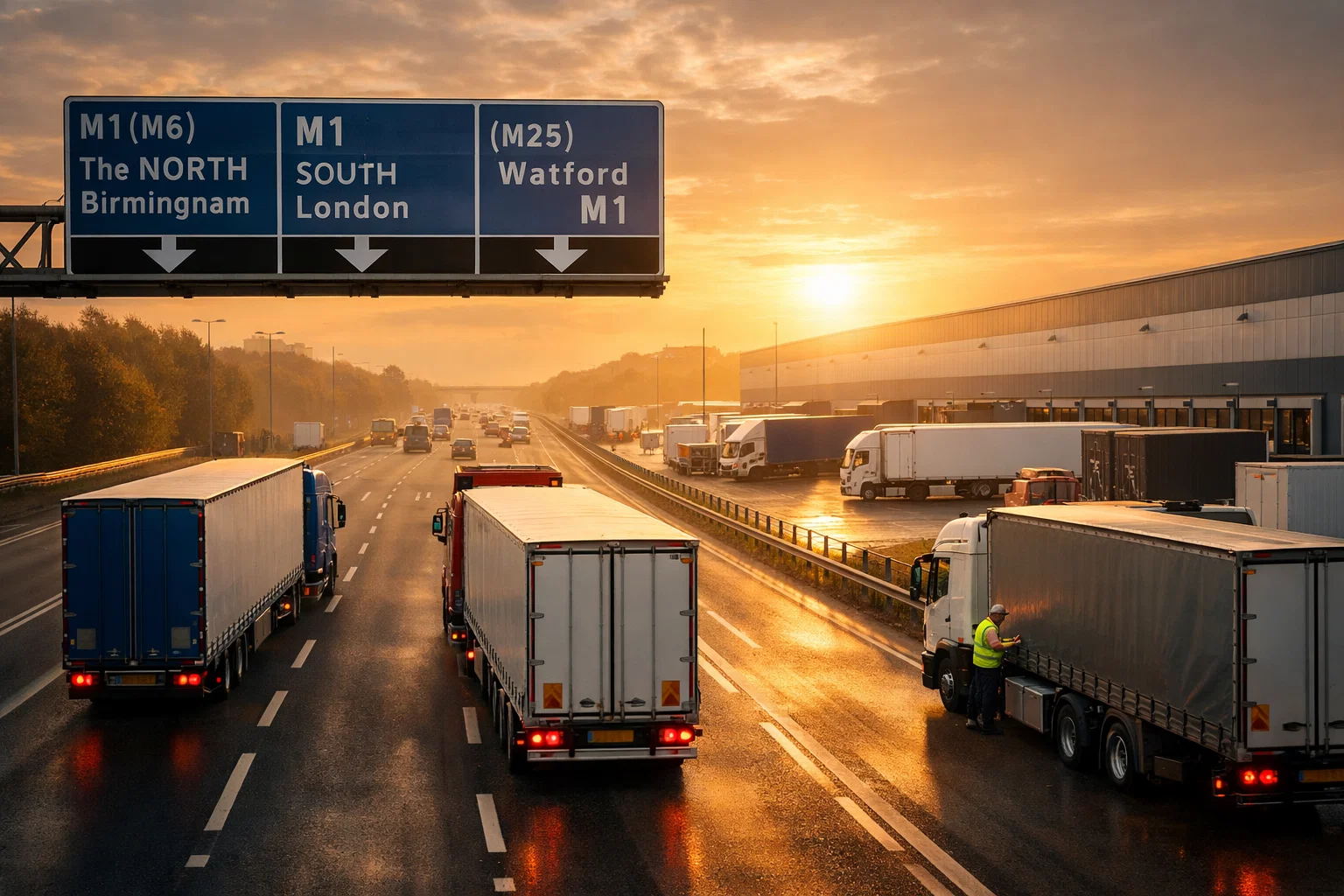
UK Transport and Haulage Operations form the backbone of the British supply chain. Road freight moves more than 1.6 billion tonnes of goods annually across the UK, according to the Department for Transport (DfT). From retail deliveries to construction materials, haulage fleets keep industries operating smoothly. As of 2026, the UK has over 311,000 licensed HGV drivers and around 493,000 registered heavy goods vehicles, reflecting the scale of the logistics sector.
However, running UK Transport and Haulage Operations involves more than moving freight. Operators must manage compliance, rising fuel costs, fleet efficiency, and driver safety regulations. The industry also faces stricter environmental targets, digital fleet monitoring, and increased enforcement of transport regulations. Failure to comply can lead to fines, vehicle impoundment, or licence suspension.
Modern haulage businesses, therefore, rely on structured fleet management systems. These systems help track vehicles, reduce fuel usage, maintain compliance, and improve operational planning. Efficient management can reduce fleet operating costs by 10–15%, according to industry fleet management studies.
Understanding UK Transport Regulations and Compliance
Operator Licensing Requirements
Every company running UK Transport and Haulage Operations must hold a valid Goods Vehicle Operator Licence issued by the Traffic Commissioner. As of 2026, three licence types exist:
- Standard International Licence – permits transport across the UK and Europe.
- Standard National Licence – allows transport within the UK.
- Restricted Licence – for companies moving their own goods.
Operators must prove financial standing. The current requirement is £8,000 for the first vehicle and £4,450 for each additional vehicle. These funds ensure businesses can maintain vehicles safely.
Driver Hours and Tachograph Rules
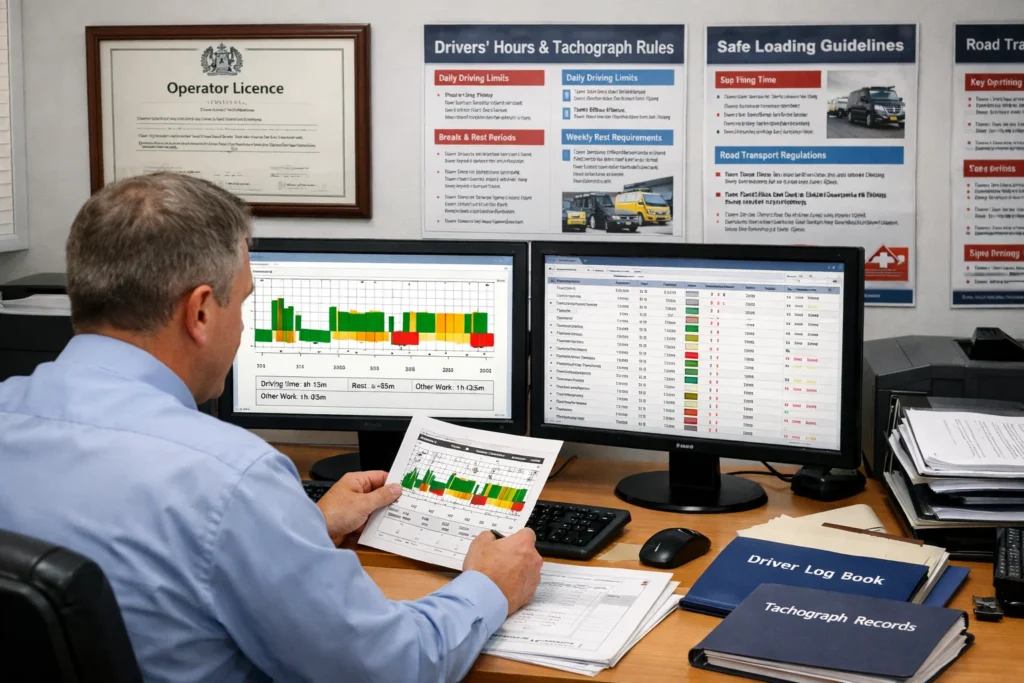
Driver fatigue remains one of the largest safety risks in road transport. UK and EU tachograph regulations strictly control driving hours.
Key rules include:
- Maximum 9 hours driving per day (10 hours twice per week).
- Maximum 56 hours per week driving.
- Minimum 45-minute break after 4.5 hours driving.
- Weekly rest period of 45 hours.
Digital tachographs automatically record these hours. Fleet managers must regularly download and review this data to maintain compliance.
Fleet Management Systems in Modern Haulage
Vehicle Tracking and Telematics
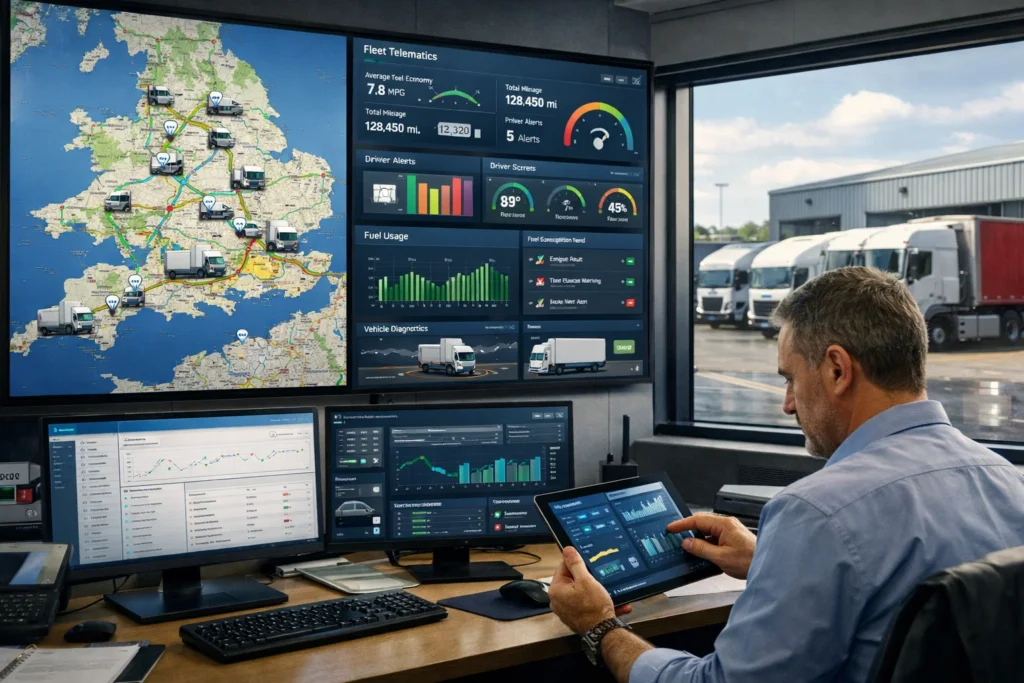
Modern UK Transport and Haulage Operations rely heavily on telematics technology. Fleet tracking systems combine GPS tracking, driver behaviour monitoring, and vehicle diagnostics.
Key benefits include:
- Real-time vehicle location tracking.
- Monitoring fuel usage and idle time.
- Driver performance analysis.
- Theft recovery support.
Telematics also helps businesses optimise routes. Route optimisation can reduce fuel consumption by 5–10%, which significantly lowers operating costs.
Maintenance Scheduling and Vehicle Safety
Vehicle maintenance is critical for compliance and cost control. HGVs must pass regular MOT inspections annually after the first year of registration.
Operators must also conduct:
- Daily walk-around checks by drivers.
- Regular safety inspections every 6–12 weeks.
- Brake testing at least four times per year.
Maintenance scheduling software helps automate reminders and track service history. This reduces the risk of unexpected breakdowns.
Key Cost Factors in UK Haulage Operations
Fuel Costs and Efficiency
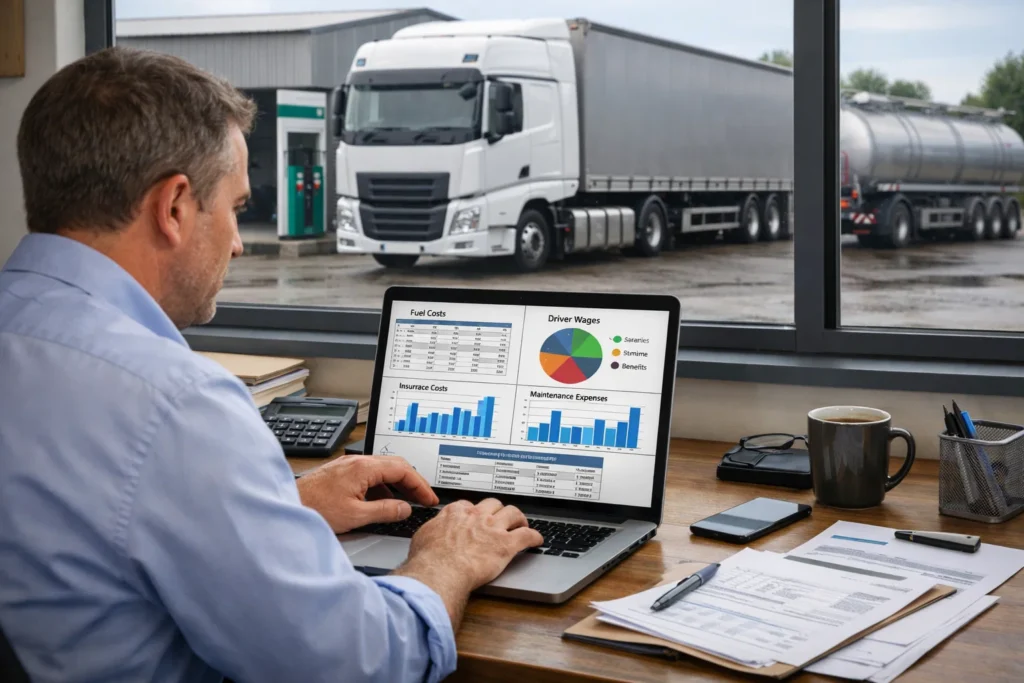
Fuel remains the largest expense in UK Transport and Haulage Operations. In early 2026, the UK average diesel price sits around £1.54 per litre, according to national fuel price reports.
A typical articulated HGV covering 120,000 kilometres annually consumes roughly 35,000 litres of diesel.
This means a single truck can generate annual fuel costs exceeding £53,900.
Fleet operators reduce fuel expenses through several strategies:
- Driver training for eco-driving.
- Route optimisation software.
- Low rolling resistance tyres.
- Speed limiter enforcement.
Insurance, Maintenance, and Driver Costs
Operating an HGV fleet involves multiple cost categories beyond fuel.
Average annual costs per vehicle include:
| Cost Category | Typical Annual Cost (UK) |
|---|---|
| Fuel | £53,900 |
| Insurance | £3,000 – £6,000 |
| Maintenance | £4,000 – £6,500 |
| Driver Salary | £32,000 – £45,000 |
| Vehicle Finance/Lease | £9,000 – £18,000 |
Environmental and Sustainability Regulations
Clean Air Zones and Emissions Standards
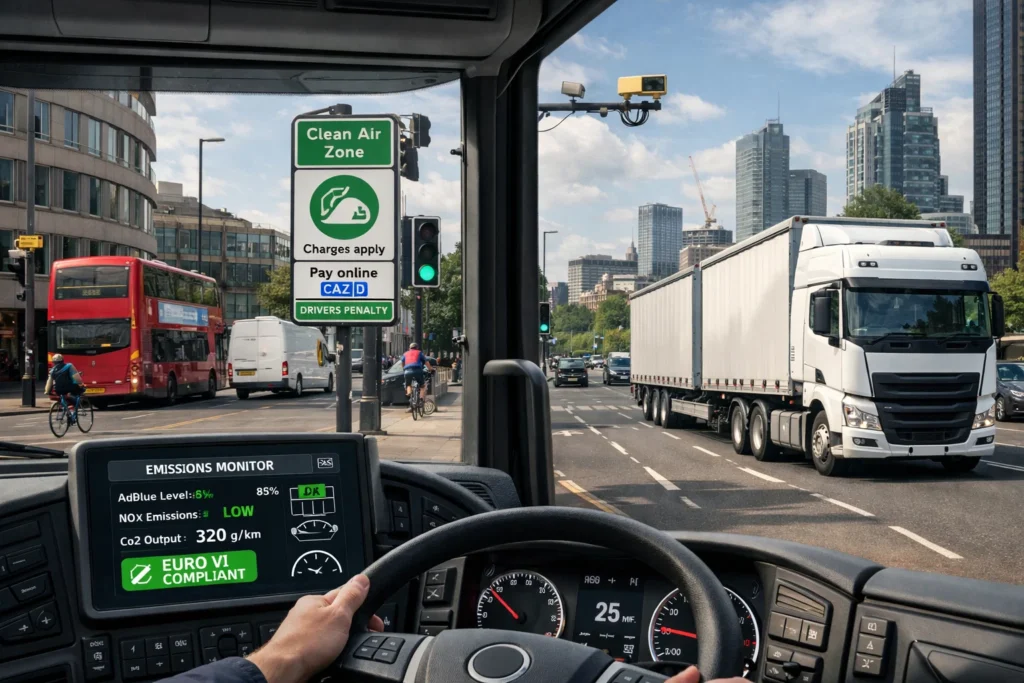
Environmental regulations increasingly shape UK Transport and Haulage Operations. Major UK cities now enforce Clean Air Zones (CAZ).
Cities with active or planned CAZ policies include:
- Birmingham
- Bristol
- Bath
- London
- Sheffield
Non-compliant HGVs entering these zones face daily charges of £100 or more.
Vehicles must meet Euro VI emission standards to avoid these fees. Many fleets are replacing older diesel trucks to meet compliance requirements.
Transition to Alternative Fuels
Sustainability targets push operators toward alternative fuel vehicles.
Key emerging options include:
- Electric HGVs for urban deliveries.
- Hydrogen-powered long-distance trucks.
- Biofuel-compatible diesel engines.
Electric trucks still face challenges due to battery range limitations. However, technology continues to improve.
Improving Efficiency in Transport Operations
Driver Training and Safety Programmes
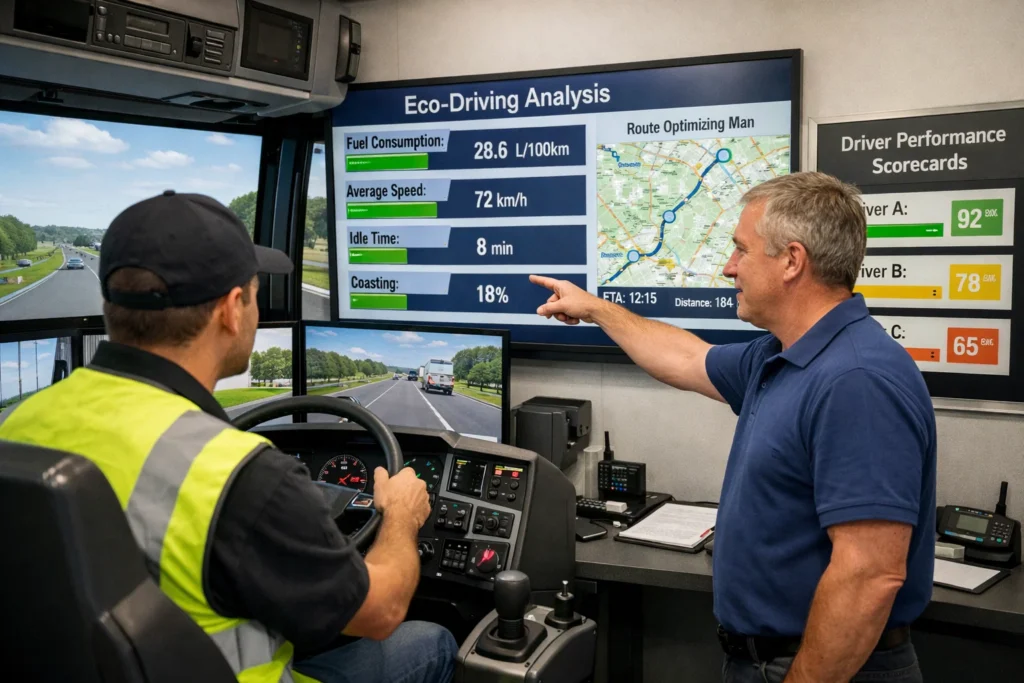
Driver behaviour significantly impacts operational performance. Poor driving habits increase fuel consumption and accident risks.
Fleet operators invest in:
- Defensive driving courses.
- Fuel-efficient driving training.
- Safety awareness programmes.
Studies show driver training can reduce fuel usage by 8–12% and accidents by 20%.
Data Analytics and Transport Planning
Data-driven planning is transforming UK Transport and Haulage Operations. Fleet software now collects large amounts of operational data.
Managers analyse this data to identify:
- Inefficient routes.
- Excessive vehicle idle time.
- Driver safety issues.
- Maintenance patterns.
Bottom Line
Running efficient UK Transport and Haulage Operations requires a balance between compliance, cost management, and operational performance. Operators must follow strict regulations on licensing, driver hours, and vehicle safety. At the same time, businesses must manage rising fuel prices, insurance costs, and environmental rules.
Modern fleet management systems provide powerful tools to address these challenges. Telematics tracking, preventative maintenance software, and data analytics help operators optimise routes and reduce operating expenses. These technologies also support compliance monitoring and safety management.