
Table of Contents
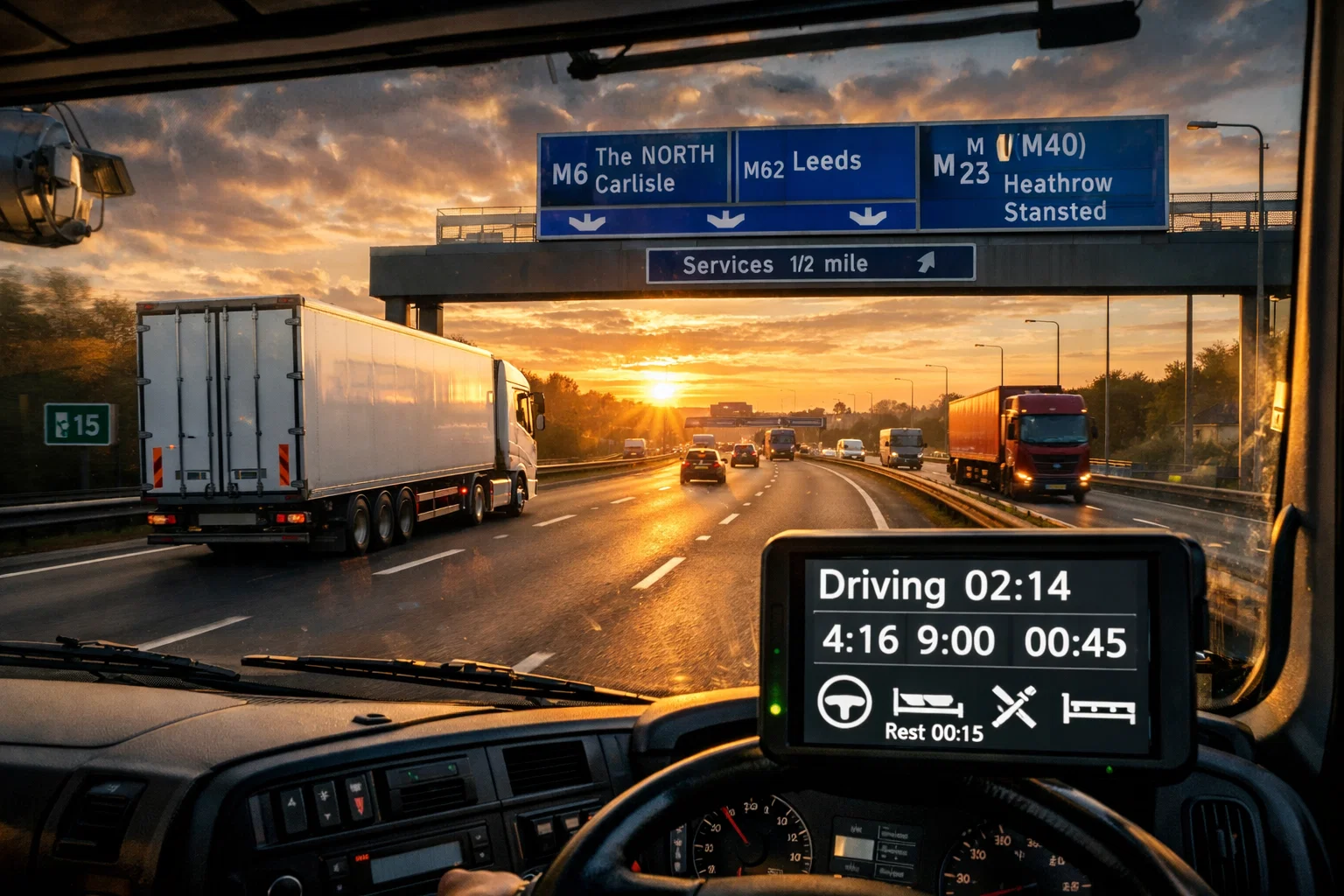
The UK Tachograph Rules govern how long professional drivers can drive, rest, and work in the United Kingdom. These rules protect road safety, reduce fatigue-related accidents, and ensure fair competition across the transport industry. As of 5 March 2026, enforcement remains strict under UK and retained EU drivers’ hours legislation, covering most Heavy Goods Vehicles (HGVs) over 3.5 tonnes.
Tachographs record driver activity automatically. The device tracks driving time, rest periods, speed, and distance. Fleet operators and regulators rely on this data to verify compliance. Authorities such as the Driver and Vehicle Standards Agency (DVSA) inspect records during roadside checks and audits.
For operators, understanding UK Tachograph Rules is essential. Breaches can lead to fines, licence points, and operator licence action. Drivers also face penalties if they exceed permitted driving hours or falsify records.
Driver Hours Limits Under UK Tachograph Rules
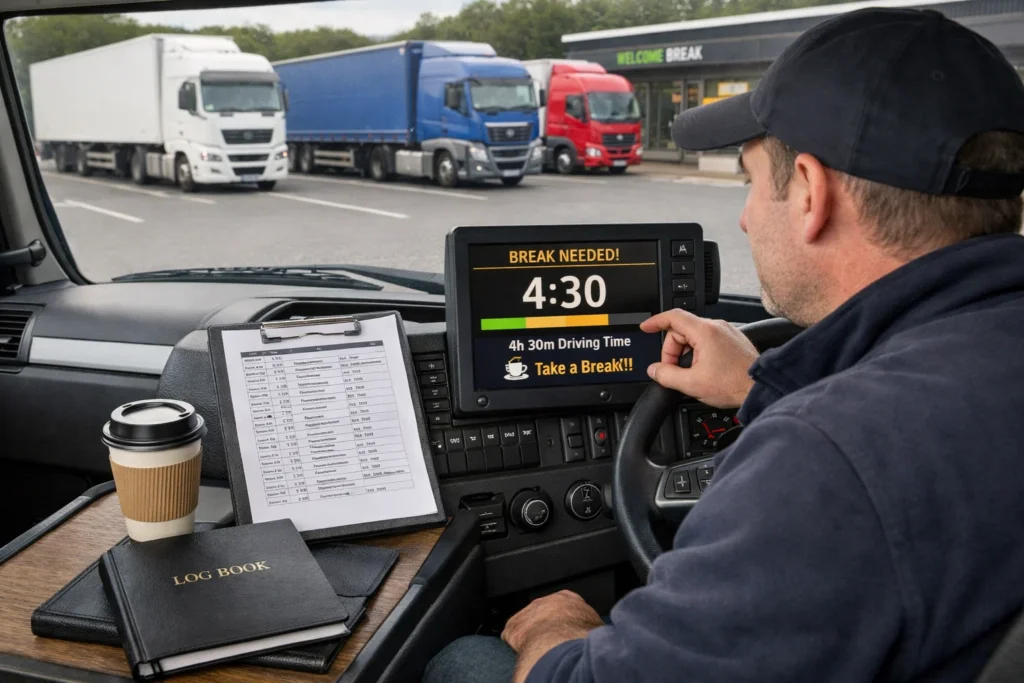
Driver hours limits are the foundation of UK Tachograph Rules. These limits prevent fatigue and standardise working patterns across the transport sector. Tachographs record activity automatically, making compliance measurable and enforceable.
Maximum Driving Time
Drivers operating goods vehicles must follow strict daily and weekly limits:
- Daily driving limit: 9 hours (can extend to 10 hours twice per week).
- Weekly driving limit: 56 hours maximum.
- Fortnightly driving limit: 90 hours across two weeks.
These limits apply to driving only. Other work activities are recorded separately. Tachograph data ensures accurate records of driving activity and time spent behind the wheel.
Mandatory Breaks and Rest Periods
Breaks are essential for safe operation under UK Tachograph Rules.
Key requirements include:
- Break after 4.5 hours driving: At least 45 minutes.
- Break may be split into 15 minutes + 30 minutes.
- Daily rest: Minimum 11 consecutive hours.
- Reduced rest: 9 hours allowed up to three times weekly.
Drivers must manually confirm rest periods in the tachograph. Failure to record correct activity can lead to compliance violations during inspections.
Tachograph Devices and Driver Responsibilities
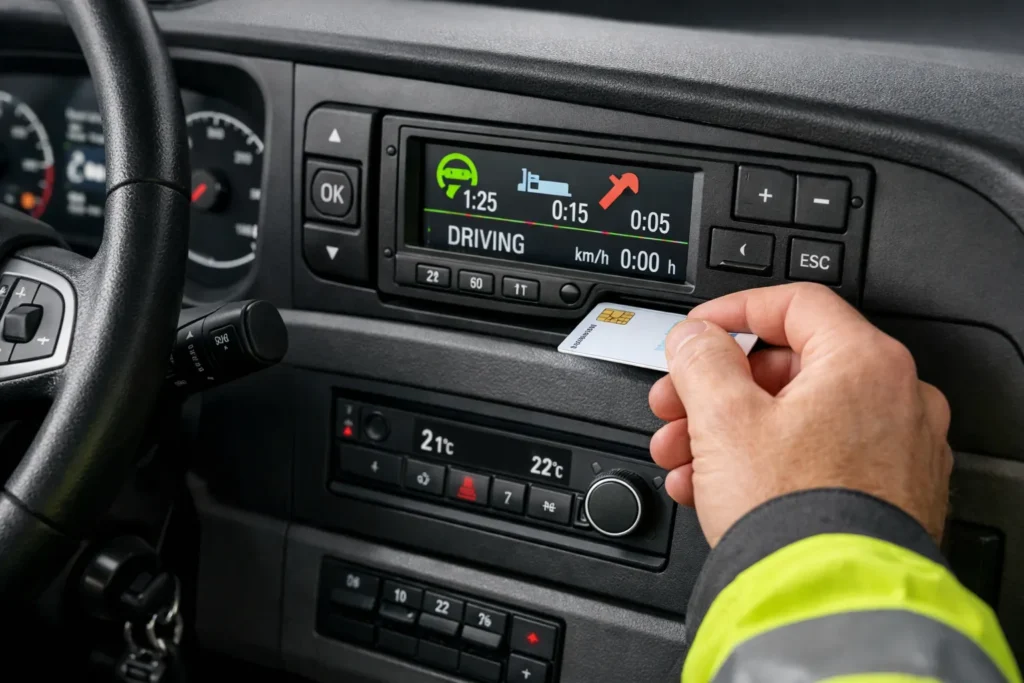
Modern fleets rely on digital and smart tachographs to meet UK Tachograph Rules. These devices automatically record driving data and store activity logs for regulatory checks.
Types of Tachographs in Use
The UK currently uses three primary tachograph systems:
| Tachograph Type | Introduced | Key Function |
|---|---|---|
| Analogue Tachograph | Pre-2006 | Paper chart recording |
| Digital Tachograph | 2006 | Electronic driver card recording |
| Smart Tachograph | 2019 | GPS tracking and remote enforcement |
Smart tachographs allow enforcement officers to detect potential violations remotely. This technology improves compliance monitoring without stopping vehicles unnecessarily.
Driver Duties When Using Tachographs
Drivers must follow clear responsibilities under UK Tachograph Rules:
- Insert the driver’s card before starting work.
- Record all driving, rest, and other work activities.
- Carry 28 days of tachograph records when driving.
- Report faults or malfunctions immediately.
Operators must also download tachograph data regularly. The recommended interval is every 28 days for driver cards and 90 days for vehicle units. This data supports internal compliance checks and audit preparation.
Enforcement and Compliance Checks
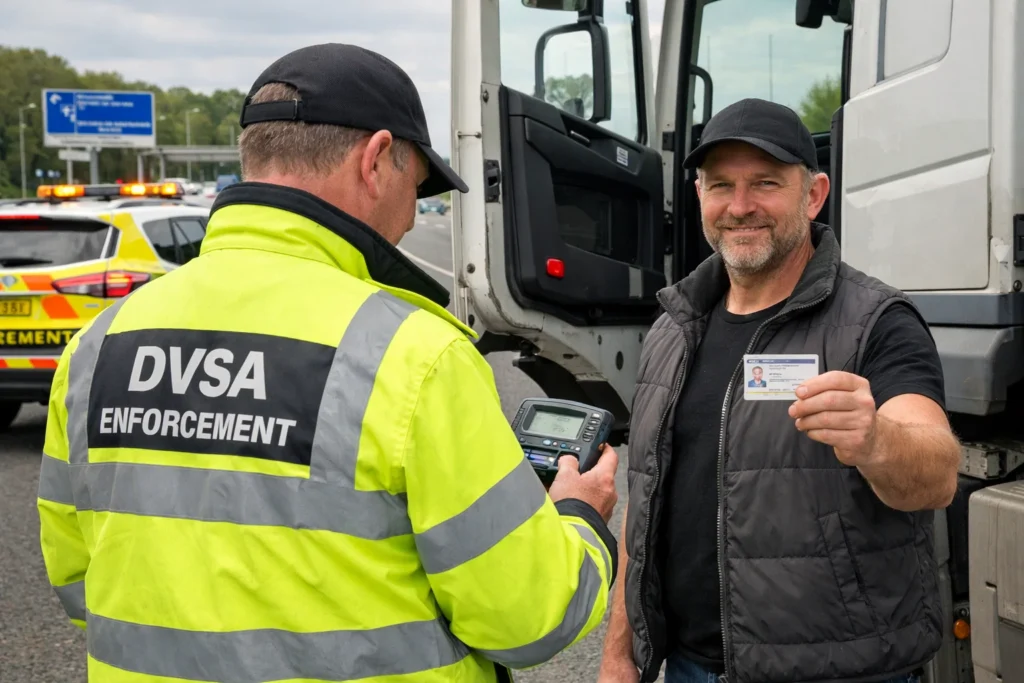
Authorities actively enforce UK Tachograph Rules through roadside inspections and operator audits. The Driver and Vehicle Standards Agency (DVSA) conducts thousands of checks annually across UK motorways and freight corridors.
Common Compliance Violations
The most frequent tachograph offences include:
- Exceeding maximum daily driving hours.
- Failing to take required breaks.
- Missing tachograph records.
- Incorrect activity mode selection.
- Tampering with tachograph devices.
Remote detection technology in smart tachographs helps officers identify suspicious activity quickly. This allows targeted enforcement while reducing unnecessary roadside stops.
Operators must maintain accurate documentation to demonstrate compliance. A strong compliance system reduces the risk of penalties and licence issues.
Penalties for Breaking UK Tachograph Rules
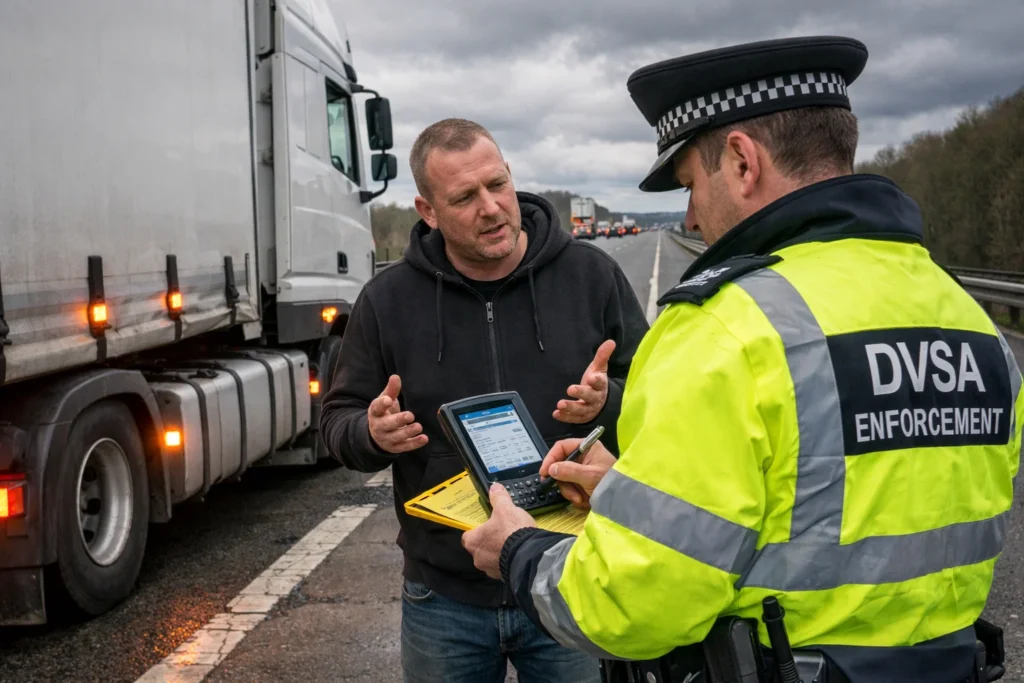
Breaching UK Tachograph Rules can result in serious penalties for both drivers and operators. Enforcement focuses on safety and preventing systematic violations.
Fixed Penalties and Fines
Drivers committing minor offences may receive fixed penalties of up to £300 per offence. Multiple violations during a single inspection can increase total fines significantly.
Serious offences may escalate to court prosecution. Courts can impose fines up to £5,000 for tachograph manipulation or deliberate record falsification.
Operator Licence Consequences
Operators face additional regulatory risks when drivers break tachograph rules repeatedly.
Possible consequences include:
- Operator licence warnings.
- Reduced the licence vehicle authorisation.
- Public inquiry with the traffic commissioner.
- Suspension or revocation of the operator licence.
Best Practices for Tachograph Compliance
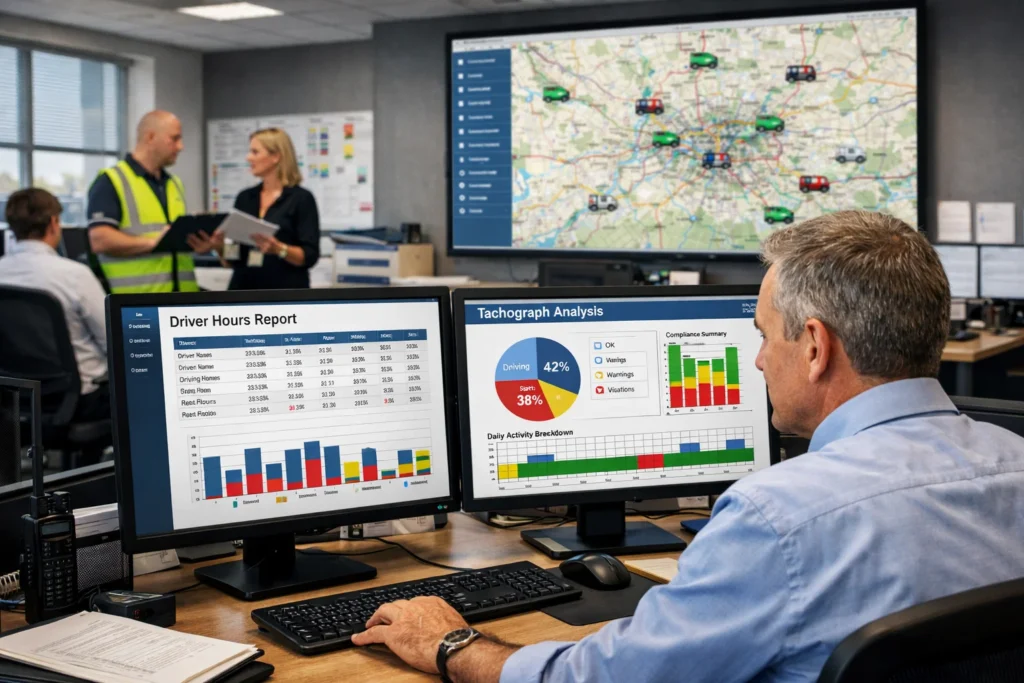
Effective compliance requires consistent processes and clear communication. Fleet managers must monitor tachograph data regularly and train drivers on correct usage.
Key Compliance Strategies
- Conduct weekly driver hours reviews using tachograph downloads.
- Provide driver training on activity mode selection.
- Maintain tachograph calibration every two years.
- Investigate any driving time breaches immediately.
Operators should also adopt fleet management software that analyses tachograph data automatically. These systems flag violations before enforcement agencies identify them.
Regular audits help companies identify compliance gaps early. This proactive approach reduces enforcement risk and improves driver safety.
Bottom Line
The UK Tachograph Rules play a critical role in road safety and fair competition across the transport sector. These regulations control driver hours, enforce rest periods, and ensure accurate activity records for commercial drivers.
Understanding the rules helps both drivers and fleet operators avoid costly penalties. Maximum driving limits, mandatory breaks, and proper tachograph usage remain the core compliance requirements in 2026. Enforcement authorities actively monitor these rules through roadside inspections and digital data checks.