
Table of Contents
UK Road Freight Costs shape how goods move across Britain’s supply chains. Every pallet delivered by road carries a detailed cost structure. Fuel prices, road tolls, vehicle maintenance, driver wages, and operational overheads all influence the final haulage rate. In 2026, UK logistics companies continue adjusting pricing models due to inflation, regulatory changes, and labour shortages.
Average UK haulage spot rates remain above £1.60 per mile for standard articulated vehicles. Meanwhile, long-term contract rates range between £1.20 and £1.50 per mile depending on route, load type, and service level. Rising diesel prices and driver wages remain the largest contributors to UK Road Freight Costs.
Road freight still carries roughly 81% of domestic freight in the UK, according to the Department for Transport. That dominance makes cost transparency critical for shippers and logistics planners. Businesses must understand how each cost component affects pricing to control transport budgets.
Fuel Costs and Their Impact on Freight Rates
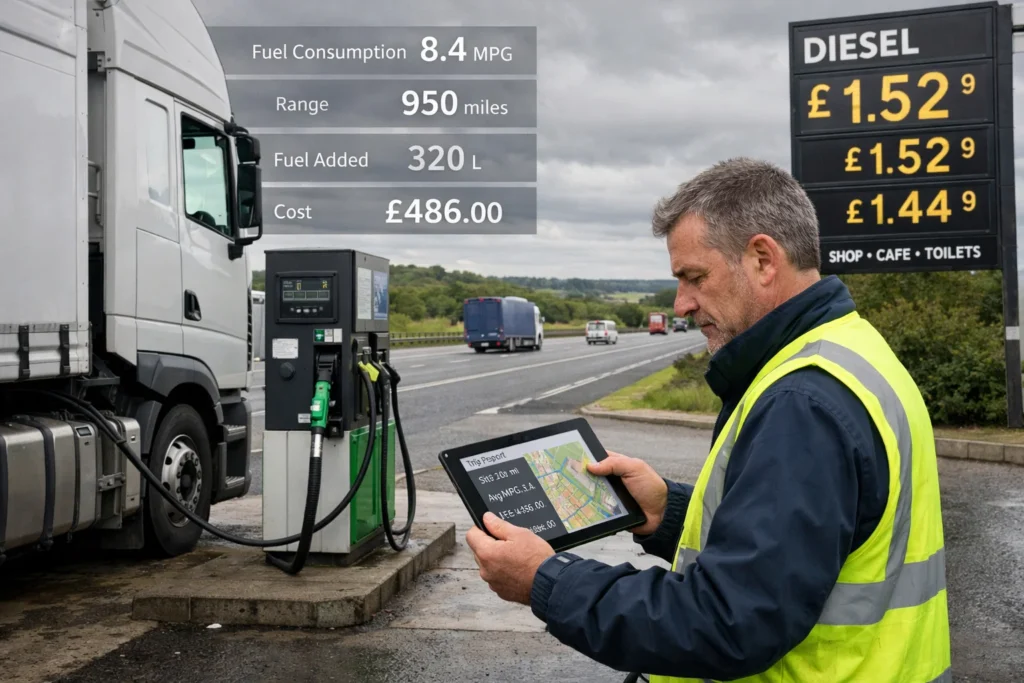
Fuel remains the largest variable component within UK Road Freight Costs. Diesel price volatility directly affects haulage pricing and transport budgets.
Diesel Prices and Fuel Consumption
As of March 2026, average UK diesel prices hover around £1.52 per litre, according to national fuel price monitoring. A typical articulated lorry consumes about 8 miles per gallon, equal to roughly 35 litres per 100 km.
A long-distance 400-mile delivery can require nearly 225 litres of diesel. At £1.52 per litre, that single journey costs about £342 in fuel alone. These figures explain why even minor fuel changes influence haulage rates.
Fuel costs represent approximately 30–35% of total UK Road Freight Costs. When diesel rises, freight rates follow quickly. Many carriers apply fuel surcharges to maintain profitability.
Fuel Surcharges in Freight Contracts
Fuel surcharges allow transport companies to adjust prices when diesel changes. Most UK contracts link the surcharge to government fuel price benchmarks.
Typical surcharge adjustments follow this pattern:
- Base diesel price included in contract rate.
- Adjustment triggered when diesel changes by ±5 pence per litre.
- Rate revised monthly or quarterly.
Road Tolls, Charges, and Infrastructure Costs
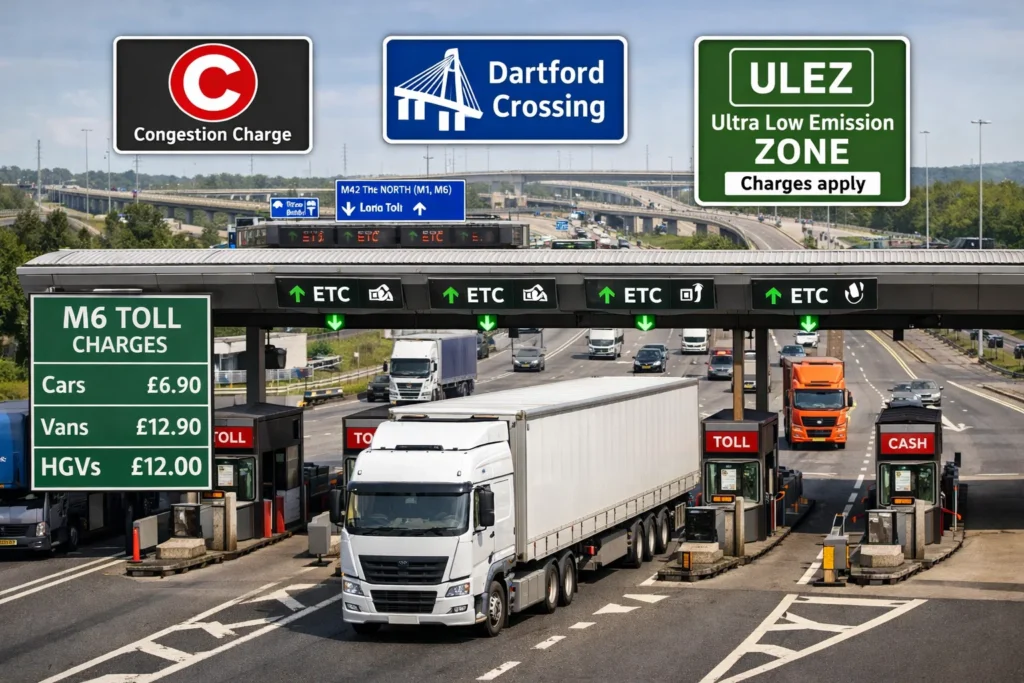
Road charges form another essential part of UK Road Freight Costs. While the UK has fewer toll roads than many European countries, several charges still apply.
Key UK Road Charges for Haulage
Most UK motorways are toll-free, but specific infrastructure requires payment. These costs accumulate quickly for fleets operating daily routes.
Common toll and road charges include:
- M6 Toll Road: Approximately £13.60 for heavy goods vehicles.
- Dartford Crossing charge: £2.50 per crossing for HGVs.
- London Congestion Charge: £15 per day for vehicles entering the zone.
- Ultra Low Emission Zone (ULEZ): £100 daily charge for non-compliant HGVs.
These infrastructure charges often appear as additional line items on haulage invoices. They directly increase UK Road Freight Costs, particularly for urban deliveries.
Cross-Border Charges and European Routes
UK hauliers operating in Europe face additional toll systems. France, Germany, and Belgium charge distance-based motorway fees.
For example:
- Germany’s LKW-MAUT toll averages €0.19–€0.34 per kilometre.
- French motorway tolls often exceed €100 for long HGV routes.
International transport, therefore, raises total UK Road Freight Costs significantly. Companies must include toll forecasting when calculating European haulage budgets.
Driver Wages and Labour Shortages
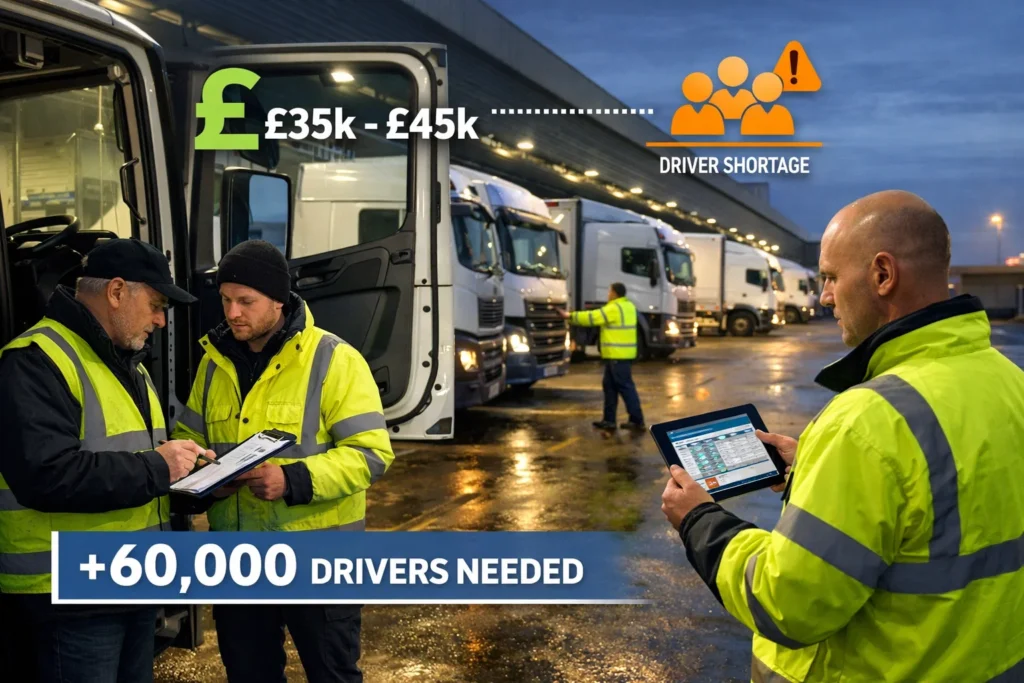
Driver pay remains a major factor shaping UK Road Freight Costs. Labour shortages since 2021 continue to influence wages and recruitment costs.
Average HGV Driver Salaries in 2026
| Driver Type | Average Salary |
|---|---|
| Entry-level HGV driver | £30,000 |
| Experienced Class 1 driver | £38,000 |
| Long-distance driver | £45,000 |
| Specialist tanker driver | £50,000+ |
Driver wages now represent 25–30% of total UK Road Freight Costs. Higher wages help retain drivers but increase haulage rates.
Companies must also cover additional employment costs, including:
- National Insurance contributions
- Pension contributions
- Holiday pay
- Training and licensing costs
These labour expenses push transport companies to maintain stable pricing models.
Driver Shortage Impact on Freight Rates
The UK still faces a shortage of around 40,000 HGV drivers, according to logistics industry estimates in 2026. Fewer drivers increase recruitment costs and reduce fleet capacity.
This shortage produces three main effects on UK Road Freight Costs:
- Higher wages to attract drivers.
- Increased overtime costs during peak demand.
- Reduced competition on certain routes.
Common Freight Pricing Models in the UK
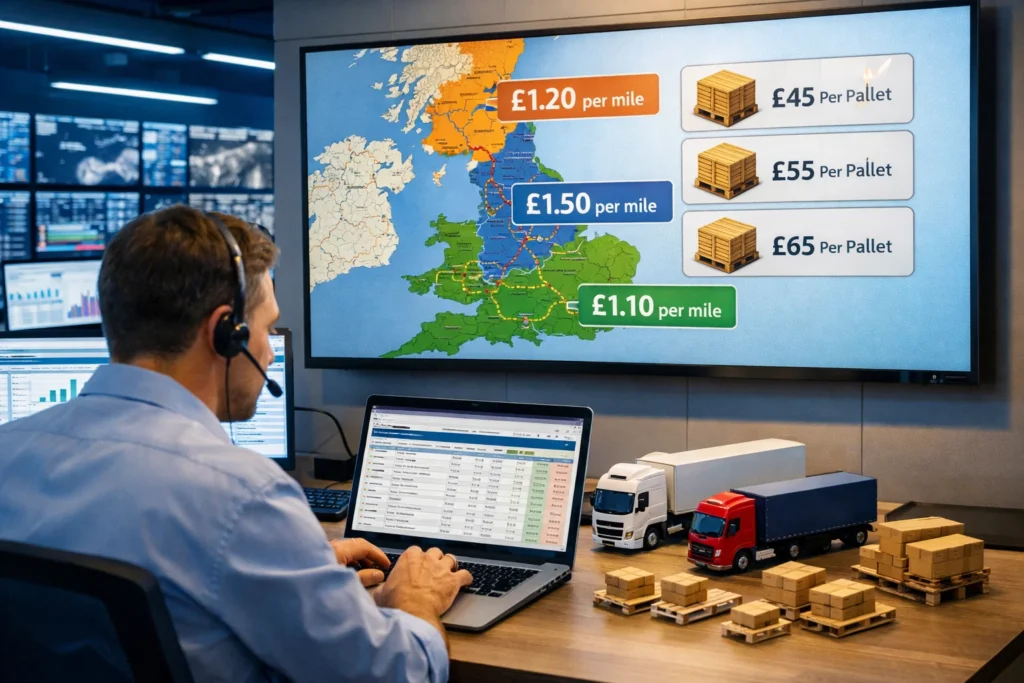
Haulage companies use several pricing models to calculate UK Road Freight Costs. The chosen model depends on cargo type, distance, and contract structure.
Per-Mile Pricing Model
Per-mile pricing is the most widely used method. It calculates freight charges based on distance travelled.
Typical UK per-mile rates in 2026:
- £1.20–£1.50 per mile for contract work.
- £1.60–£2.00 per mile for spot market deliveries.
- £2.20+ per mile for urgent or specialised loads.
Distance pricing simplifies quoting and planning. It remains the backbone of most UK road freight agreements.
Pallet and Load-Based Pricing
Many logistics providers charge per pallet instead of per mile. Pallet networks dominate this pricing model.
Example pallet network rates:
| Pallet Type | Average Price |
|---|---|
| Quarter pallet | £35–£50 |
| Half pallet | £45–£70 |
| Full pallet | £70–£110 |
| Oversized pallet | £120+ |
Dedicated Contract Pricing
Large retailers often use dedicated fleet contracts. These agreements allocate trucks and drivers exclusively to one client.
Typical contract pricing includes:
- Fixed monthly fleet fee.
- Fuel surcharge adjustments.
- Performance bonuses or penalties.
Dedicated contracts stabilise UK Road Freight Costs for high-volume shippers. They also guarantee transport capacity during peak demand.
Key Cost Components in UK Road Freight
The following table summarises the typical cost distribution in UK haulage operations.
| Cost Component | Share of Total Cost |
|---|---|
| Fuel | 30–35% |
| Driver wages | 25–30% |
| Vehicle maintenance | 10–12% |
| Insurance | 5–8% |
| Tolls and road charges | 3–6% |
| Administration and overhead | 10–15% |
Bottom Line
Understanding UK Road Freight Costs helps businesses manage logistics budgets and negotiate smarter transport contracts. Fuel expenses, driver wages, toll charges, and pricing models all influence the final rate paid for moving goods.
In 2026, average UK haulage rates range between £1.20 and £2.00 per mile, depending on distance and service requirements. Diesel prices around £1.52 per litre continue driving cost fluctuations. Labour shortages also keep driver salaries high across the sector.