
Table of Contents
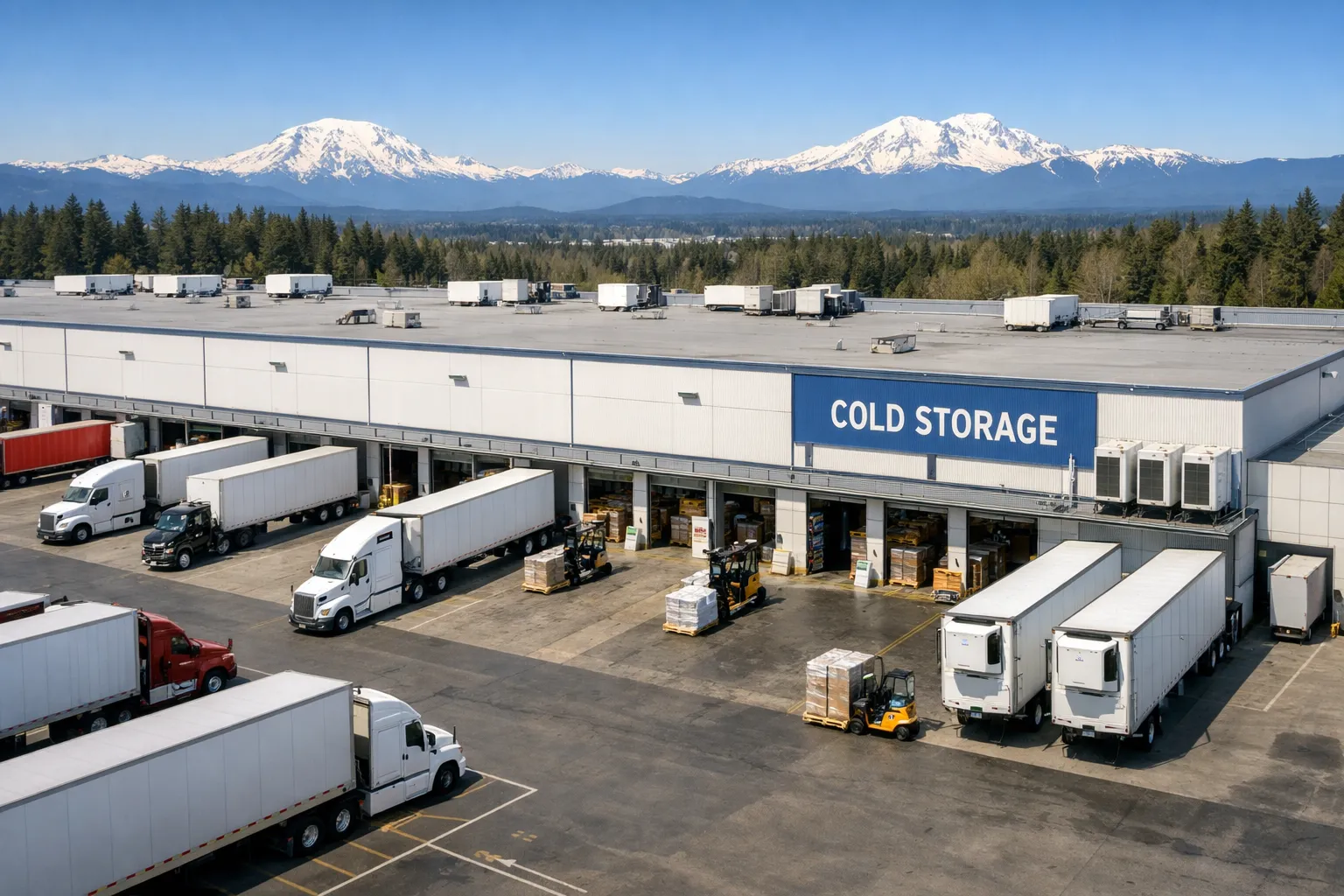
The northwest freight warehouse cross-dock and cold storage model plays a vital role in modern freight transportation. Distribution speed, temperature control, and cargo handling accuracy now define competitive logistics operations in 2026. Warehouses combining cross-dock operations and refrigerated storage help trucking companies reduce dwell time, cut storage costs, and accelerate delivery cycles.
Facilities such as Northwest Freight’s cross-dock warehouse in Troutdale, Oregon, demonstrate how integrated logistics infrastructure supports regional freight movement. Located at 901 NW Eastwind Dr, Troutdale, Oregon 97060, the warehouse operates around the clock and serves a broad range of trucking services, including cross-docking, cold storage, freight restacking, and load delivery.
Cross-docking allows freight to move directly between inbound and outbound trucks with minimal storage. This logistics technique reduces inventory handling costs and improves shipment speed across supply chains.
In North America, temperature-controlled logistics continues to expand due to growth in food distribution, pharmaceuticals, and e-commerce groceries. Cold storage warehouses now handle millions of tonnes of perishable cargo annually.
Understanding Northwest Freight Warehouse Cross Dock and Cold Storage
Facility location and logistics role
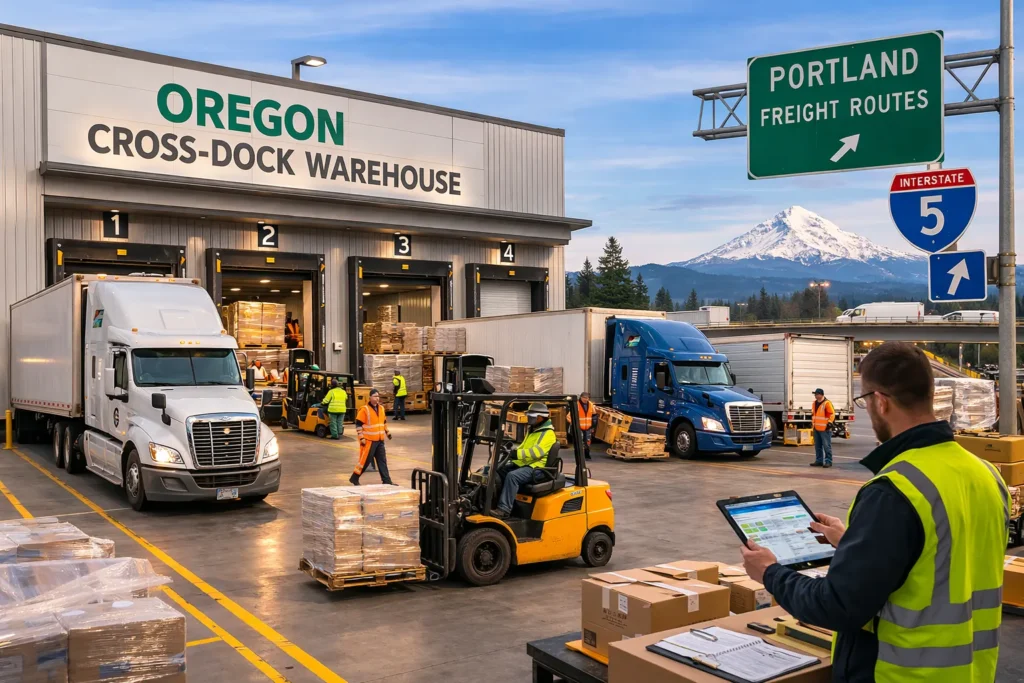
The northwest freight warehouse cross dock and cold storage facility sits near Portland’s freight corridor. This location connects Interstate freight routes across Oregon, Washington, and California.
Strategically located warehouses reduce trucking turnaround time and support regional distribution networks. Carriers moving goods through the Pacific Northwest rely on facilities like this to consolidate and redistribute freight efficiently.
Key location advantages include:
- Proximity to Portland freight routes
- Direct access to regional trucking lanes
- Fast redistribution for West Coast logistics
- Efficient handling for LTL and FTL shipments
The warehouse operates 24 hours a day, ensuring drivers can unload and reload shipments without delays. Continuous operations help reduce dwell time and increase truck utilisation.
Core services offered
The facility provides several integrated logistics services that support freight carriers and distributors.
Primary services include:
- Cross-dock freight handling
- Temperature-controlled storage
- Truck wash and maintenance services
- Load delivery using dry vans and refrigerated trailers
- Freight restacking and consolidation
Cold storage areas allow businesses to maintain controlled temperatures for food and pharmaceutical cargo. Temperature-controlled logistics plays a critical role in modern supply chains where product integrity depends on stable storage environments.
These combined services make the northwest freight warehouse cross dock and cold storage facility a multifunction logistics hub for regional trucking companies.
How Cross-Dock Warehousing Works in Freight Transportation
Definition of cross-docking
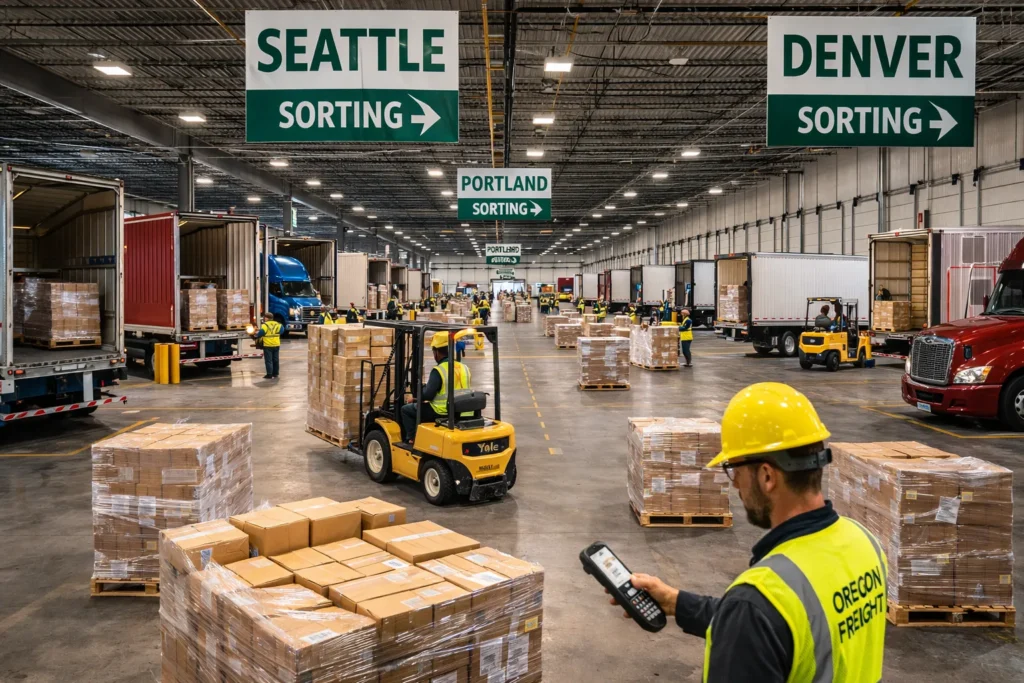
Cross-docking is a logistics process where cargo moves directly from inbound transportation to outbound vehicles. Warehouses only serve as temporary transfer points rather than long-term storage facilities.
Freight arrives at inbound dock doors, gets sorted by destination, and moves immediately to outbound trucks. This method reduces handling time and minimises inventory holding costs.
Cross-docking became popular in the retail logistics boom of the 1980s and remains a key efficiency strategy today.
Typical cross-dock facilities use elongated warehouse layouts with inbound and outbound loading doors positioned opposite each other.
Freight types suitable for cross-dock operations
Cross-dock logistics works best for products with consistent demand or tight delivery schedules.
Common freight types include:
- Perishable food products
- Consumer retail goods
- Promotional inventory
- Agricultural commodities
- Temperature-sensitive pharmaceuticals
These goods benefit from reduced storage time and faster distribution.
The northwest freight warehouse cross dock and cold storage model is especially effective for refrigerated cargo. Cold chain shipments must move quickly to maintain product quality. Understanding cross-dock logistics also helps companies optimise their UK warehousing and distribution operations for faster supply chain performance.
Cold Storage Capabilities in Northwest Freight Warehouses
Temperature-controlled logistics
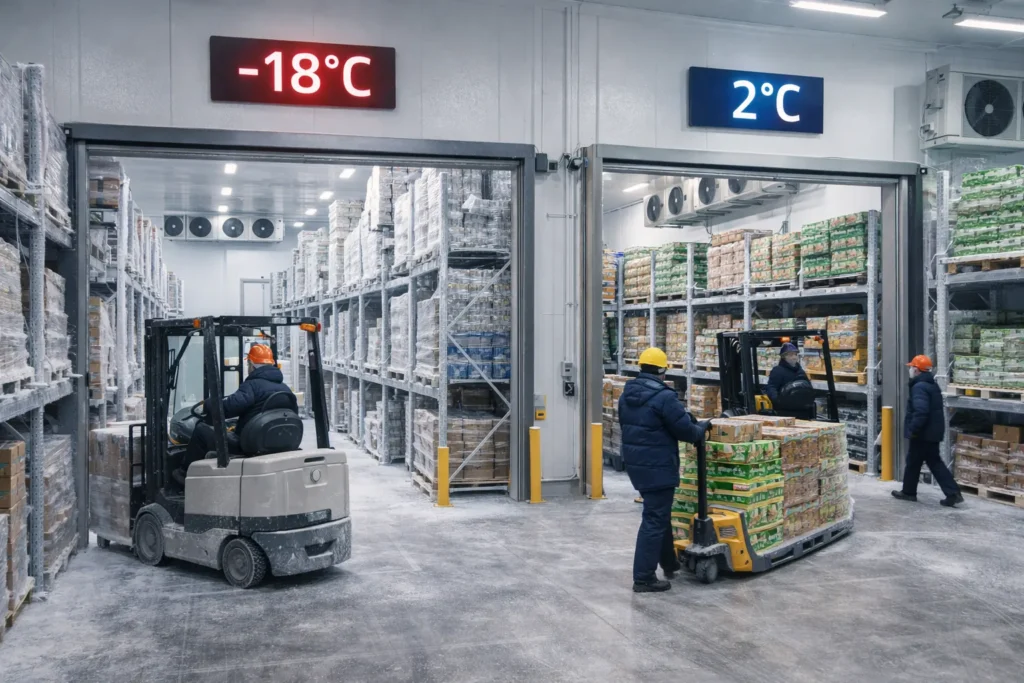
Cold storage facilities maintain controlled environments to protect sensitive cargo. These environments typically include refrigerated and frozen storage zones.
Temperature ranges commonly used in cold logistics include:
| Storage Type | Typical Temperature | Cargo Examples |
|---|---|---|
| Chilled storage | 0°C to 4°C | Fresh produce, dairy |
| Refrigerated storage | -1°C to 5°C | Meat, seafood |
| Frozen storage | -18°C or lower | Frozen foods, pharmaceuticals |
Modern cold chain warehouses also use monitoring systems to maintain temperature stability and prevent spoilage.
Importance of regional food supply chains
The Pacific Northwest is a major producer of agricultural goods. Apples, seafood, dairy products, and frozen foods move through regional cold chain networks every day.
Cold storage warehouses enable:
- Safe storage of perishable goods
- Compliance with food safety regulations
- Efficient distribution across states
- Reduced product spoilage
Large cold chain providers often operate networks capable of serving major population centres quickly.
Facilities with integrated cross-dock and cold storage capabilities can ship products directly to supermarkets and distribution centres without long warehouse dwell times.
Operational Advantages of Cross Dock and Cold Storage Facilities
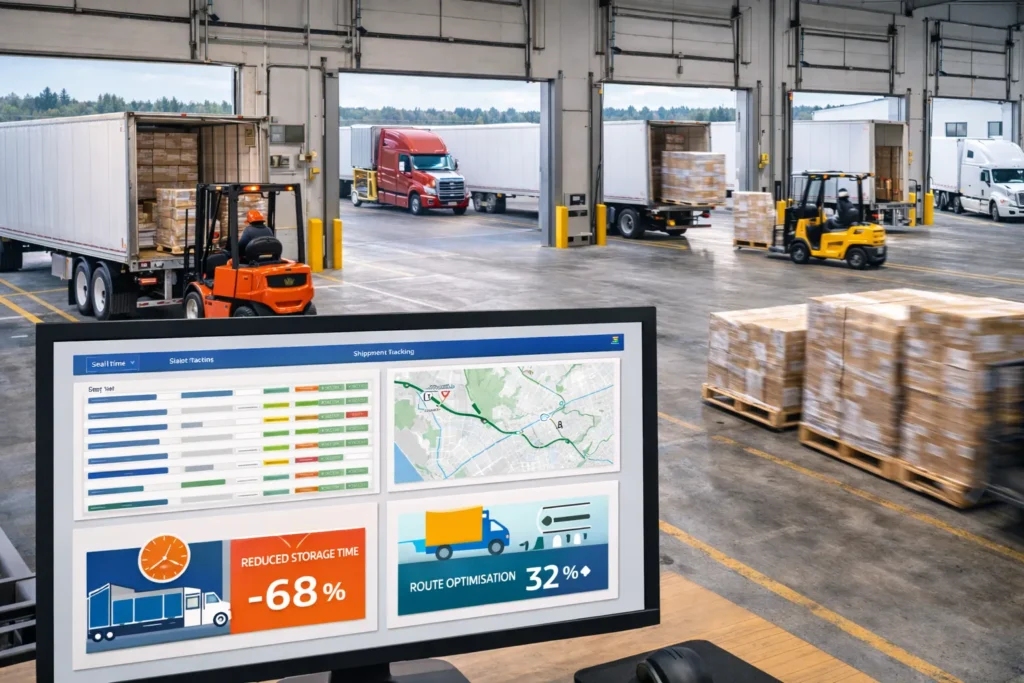
Modern freight hubs combining cross-dock and cold storage provide several logistics advantages.
Key benefits
- Faster cargo handling and reduced transit time
- Lower warehouse storage costs
- Reduced inventory holding requirements
- Improved freight consolidation efficiency
- Better temperature control for sensitive cargo
These benefits improve overall supply chain performance.
Freight handling improvements
Cross-dock systems streamline warehouse operations by reducing unnecessary handling steps. Goods move directly from inbound to outbound transportation, lowering labour costs and improving turnaround time.
According to logistics industry studies, cross-dock operations can reduce storage time by up to 70% compared with traditional warehousing models.
Logistics network efficiency
Integrated facilities help carriers optimise truck routes. Freight consolidation allows multiple shipments heading to similar destinations to travel in a single outbound truck.
This consolidation reduces fuel consumption and improves route efficiency across regional freight networks.
Key Services Available at Northwest Freight Warehouse

The northwest freight warehouse cross dock and cold storage facility supports several logistics activities beyond basic warehousing.
Logistics services overview
| Service | Description |
|---|---|
| Cross-dock warehousing | Direct freight transfer between trucks |
| Cold storage | Refrigerated and frozen cargo storage |
| Truck wash | Automated cleaning system for commercial trucks |
| Freight restacking | Cargo repositioning and pallet correction |
| Load delivery | Freight transport using dry vans and reefers |
| Truck repair | Maintenance services for commercial vehicles |
Additional operational support
Warehouse hubs offering maintenance and wash services reduce downtime for trucking fleets. Drivers can clean and service their vehicles while managing freight transfers in one location.
This integrated service approach improves operational efficiency across regional freight transportation networks.
The Role of Cross Dock and Cold Storage in Modern Freight Logistics
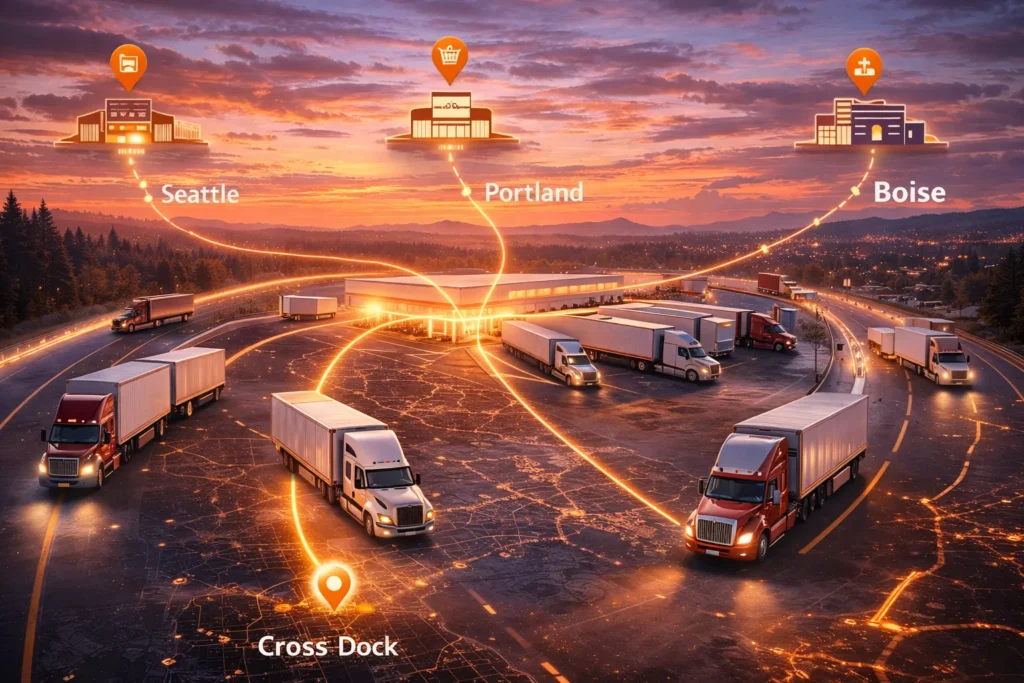
Freight transportation continues to evolve as supply chains demand faster deliveries and tighter inventory control.
Cross-dock logistics has become essential for industries, including:
- Retail distribution
- Grocery supply chains
- Pharmaceutical logistics
- E-commerce fulfilment
- Agricultural freight transport
These sectors rely on rapid freight movement and precise temperature control.
Warehouse networks across North America now integrate cross-dock operations with refrigerated storage and transport management systems. This integration improves visibility and coordination between carriers, warehouses, and retailers.
As logistics technology advances, cross-dock warehouses will increasingly rely on automation, real-time tracking, and predictive demand forecasting.
Facilities like the northwest freight warehouse cross dock and cold storage operation illustrate how modern freight hubs combine speed, flexibility, and specialised storage capabilities.
Bottom Line
The northwest freight warehouse cross dock and cold storage facility demonstrates how integrated logistics infrastructure supports efficient freight transportation. By combining cross-dock warehousing, temperature-controlled storage, and trucking support services, these facilities streamline regional distribution networks.
Cross-docking reduces handling time and speeds up cargo transfers between trucks. Cold storage ensures that perishable goods remain safe throughout the transportation process. Together, these capabilities help carriers reduce operational costs and improve delivery reliability.