
Table of Contents
Last-mile delivery in London has become a strategic challenge for logistics managers in 2026, driven by tighter vehicle regulations and rising urban charges. Businesses must now navigate not only the Ultra Low Emission Zone (ULEZ), which enforces strict emissions standards across Greater London, but also an updated Congestion Charge regime that applies to battery and electric vehicles (EVs) alike.
From 2 January 2026, the standard Congestion Charge rises to £18 per day for entering central London, with EVs paying 25-75% of the full amount depending on Auto Pay enrolment. ULEZ continues to charge non-compliant vehicles £12.50 daily if they do not meet Euro 6 standards.
For logistics and warehousing operations, these charges directly impact delivery costs, route planning and fleet optimisation. With e-commerce-fulfilment volumes accelerating and urban parcel demand continuing to rise, London’s traffic patterns and regulatory environment now demand more efficient urban fulfilment strategies.
We explore what these charges mean for operators, how to structure delivery networks, and how to protect margins with data-driven decisions. External reference data from Transport for London and industry analyses inform the insight below.
Understanding London ULEZ and Congestion Charge
What ULEZ Means for Last-Mile Fleets
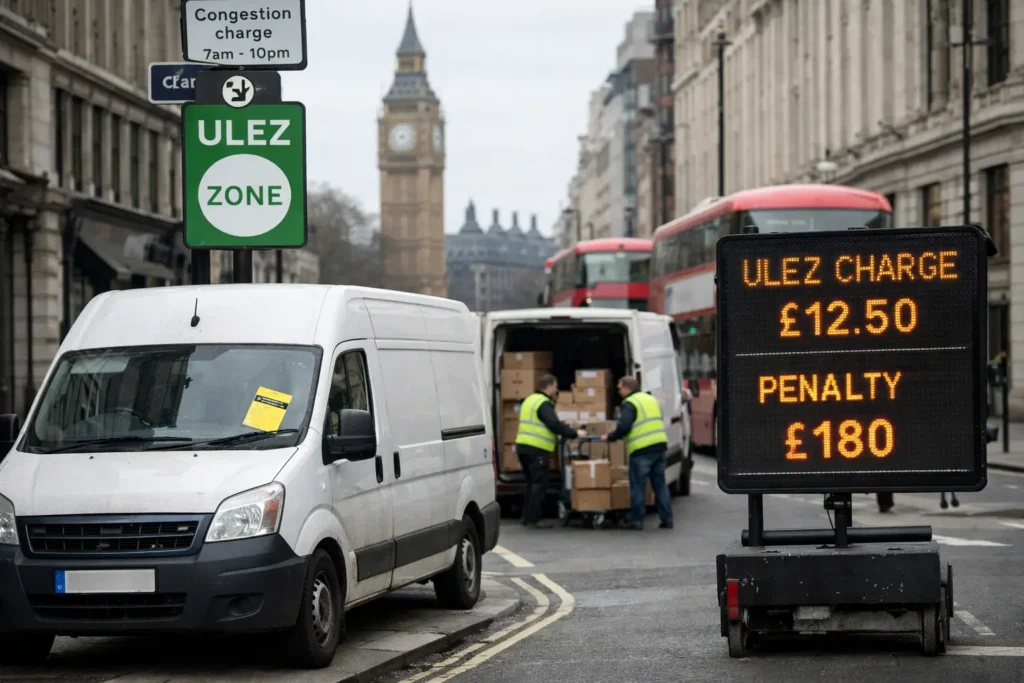
London’s ULEZ imposes a daily fee of £12.50 on vehicles that fail to meet Euro 6 (diesel) or Euro 4 (petrol) emission standards when operating within the zone. Non-compliant vans or trucks pay each day they enter the zone and risk a £180 penalty if not paid. ULEZ applies 24/7 across Greater London and affects diesel vans widely used in last-mile delivery.
This regulatory structure compels logistics providers to upgrade fleets or face recurring charges. With an average delivery vehicle entering ULEZ 150 days per year, annual costs for non-compliance can exceed £1,875 per van alone, eroding profit margins unless offset by pricing or efficiency gains. Aligning fleets to Euro 6 or EV standards is now an operational priority. Efficient routing and consolidation hubs further reduce unnecessary zone entries while improving delivery predictability.
Congestion Charge Changes from 2026
From January 2, 2026, the Congestion Charge rises to £18 per day for vehicles in central London between 07:00–18:00 (weekdays) and 12:00–18:00 (weekends/holidays). EVs, previously exempt, pay 25% of the charge for cars and 50% for vans and HGVs if registered with Auto Pay, delivering partial relief but still adding cost. Residents holding the discount pay £1.80 per entry.
For delivery fleets entering central London frequently, even discounted rates translate to significant annual outlays. A van entering 200 days per year could incur up to £3,600 in congestion fees before discounts. When evaluating 3PL vs. 4PL operating models, tactics such as off-peak scheduling, micro-hubs near the zone boundary, or cargo bike services within central areas materially reduce these expenses while maintaining service levels.
Cost Implications and Operational Strategies
Direct Delivery Costs in Urban Zones
Last-Mile Delivery in London now involves a complex cost mix: driver wages, vehicle operating costs, fuel (or electricity), plus regulatory charges. Recent market data shows delivery costs can constitute up to 53% of total logistics expenses, intensified in urban settings with congestion and low-emission fees.
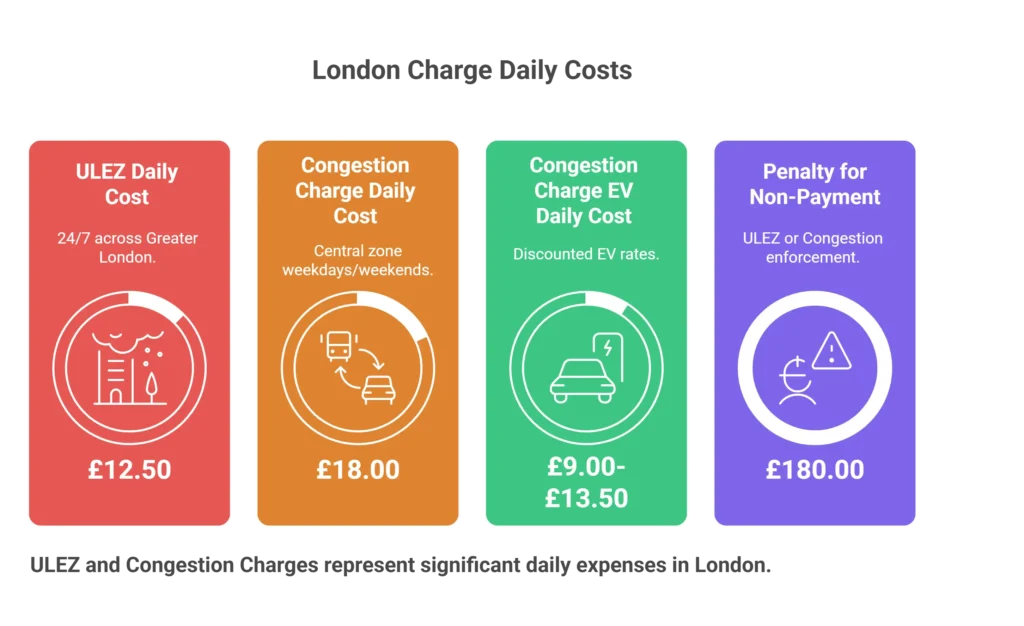
Below is a comparison of daily cost impacts for typical delivery vehicles operating within London’s regulatory framework:
Daily Urban Charge Comparison
| Charge Type | Daily Cost | Notes |
|---|---|---|
| ULEZ (Non-Compliant) | £12.50 | 24/7 across Greater London |
| Congestion Charge | £18.00 | Central zone weekdays/weekends |
| Congestion Charge (EV – Auto Pay) | £9–£13.50 | Discounted EV rates |
| Penalty for Non-Payment | £180 | ULEZ or Congestion enforcement |
This table shows that avoiding non-compliance vastly improves cost predictability. EVs lower ULEZ costs to zero but remain subject to congestion fees; clean internal combustion or hybrid vehicles that comply with emissions standards avoid the ULEZ charge entirely.
Route Planning and Delivery Cadence
Given London’s average delivery vehicle speed of around 7.6 mph in dense urban traffic, congestion significantly slows operations and increases fuel energy use. Rolling out advanced route optimisation tools, combined with predictive traffic modelling, can trim delivery times by 12–18%. Advanced planning also helps reduce unnecessary zone entries, a key lever for cutting fees.
To complement route planning, logistics firms increasingly use micro-fulfilment centres situated near high-demand zones. These urban nodes reduce long inbound journeys and concentrate last-mile deliveries into batch runs, cutting vehicle miles and urban charges.
Micro-Fulfilment and Greener Urban Fulfilment
Advantages of Micro-Fulfilment Hubs
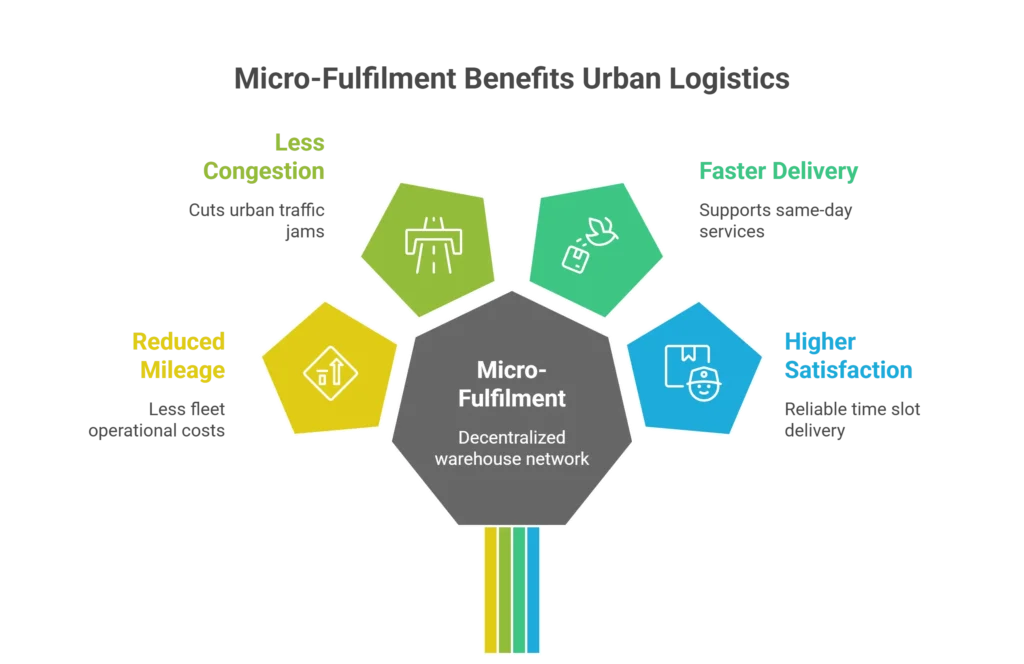
Micro-fulfilment centres (MFCs) act as mini depots close to delivery clusters. Studies indicate that deploying MFCs in London could reduce delivery traffic by 13%, equivalent to millions fewer miles travelled annually.
Benefits of Micro-Fulfilment
- Reduces fleet mileage and operational costs.
- Cuts urban congestion and emissions.
- Supports faster same-day and next-day delivery services.
- Enhances customer satisfaction with reliable time slots.
With e-commerce volumes growing, urban warehousing near delivery hotspots (Inner London, North and South Circular) accelerates fulfilment timelines. This is especially valuable for premium and perishable goods, while Bonded Warehousing also enables duty-deferred storage closer to end customers, supporting tighter delivery windows without increasing inventory risk.
Electrification and EV Fleet Adoption
Shifting to electric vans and cargo bikes mitigates ULEZ charges and aligns with UK net-zero goals. Though EVs pay congestion fees, their overall operating costs tend to be lower due to cheaper electricity relative to diesel and reduced maintenance costs. Integrating charging infrastructure at urban depots is essential for operational resilience.
Electric vehicles further support sustainability pledges, appealing to eco-conscious consumers and large retailers seeking greener supply chains. Partnerships with charging network providers unlock cost savings and predictable energy pricing.
Case Study: Measured Environmental Impact of the Micro-Logistics Hub
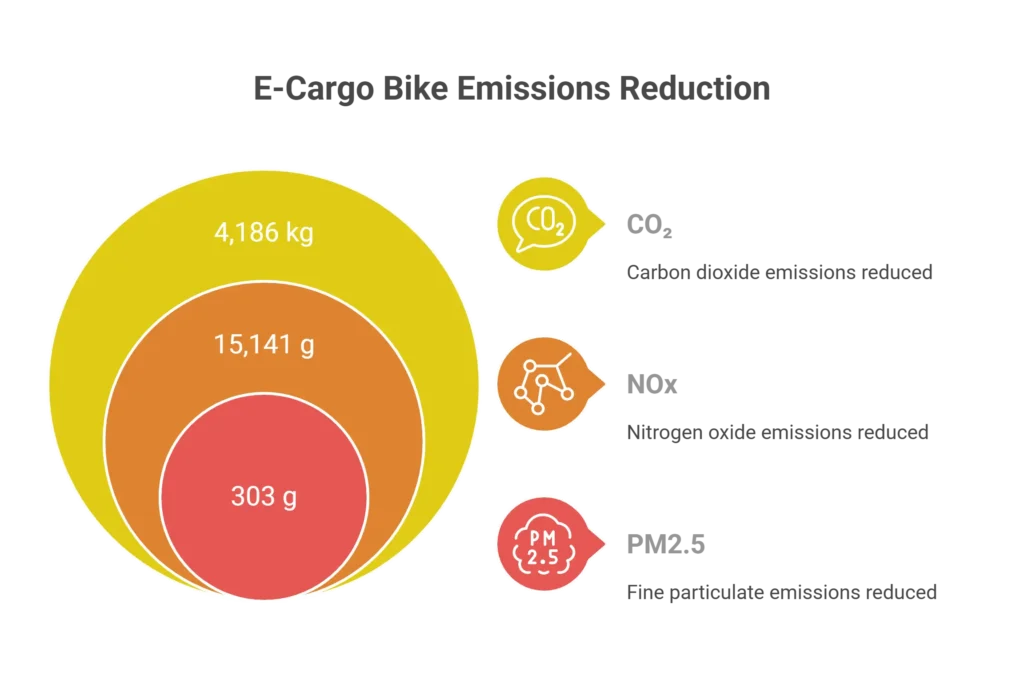
After nine months of operation (to 31 December 2023), this real UK case study achieved measurable environmental impact: the e‑cargo bikes travelled 22,578 km (14,029 miles) and cut emissions by 4,186 kg of CO₂, 15,141 g of NOx and 303 g of PM2.5 compared with conventional van deliveries covering the same routes. These reductions reflect significant improvements in urban air quality and support sustainable logistics within London.
Importantly, the trial was judged successful and has been extended for at least 12 more months, demonstrating scalability and real business and environmental value for logistics operators working under Last‑Mile Delivery in London constraints, led by Cross River Partnership and Westminster City Council-funded. After delivery, companies must manage product returns efficiently using reverse logistics ecommerce returns UK.
Bottom Line
Last-Mile Delivery in London requires strategic planning to balance operational efficiency with regulatory charges like ULEZ and congestion fees. Upgrading to cleaner vehicles and using micro-fulfilment hubs directly cuts costs and improves delivery reliability. Efficient routing and fleet electrification will remain central to profitable urban fulfilment. Logistics operators that adapt to London’s evolving rules and urban patterns gain a competitive advantage and future-proof their last-mile operations.
FAQs
What is the ULEZ charge in London for delivery vans?
Non-compliant vans pay £12.50 daily; compliant and electric vans avoid this fee.
How much is the Congestion Charge in 2026?
The Congestion Charge is £18 per day inside central London.
Do electric delivery vehicles pay congestion fees?
Yes, EVs pay discounted congestion charges if registered for Auto Pay.
Can micro-fulfilment centres reduce delivery costs?
Yes, they can cut fleet miles and congestion costs significantly.
What penalty applies for failing to pay ULEZ?
Non-payment can incur up to £180 per offence.
Disclaimer
This article is for general informational purposes only. Regulations, charges, and operational impacts may change. Always verify requirements with Transport for London and relevant authorities before making logistics or fleet decisions.