
Table of Contents
International shipment release is the critical logistics milestone when imported cargo has cleared customs and is freed for final delivery. This status matters to importers, supply chain teams, and end customers tracking global parcels. In 2025, import volumes will remain robust despite headwinds such as new tariff regimes and documentation requirements across major markets.
For example, U.S. container imports in September 2025 reached 2,307,933 TEUs, even as volumes slipped 8.4% from August levels.
In global parcel tracking, seeing “International Shipment Release – Import” means customs in the destination country has completed its clearance process. Clearance includes documentation checks, payment of duties, and compliance reviews. Once released, international parcels transition back into the carrier’s local network for distribution.
For logistics planners, understanding this status helps reduce confusion during critical delivery windows. This article unpacks how international shipment release works, key tracking interpretations, customs documentation that speeds release, common delay causes, and practical import tips to control cost and timing.
Track your FedEx® shipments
Enter up to 30 of your FedEx tracking, door tag, or FedEx Office order numbers (one per line).
What “International Shipment Release” Really Means
When tracking shows international shipment release, it signals successful customs clearance for your imported goods. This status typically follows detailed checks of documentation, duties, and regulatory requirements.
Carriers such as FedEx, UPS, and DHL use this term slightly differently. For major carriers like FedEx, it means customs has confirmed the shipment qualifies for entry under local laws, and the parcel can now move through the destination network.
Key activities completed before this status include:
- Customs review of the commercial invoice and HS codes.
- Duty and tax assessment and payment verification.
- Physical inspection and regulatory compliance checks.
Once released, the shipment is no longer under customs control and enters the final-mile phase. However, clearance does not guarantee immediate delivery. In many cases, carriers require 2–5 business days after release to reach the recipient, depending on local network capacity and distance from the customs entry point.
Key Import Documents That Speed Release
Documentation Essentials for Import Compliance
Accurate documentation is a foundational factor that determines how quickly your cargo gets an international shipment release status. Customs authorities rely on several core papers to verify and grant clearance:
| Document | Purpose | Impact on Clearance |
|---|---|---|
| Commercial Invoice | Proof of receipt by the carrier | Declares value, manufacturer, and HS codes |
| Bill of Lading / Air Waybill | Proof of receipt by carrier | Must match shipment details or customs may hold goods. |
| Packing List | Itemizes contents | Helps customs confirm cargo matches documentation. |
| Import License / Certificates | Regulatory compliance | Some goods need special permits; missing these halts release. |
| Duty Payment Records | Proof duties paid | Without it, customs will not release the shipment. |
Customs systems scan these documents to cross-verify values, quantities, and HS codes before issuing release orders. Discrepancies between documents account for many delays. Carriers often recommend submitting finalized paperwork electronically at least 72 hours before arrival to avoid clearance backlogs.
Typical Timeline: From Port to Release
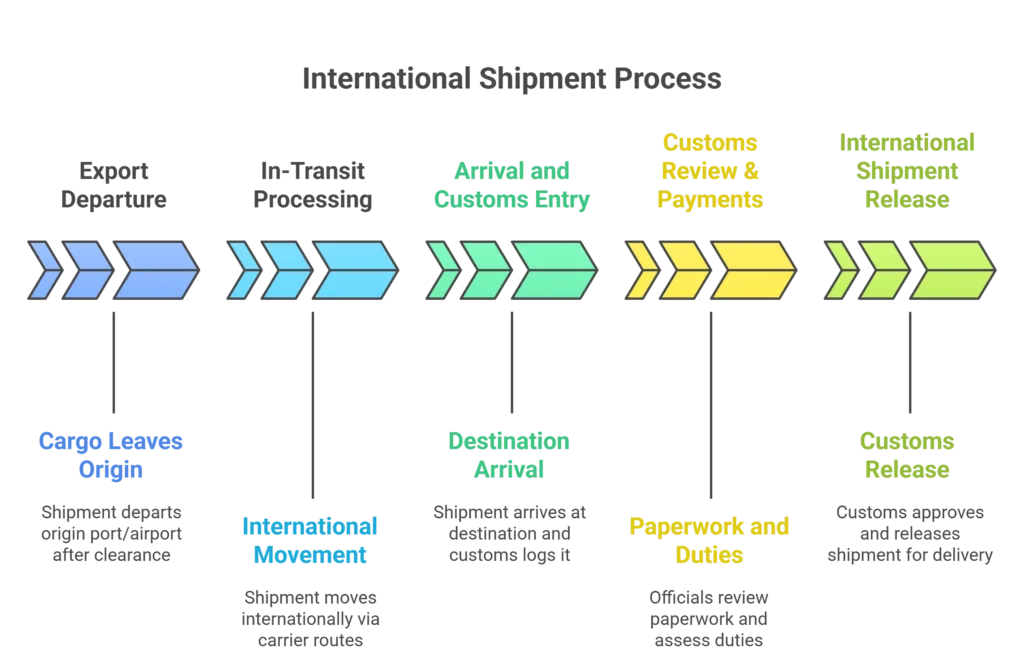
Understanding how long each stage of an international shipment takes can help logistics teams set realistic expectations around international shipment release.
- Export Departure: Cargo leaves the origin port or airport after export clearance.
- In-Transit Processing: The shipment moves internationally, subject to carrier schedules and routing.
- Arrival and Customs Entry: Upon arrival at the destination country, customs logs the shipment.
- Customs Review & Payments: Officials verify paperwork and assess duties.
- International Shipment Release: Once approvals are complete, customs relinquishes control.
Typical times vary widely by transport mode and destination:
- Air freight: Clearance can be completed in 6–48 hours after arrival if the paperwork is correct.
- Ocean freight: Arrival to release often spans 2–7 days, depending on port congestion and documentation.
- Cross-border trucks: Road entries often clear in 1–2 days if compliant.
Delays commonly occur at step 4 due to incomplete paperwork, high customs volume, or unpaid duties. Once released, carriers aim to deliver within 2–5 business days domestically, but this depends on distance and local network capacity.
Tracking Interpretations: What To Expect
Interpreting Different Status Messages
Tracking platforms use a range of messages that can confuse logistics teams and customers. Knowing what each means in relation to international shipment release helps avoid misinterpretation:
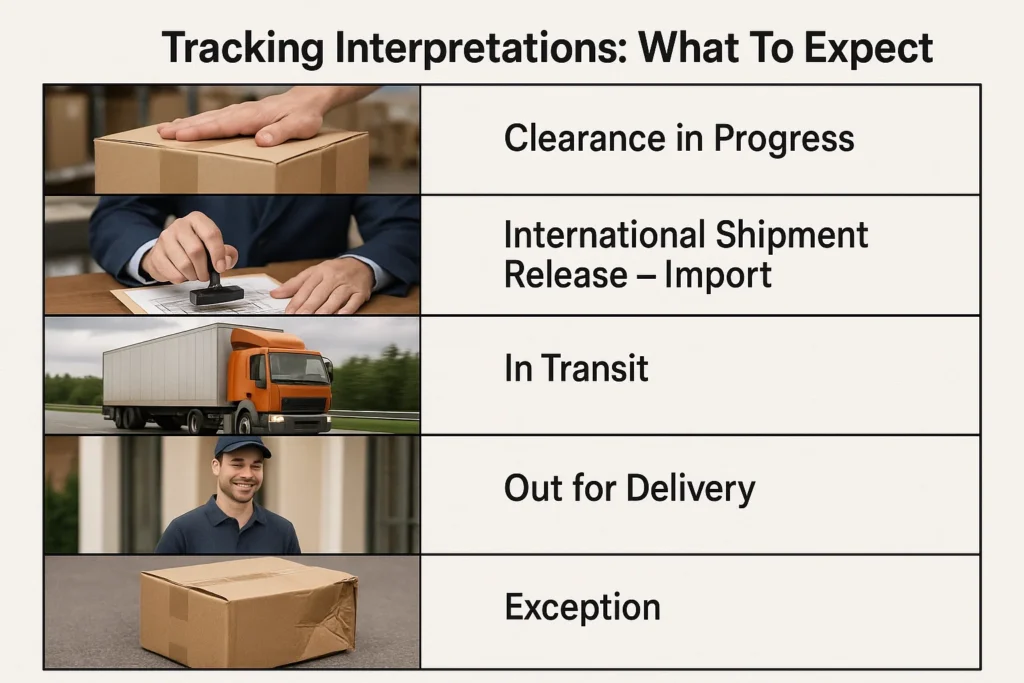
Clearance in Progress: Customs has your shipment, but it’s under review for documentation, valuation, or duties.
International Shipment Release Import: Customs has completed the review and released the goods.
In Transit: After release, the carrier is moving the shipment toward delivery.
Out for Delivery: The final-mile delivery is underway; no customs activities remain.
Exception: This status often signals customs issues such as missing documentation or duties due.
A common myth is that release equals delivery. Data shows that even after release, delivery can require several days due to local logistics capacity, weekends, and holidays.
Common Causes of Release Delays
Why Releases Stall And How to Fix Faster
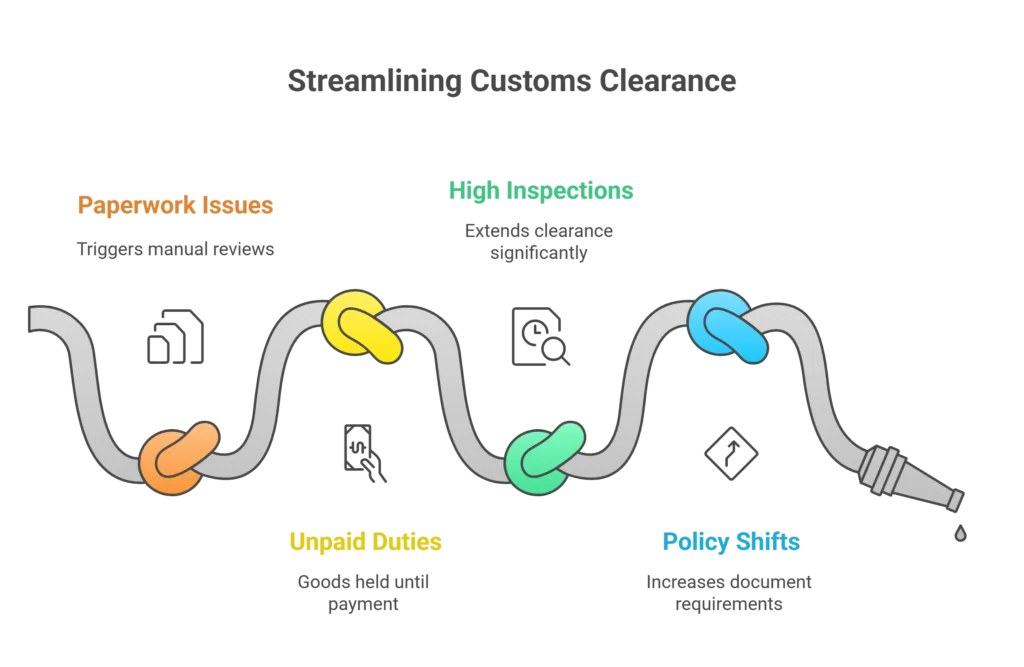
Even when documentation appears correct, shipments can stall before attaining international shipment release status. Common causes include:
- Incomplete or inconsistent paperwork: Customs systems compare documents line by line; missing HS codes or mismatches trigger manual reviews.
- Unpaid duties: Customs will hold goods until duties are paid. Carriers often bill later, but customs won’t release without duty confirmation.
- High inspection volumes: Peak seasons cause audits that extend clearance by 48–72 hours or more.
- Policy shifts: New import rules or tariff changes can suddenly increase document requirements.
Practical tips to avoid delays:
- Pre-validate documents with your customs broker at least 5 business days before shipment arrival.
- Confirm HS codes and values align across all paperwork.
- Pre-pay duties if possible or ensure quick payment arrangements.
- Use electronic data interchange (EDI) submissions to minimize errors.
How Duty & Tariff Changes Affect Clearance
The 2025 Context for Importers
Global trade policy is dynamic in 2025. Several markets are tightening customs entry requirements and duty rules, affecting international shipment release timelines and costs.
For example, in major trade corridors, revised de minimis rules now require low-value imports to undergo full clearance rather than simplified entry, increasing paperwork and inspection likelihood. This trend emerged from recent policy adjustments in key importing markets, affecting duties on shipments previously exempt.
Such changes mean:
- Shipments under formerly duty-free thresholds now require full customs entries.
- The volume of customs inspections has increased, lengthening clearance times.
- Carriers and brokers must provide more detailed documentation to achieve release.
Being aware of these shifts allows importers to plan earlier submission of documents, budget for possible duty differences, and schedule shipments around policy enforcement dates.
Bottom Line
International shipment release is a pivotal milestone in global logistics, indicating that customs has cleared your imported goods for delivery. By understanding the meaning of this status, logistics teams can set realistic delivery expectations. Accurate documentation, timely duty payments, and proactive tracking interpretation are essential to minimize delays. Today’s evolving trade policies require even more precise customs compliance and early planning. Focus on correct commercial invoices, HS codes, and electronic submissions to speed through customs workflows. Regular communication with your customs broker adds another safeguard against unexpected holds.
Disclaimer:
This article is for general informational purposes only. Logistics regulations, customs rules, and tariff requirements can change at any time.