
Table of Contents
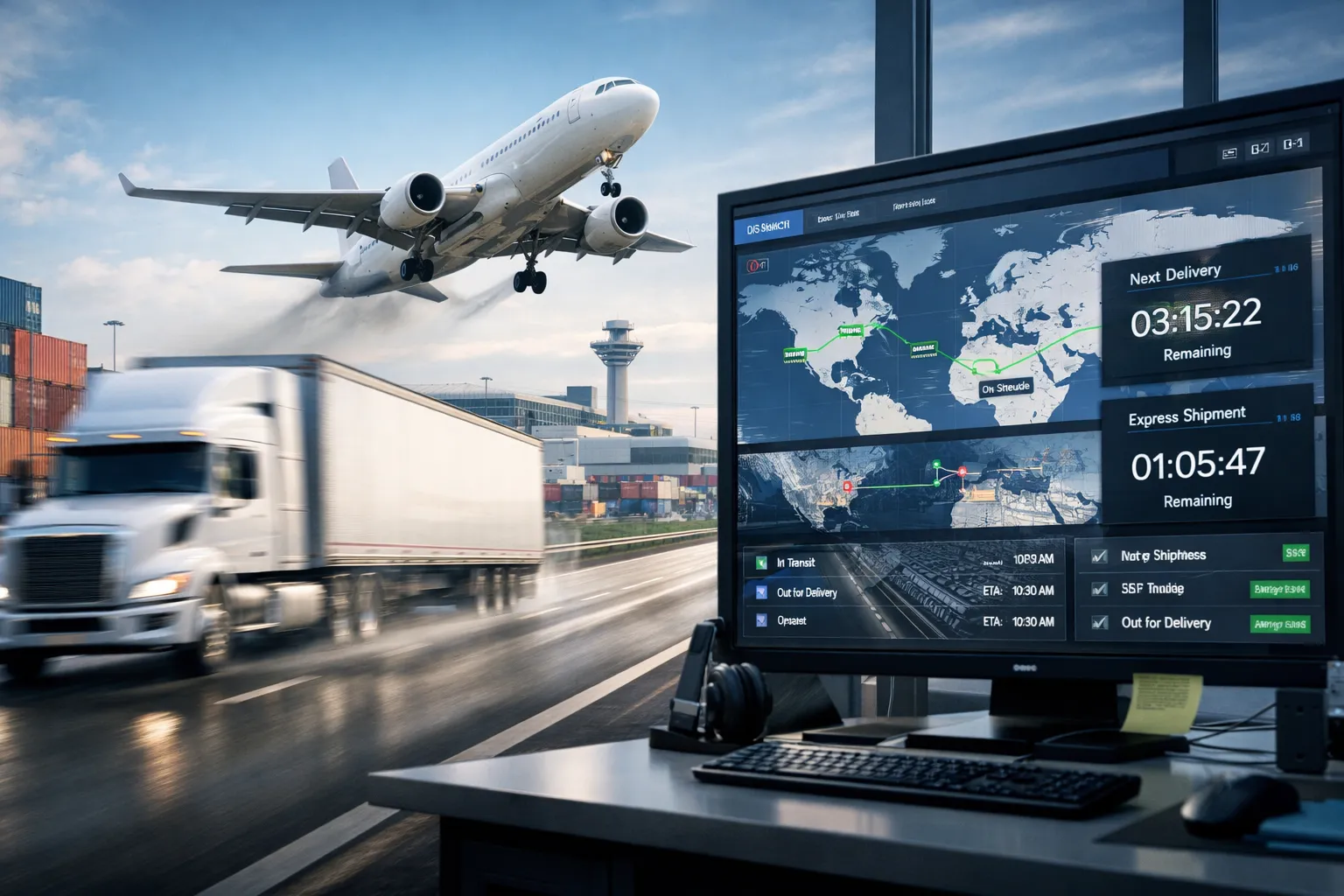
Expedited Freight and Logistics has become a critical solution for businesses that cannot tolerate delivery delays. Global supply chains are faster and more demanding in 2026 than ever before. Manufacturers, retailers, and healthcare suppliers now depend on rapid freight services to maintain operations and avoid costly disruptions.
Expedited shipping prioritises speed above all else. Unlike standard freight, shipments move immediately without waiting for consolidation or scheduled departures. Dedicated trucks, priority air freight, and direct routing ensure goods reach destinations in the shortest possible time.
The demand for fast delivery is growing rapidly. In 2025, urgent freight requests increased by 21% year-over-year globally, driven by e-commerce expansion and just-in-time inventory models. Companies now treat fast logistics as a competitive advantage rather than a luxury.
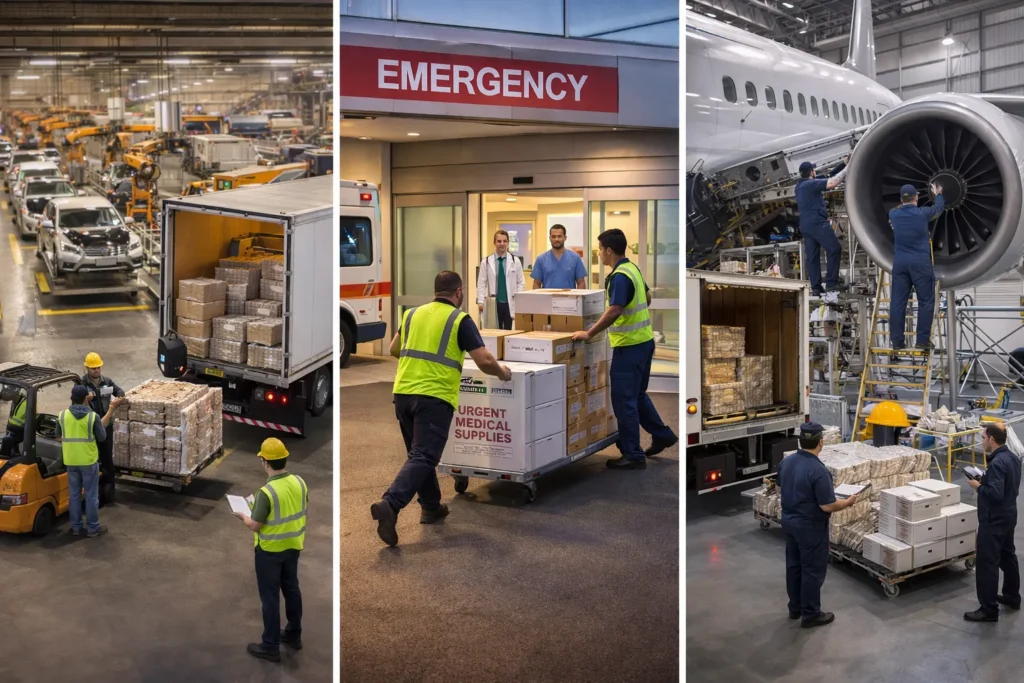
Industries such as automotive manufacturing, pharmaceuticals, aerospace, and electronics rely heavily on Expedited Freight and Logistics to avoid production stoppages and inventory shortages. When a single delayed component can halt a factory line costing £15,000 per minute, speed becomes essential.
What Expedited Freight and Logistics Mean

Definition and Core Concept
Expedited Freight and Logistics refers to priority shipping services designed to move cargo as quickly as possible. Shipments bypass traditional consolidation processes and follow direct routes.
This model eliminates unnecessary stops and transfers. Dedicated transport vehicles or priority air cargo ensure immediate movement. Carriers assign drivers, aircraft space, or logistics teams specifically for urgent shipments.
Unlike standard freight, expedited logistics focuses on time-critical delivery rather than cost efficiency. Companies choose this option when delays would cause operational disruption or financial losses.
When Businesses Use Expedited Freight
Companies rely on expedited services when speed becomes the top priority. Typical scenarios include:
- Manufacturing line shutdown risks
- Emergency medical supply deliveries
- Replacement parts for aircraft or vehicles
- High-value electronics shipments
- Seasonal retail inventory shortages
For example, automotive manufacturers often request emergency parts delivery within 12–24 hours to prevent factory shutdowns.
Expedited shipping solves these urgent logistics challenges efficiently. It ensures goods arrive exactly when operations require them.
Key Transport Methods Used in Expedited Freight

Dedicated Truckload Shipping
Dedicated truckload is one of the most common expedited freight solutions. A truck carries only one shipment and travels directly to the destination.
This method avoids multiple stops and cross-dock handling. Drivers often operate in relay teams to maintain continuous movement across long distances.
Typical transit times include:
- 500 miles: 8–10 hours
- 1,000 miles: 18–22 hours
- 2,000 miles: 36–40 hours
Dedicated trucking works best for domestic deliveries requiring immediate pickup.
Expedited Air Freight
Air cargo provides the fastest international transport option. Expedited shipments receive priority loading and minimal airport handling delays.
Air freight commonly supports industries’ shipping:
- pharmaceuticals
- aerospace components
- electronics
- emergency replacement parts
The International Air Transport Association reported global air cargo demand increased 11.3% in 2025, driven by urgent logistics needs.
Transit times for priority air shipments typically range from 6 hours to 48 hours worldwide, depending on distance.
Hot Shot Trucking
Hotshot trucking uses smaller trucks and trailers for rapid regional deliveries. These vehicles transport urgent loads quickly without waiting for full truck capacity.
Hotshot services are common in oil fields, construction projects, and industrial supply chains. They offer flexibility and speed for shipments weighing under 10,000 pounds. Businesses entering international markets should read a UK guide to international freight forwarding to understand shipping regulations and logistics processes.
Industries That Depend on Expedited Freight
Automotive Manufacturing
Automotive factories rely heavily on just-in-time inventory systems. Parts arrive hours before installation.
If components fail to arrive, production stops immediately. Industry data shows the average assembly line shutdown costs £10,000–£18,000 per minute.
Expedited Freight and Logistics keeps parts moving quickly to prevent these losses.
Healthcare and Pharmaceuticals
Hospitals and laboratories often need urgent medical supplies. Expedited transport delivers:
- vaccines
- diagnostic equipment
- surgical components
- life-saving medications
Cold chain solutions ensure temperature control during transport.
Healthcare logistics demand speed because patient outcomes depend on timely delivery.
Aerospace and Aviation
Aircraft maintenance requires immediate access to specialised components. Airlines use expedited logistics to deliver replacement parts within hours.
Delays in aviation maintenance can ground aircraft and cost airlines £120,000 per day in lost operations. Understanding the most common mode of freight transportation helps businesses choose the fastest and most cost-effective shipping method.
Advantages of Expedited Freight and Logistics
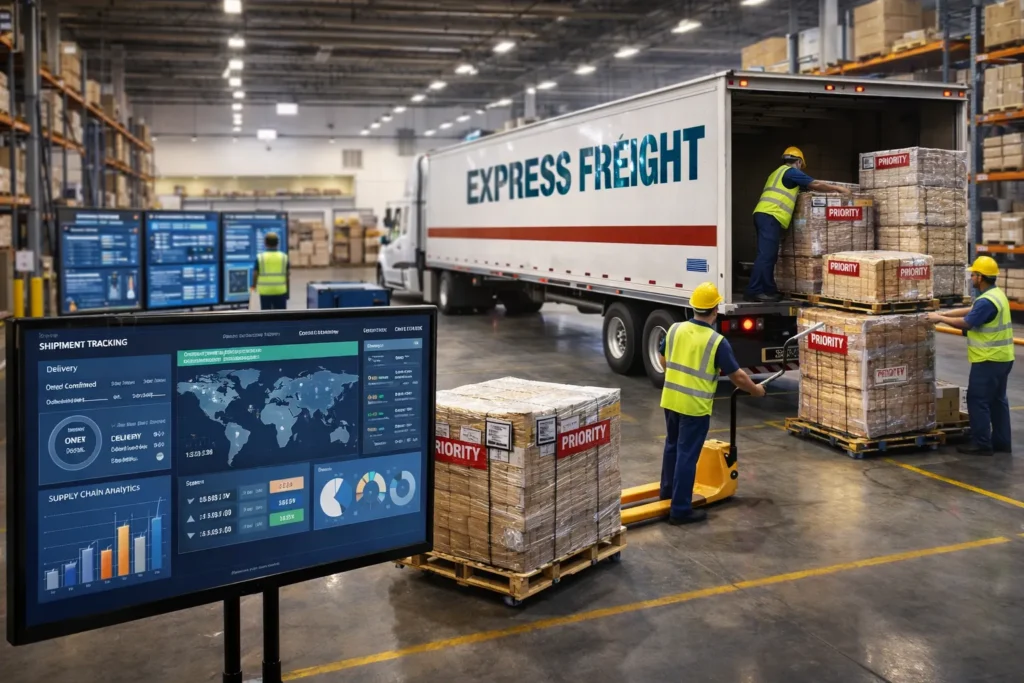
Expedited logistics offers several operational benefits for businesses.
Key advantages include:
- Faster delivery times
- Reduced production downtime
- Improved supply chain reliability
- Lower inventory storage costs
- Greater customer satisfaction
Businesses using expedited shipping often combine it with predictive supply chain analytics.
Cost Comparison: Standard vs Expedited Freight
Expedited shipping costs more because it prioritises speed and dedicated transport resources.
| Freight Type | Typical Transit Time | Average Cost Increase |
|---|---|---|
| Standard Truckload | 3–5 days | Baseline |
| Expedited Truckload | 1–2 days | +35–60% |
| Standard Ocean Freight | 25–40 days | Baseline |
| Expedited Air Freight | 1–3 days | +200–400% |
How Businesses Choose Expedited Freight Services
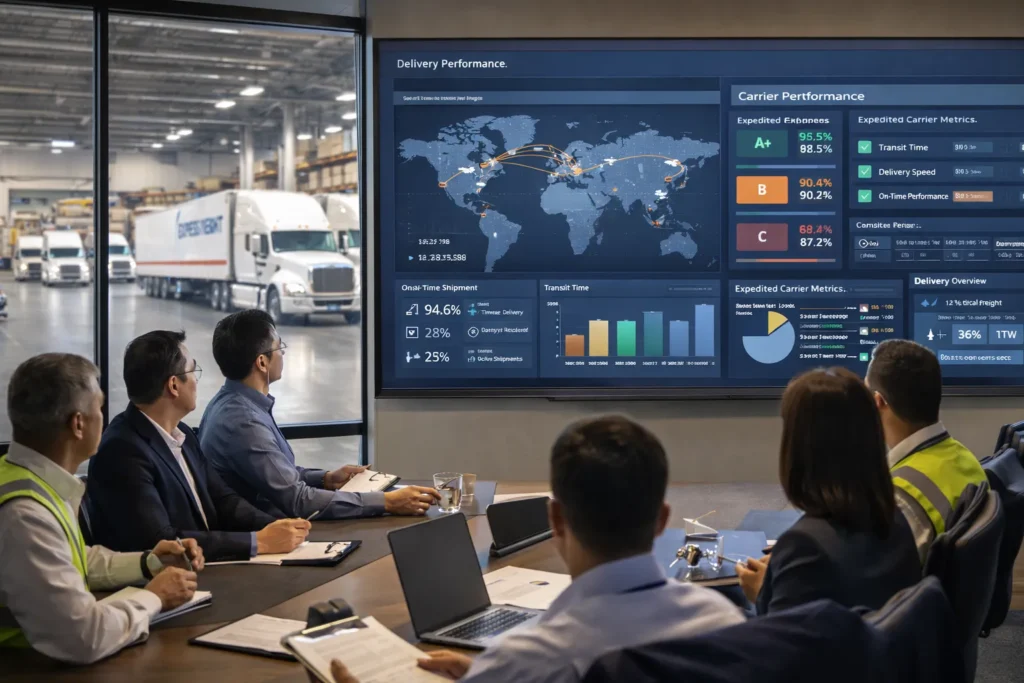
Selecting the right logistics provider requires careful evaluation.
Important factors include:
- carrier reliability
- geographic coverage
- real-time shipment tracking
- customs clearance capability
- 24-hour logistics support
Many logistics companies now use AI-powered routing systems to optimise expedited delivery paths.
Supply chain technology in 2026 allows businesses to monitor shipments in real time and respond to disruptions immediately. Companies increasingly integrate expedited logistics into broader transportation strategies rather than treating it as an emergency tool. If you want to save on tools and equipment, check whether does harbor freight give military discounts before placing your order.
Bottom Line
Expedited Freight and Logistics provides businesses with the speed and reliability required in modern supply chains. When delays threaten operations or customer satisfaction, expedited shipping becomes the fastest solution available.
Industries such as automotive manufacturing, healthcare, and aerospace depend heavily on urgent freight delivery. Dedicated trucks, priority air cargo, and hot shot trucking ensure shipments arrive within hours rather than days.