
Table of Contents
Cold Storage Warehousing UK plays a critical role in protecting food, pharmaceuticals, and temperature-sensitive goods throughout the supply chain. Temperature-controlled logistics ensure products remain safe, compliant, and commercially viable from production to final delivery. In 2026, the UK cold chain sector supports more than 3.6 million cubic metres of refrigerated warehouse capacity, serving supermarkets, healthcare providers, and food manufacturers nationwide.
Demand continues to rise due to online grocery growth, pharmaceutical distribution, and stricter food safety regulations. The Food Standards Agency (FSA) requires chilled food to remain below 8°C, while frozen goods must stay at -18°C or lower. Failure to maintain these standards can cause spoilage, compliance violations, and financial losses.
Modern Cold Storage Warehousing UK operations rely on advanced refrigeration systems, warehouse management technology, and strict monitoring protocols. Operators also prioritise energy efficiency, automation, and traceability to reduce operational costs and maintain product quality.
Understanding Cold Storage Warehousing UK
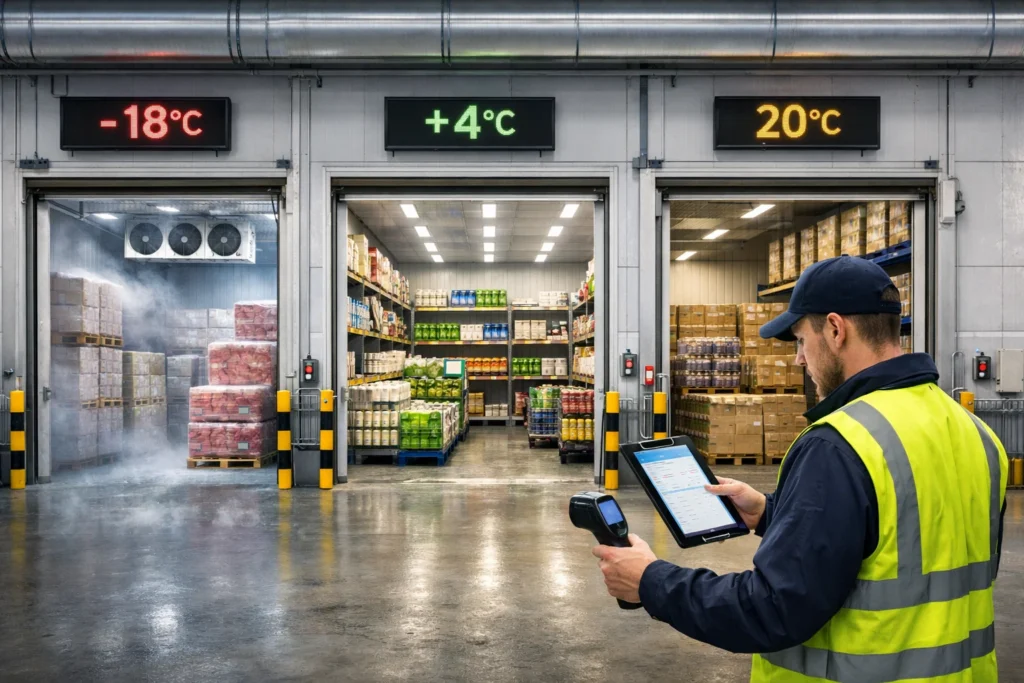
Cold Storage Warehousing UK refers to specialised warehouses designed to maintain controlled temperatures for sensitive products. These facilities use refrigeration systems, insulation technology, and monitoring equipment to keep products within strict temperature ranges.
Temperature control prevents bacterial growth, chemical degradation, and product spoilage. This protection is especially important for fresh food, dairy products, vaccines, and medical supplies.
Temperature Zones Used in Cold Warehouses
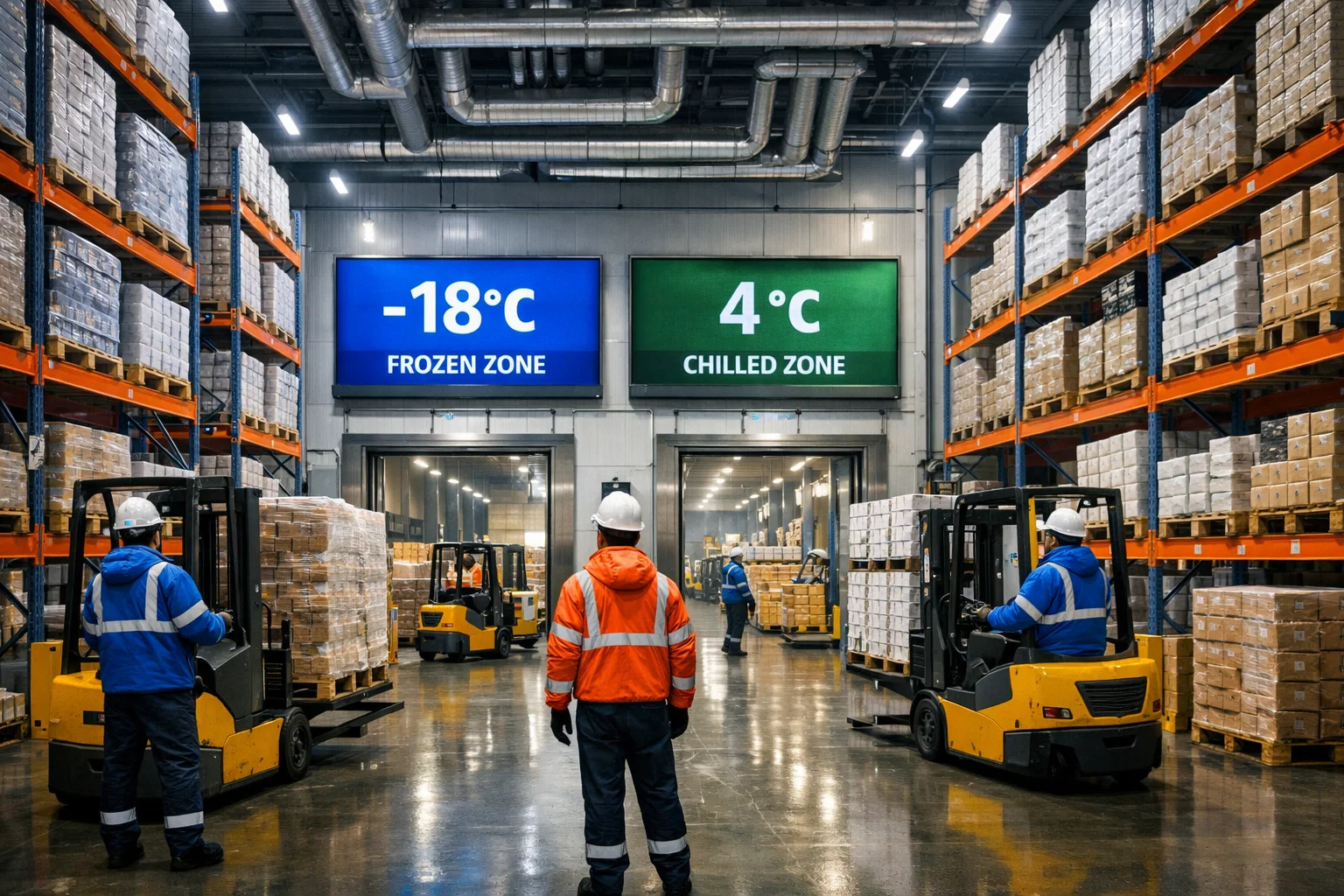
Cold warehouses typically divide storage into defined temperature zones to support different product requirements.
Common zones include:
- Frozen storage: −18°C to −25°C for meat, seafood, and frozen foods.
- Chilled storage: 0°C to 5°C for dairy, fresh produce, and prepared meals.
- Controlled ambient: 8°C to 15°C for certain pharmaceuticals and beverages.
Each zone uses insulated panels, rapid-seal doors, and automated sensors. These systems prevent temperature fluctuations during loading and unloading.
Why Temperature Precision Matters
Temperature variation can damage products quickly. Frozen foods may thaw and refreeze, causing texture changes and microbial risks. Pharmaceutical products can lose effectiveness if exposed to heat.
According to the UK Cold Chain Federation, temperature failures cause up to 10% of food waste during distribution globally. Reliable cold storage infrastructure significantly reduces these losses.
Infrastructure and Technology Behind Cold Warehousing

Cold Storage Warehousing UK facilities rely on specialised infrastructure to maintain stable temperatures and operational efficiency. Modern warehouses combine refrigeration engineering with digital monitoring systems.
These facilities are energy-intensive operations. Electricity powers compressors, evaporators, and air circulation systems that maintain consistent temperatures across large storage spaces.
Refrigeration Systems and Insulation
Refrigeration units circulate refrigerant gases that absorb heat and maintain low temperatures. Industrial systems often use ammonia or CO₂ refrigerants due to their efficiency and lower environmental impact.
Key infrastructure components include:
- High-density insulated wall panels.
- Vapour barriers to prevent moisture damage.
- Air curtains and sealed loading bays.
- Rapid-closing doors to reduce temperature loss.
Proper insulation reduces energy consumption while maintaining stable internal climates.
Warehouse Management Systems (WMS)
Digital systems play a major role in modern cold chain operations. Warehouse Management Systems track product locations, temperatures, and expiry dates in real time.
Key benefits include:
- Automated stock rotation using FIFO or FEFO rules.
- Temperature monitoring with instant alerts.
- Improved traceability for regulatory compliance.
Industries That Depend on Cold Storage Warehousing in the UK
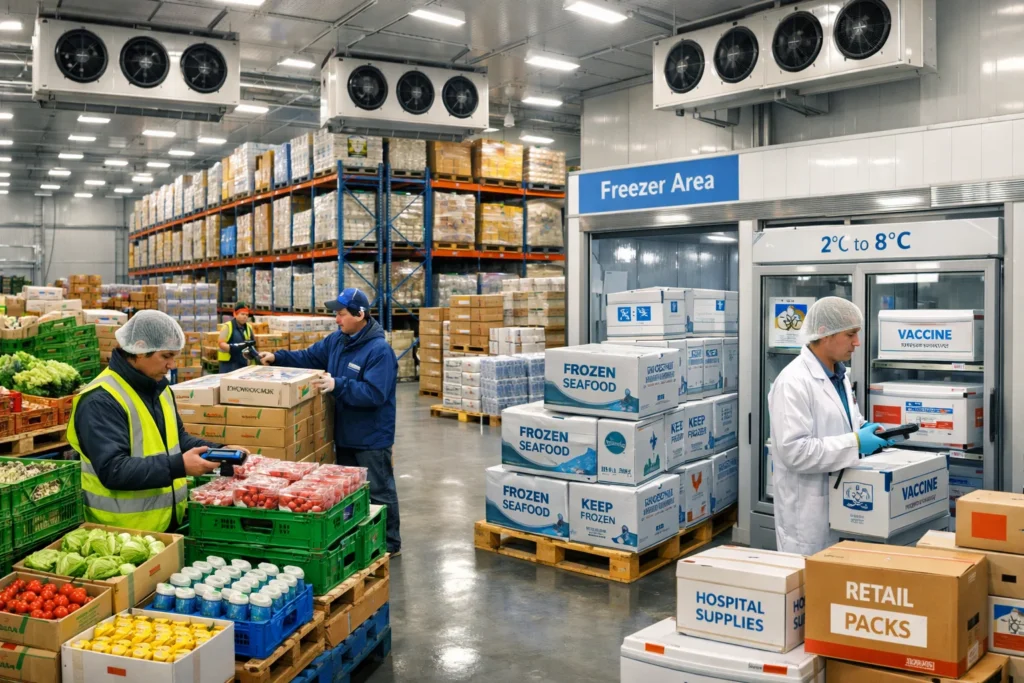
Several industries rely heavily on Cold Storage Warehousing UK infrastructure. Temperature-controlled logistics protect product integrity across food production, healthcare, and manufacturing sectors.
Food and Beverage Distribution
The UK food supply chain depends on refrigerated storage to maintain freshness and safety. Supermarkets, restaurants, and food processors rely on chilled distribution networks daily.
Typical products include:
- Fresh meat and poultry.
- Dairy and ready meals.
- Frozen foods and seafood.
- Fruit and vegetables.
Strict compliance with food safety regulations ensures products remain safe for consumers.
Pharmaceutical and Healthcare Logistics
Pharmaceutical distribution requires extremely precise temperature control. Vaccines, insulin, and biological medicines often require storage between 2°C and 8°C.
Cold warehouses therefore provide:
- Controlled environments for sensitive medicines.
- Continuous temperature monitoring.
- Secure handling procedures for medical products.
This infrastructure supports the UK healthcare system and ensures medicines remain effective.
E-Commerce Grocery Fulfilment
Online grocery orders increased sharply after 2020 and continue growing in 2026. Retailers now operate automated cold fulfilment centres to support home delivery.
These facilities integrate cold storage with rapid order picking systems. This model enables faster distribution while maintaining strict temperature control.
Cold Chain Logistics and Distribution Processes
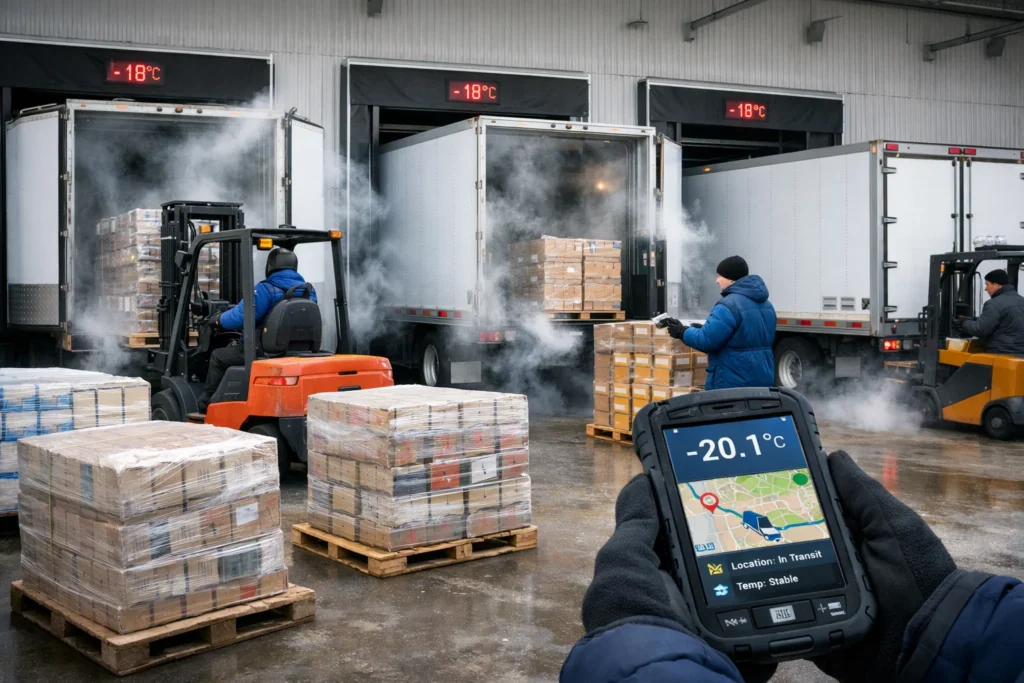
Cold Storage Warehousing UK is only one stage of the broader cold chain. Products must remain within safe temperature ranges during transportation and delivery.
Maintaining the cold chain requires coordination between storage facilities, refrigerated vehicles, and monitoring systems.
Key Cold Chain Stages
Cold chain logistics typically includes several operational stages:
- Production cooling and packaging.
- Transport to refrigerated warehouses.
- Temperature-controlled storage.
- Distribution via refrigerated vehicles.
- Retail or healthcare delivery.
Each stage must maintain strict temperature monitoring to prevent product degradation.
Role of Refrigerated Transport
Refrigerated vehicles maintain temperature conditions during distribution. These vehicles use onboard cooling systems and insulated trailers.
Logistics providers track vehicle temperatures through GPS-enabled sensors. Real-time alerts allow operators to respond quickly if temperatures exceed safe limits.
Compliance and Regulations for Cold Storage in the UK
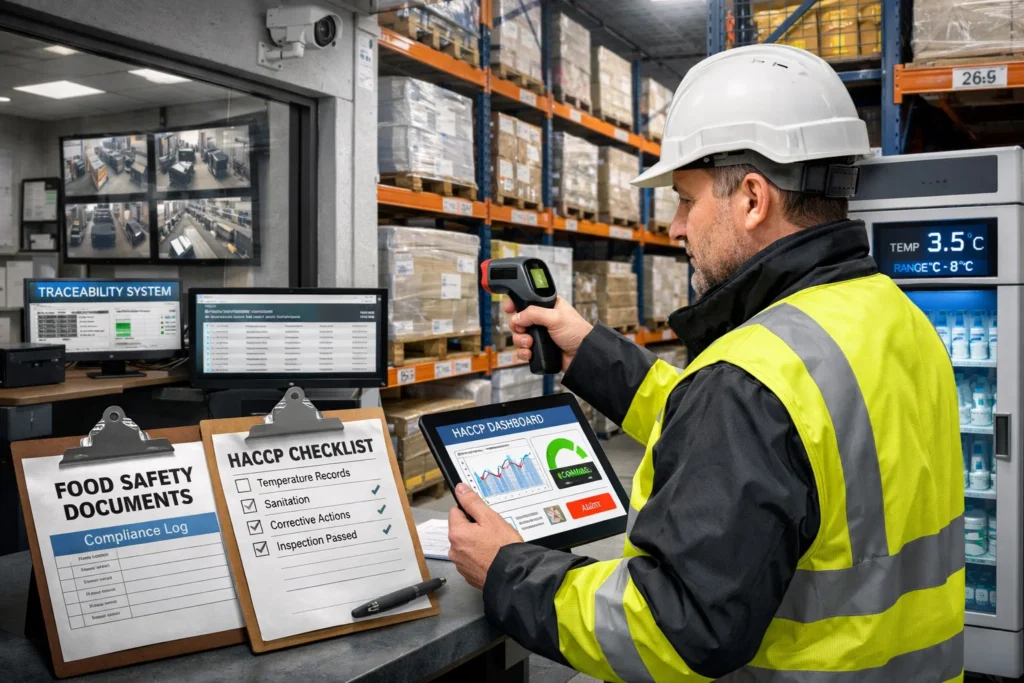
Cold Storage Warehousing UK operations must comply with strict food safety and pharmaceutical regulations. These regulations ensure product quality and protect public health.
The UK government enforces several regulatory frameworks affecting cold storage logistics.
Key Regulatory Requirements
Important regulations include:
- The Food Safety Act 1990 governs food handling standards.
- HACCP systems for hazard analysis and food safety management.
- Good Distribution Practice (GDP) guidelines for pharmaceuticals.
Businesses must maintain detailed records of storage temperatures and handling procedures.
Importance of Traceability
Traceability allows businesses to track products throughout the supply chain. Warehouse systems record batch numbers, storage conditions, and shipment data.
If contamination occurs, companies can quickly identify affected products. This capability reduces recall costs and protects consumer safety.
Cold Storage Warehouse Temperature Guide
The table below shows standard temperature ranges used in Cold Storage Warehousing UK operations.
| Storage Type | Temperature Range | Typical Products |
|---|---|---|
| Frozen storage | −18°C to −25°C | Meat, seafood, frozen meals |
| Chilled storage | 0°C to 5°C | Dairy, fresh produce, ready meals |
| Pharmaceutical storage | 2°C to 8°C | Vaccines, insulin, medicines |
| Controlled ambient | 8°C to 15°C | Certain beverages, supplements |
Bottom Line
Cold Storage Warehousing UK is essential for maintaining product quality across food, pharmaceutical, and temperature-sensitive supply chains. Temperature control prevents spoilage, protects the effectiveness, and ensures compliance with UK safety regulations.
Modern cold warehouses combine advanced refrigeration systems, digital monitoring, and automated inventory management. These technologies improve efficiency while reducing operational risks. They also help businesses meet growing demand from online grocery, healthcare distribution, and food manufacturing.