
Table of Contents
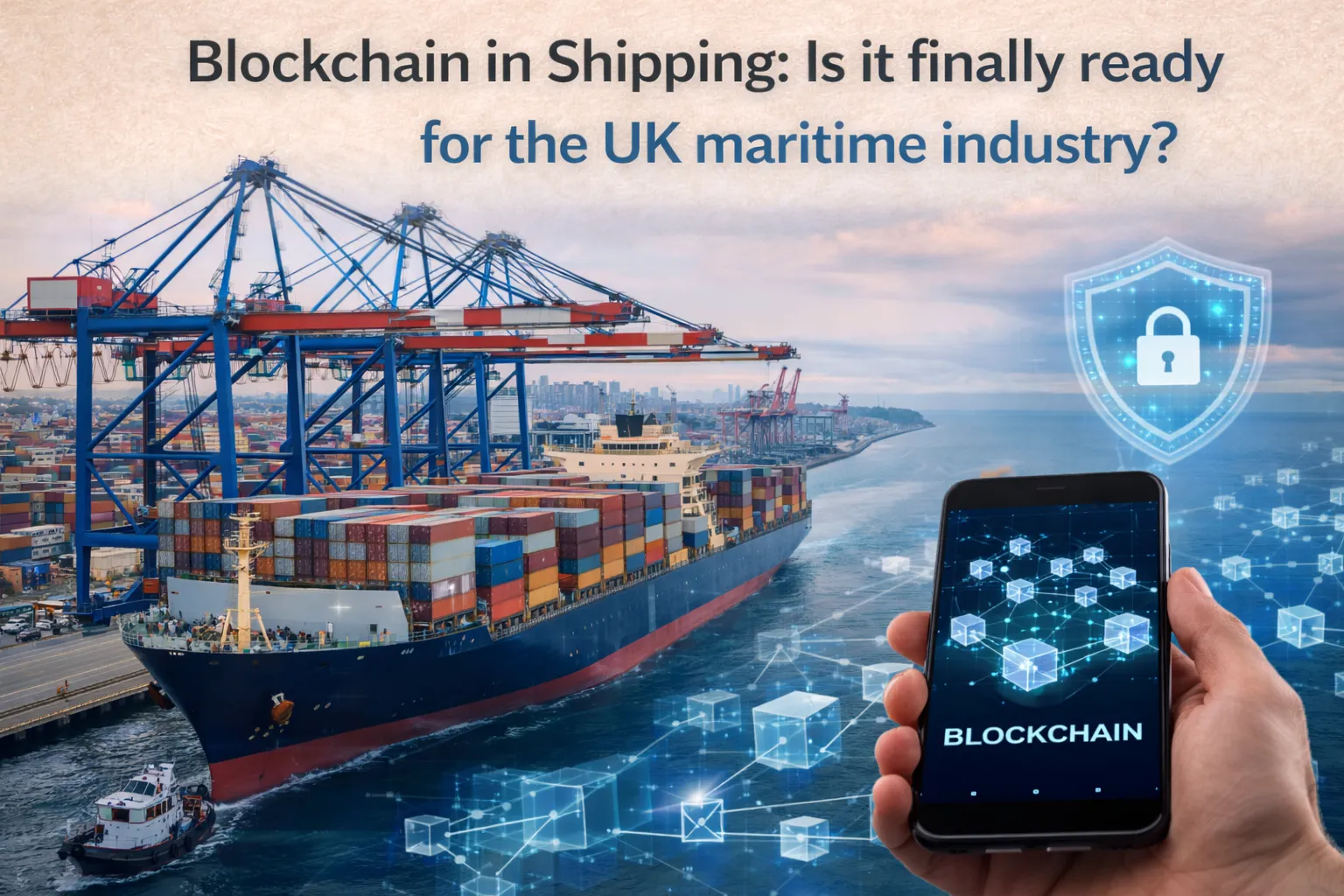
Blockchain in Shipping has moved from theory to pilot projects across global trade lanes. In 2026, the UK maritime industry faces pressure to digitise documentation, cut fraud, and meet stricter compliance rules. The UK handled 458 million tonnes of freight in 2024, according to the Department for Transport. That volume demands faster, more secure data exchange across ports, carriers, and customs.
We now see the Electronic Trade Documents Act adoption accelerating across the UK. Since September 2023, electronic bills of lading have held the same legal status as paper. This change removes a key legal barrier to Blockchain in Shipping.
At the same time, the Environment Act 2021 requires clearer reporting on waste and emissions. Digital audit trails support that requirement. The question is no longer theoretical. The question is whether Blockchain in Shipping can scale across UK ports and shipping lines in 2026.
Why Blockchain in Shipping Matters for UK Trade

Blockchain in Shipping creates a shared ledger for transactions, documents, and cargo milestones. Every authorised party sees the same verified record. That structure reduces disputes and manual reconciliation. In the UK container trade, documentation errors still cause up to 10 percent of shipment delays. Those delays increase demurrage and storage charges at ports such as the Port of Felixstowe.
Eliminating Paper Bottlenecks
Paper bills of lading take five to ten days to transfer internationally. Blockchain platforms can reduce that to minutes. DNV reports that digitised documentation can cut administrative costs by up to 20 percent.
For UK exporters, that time saving reduces working capital pressure. Faster document transfer means earlier customs clearance. That directly improves cash flow.
Strengthening Trust in Multi-Party Logistics
UK maritime trade involves carriers, freight forwarders, port operators, insurers, and HMRC. Each uses separate systems. Blockchain in Shipping creates a single source of truth. That reduces fraud risk in high-value cargo sectors such as automotive and pharmaceuticals.
According to MarineLink, blockchain pilots have reduced documentation disputes by over 30 percent in trial corridors. The operational value lies in fewer claims and faster settlements. That efficiency matters in a margin-sensitive industry.
Regulatory Alignment in 2026
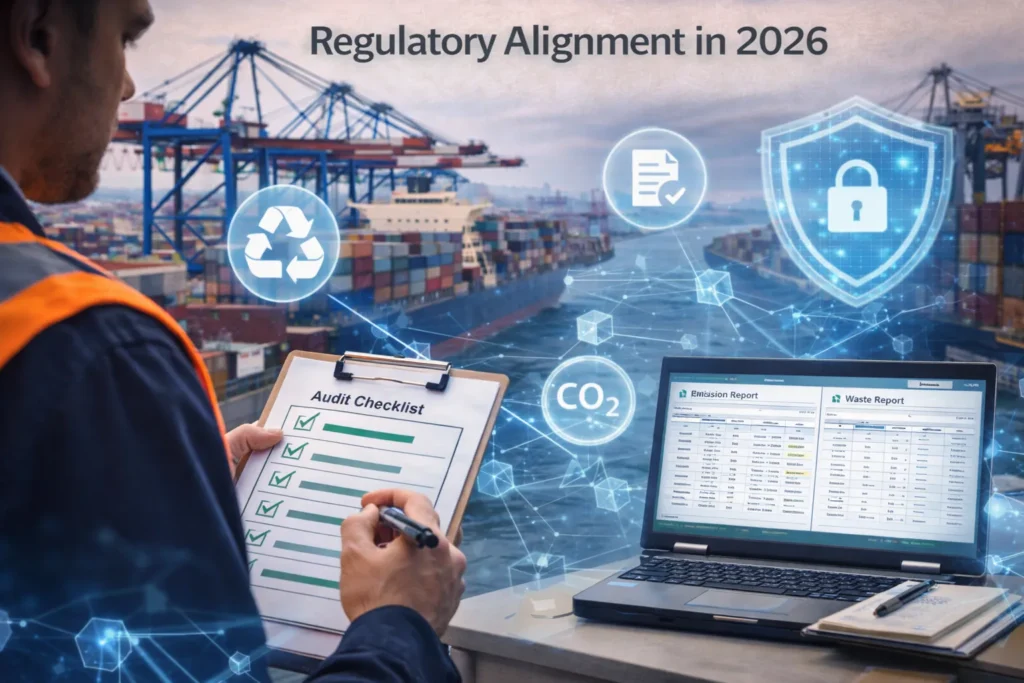
UK compliance rules now favour digital traceability. Blockchain in Shipping aligns well with these requirements. The Environment Act 2021 mandates transparent waste tracking and emissions reporting. Maritime operators must provide verifiable records during audits.
Electronic Trade Documents Act Impact
The Electronic Trade Documents Act 2023 eliminated the requirement for physical possession of documents. This shift gives legal backing to blockchain-based bills of lading. Without legal recognition, adoption would come to a halt. With it, major carriers now expand digital trade corridors.
Research published in Frontiers in Marine Science in January 2025 shows blockchain systems improve data integrity by 45 percent compared to legacy databases.
Data Protection and GDPR Considerations
Blockchain in Shipping must still comply with UK GDPR. Personal data cannot be immutable without safeguards. Most maritime platforms use permissioned blockchains with restricted access. Data encryption and off-chain storage address privacy concerns. You might also like to read our detailed guide on How AI and IoT are Reshaping UK Logistics.
Operational Gains Across UK Ports

UK ports face rising throughput and labour constraints. Blockchain in Shipping supports automation and reduces manual verification tasks. That change increases port efficiency.
Key operational benefits:
- 20 percent lower administrative processing costs.
- 30 percent fewer document-related shipment delays.
- Reduced fraud exposure in cross-border trade.
- Faster customs clearance under CDS integration.
The UK Customs Declaration Service processes over 300 million declarations annually. Manual errors create costly rejections. Blockchain in Shipping integrates digital documentation directly with customs platforms. That reduces data duplication. Learn more in our article on forecast demand in the UK.
Cost vs Value: A Practical Comparison
Adoption requires investment. Platforms, integration, and training create upfront costs. However, long-term savings often outweigh those costs.
| Factor | Traditional Process | Blockchain-Based Process |
|---|---|---|
| Bill of lading transfer | 5–10 days | Minutes |
| Documentation error rate | Up to 10% | Under 3% |
| Admin processing cost | High manual labour | 20% lower |
| Fraud risk | Moderate | Reduced via ledger verification |
Initial implementation for mid-sized UK operators can range from £250,000 to £500,000, depending on integration scope. Yet dispute reduction and faster cargo release often recover costs within three years.
Barriers Still Facing Adoption
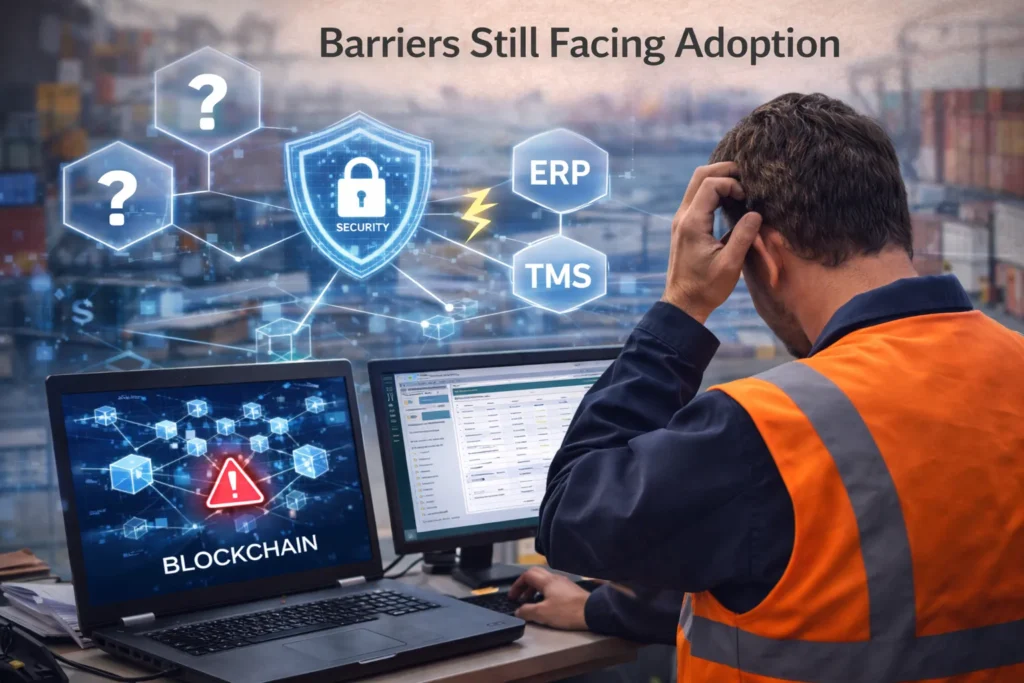
Despite progress, full rollout remains uneven. Many SMEs lack technical expertise. Integration with legacy ERP and TMS systems creates friction. Cybersecurity concerns also slow adoption.
Hapag-Lloyd highlights that industry-wide standardisation remains incomplete. Without shared standards, platforms risk fragmentation. Don’t miss our recent post about WMS vs TMS.
Bottom Line
Blockchain in Shipping is no longer experimental for the UK maritime industry. Legal recognition, regulatory alignment, and pilot results show practical readiness in 2026. Ports, carriers, and customs authorities now operate in a digital-first environment. Efficiency gains of 20 percent in administration and 30 percent fewer disputes offer strong incentives.
Adoption should follow a phased strategy. Start with digital bills of lading. Integrate with customs systems next. Train teams before scaling across trade corridors. The technology is ready. The real task is building industry-wide collaboration.