
Table of Contents
In global container shipping, much attention is given to the movement of loaded containers. However, an equally critical and often underestimated stage is the empty return. This phase directly affects costs, container availability, and overall supply chain efficiency.
What Is Empty Return in Container Shipping?
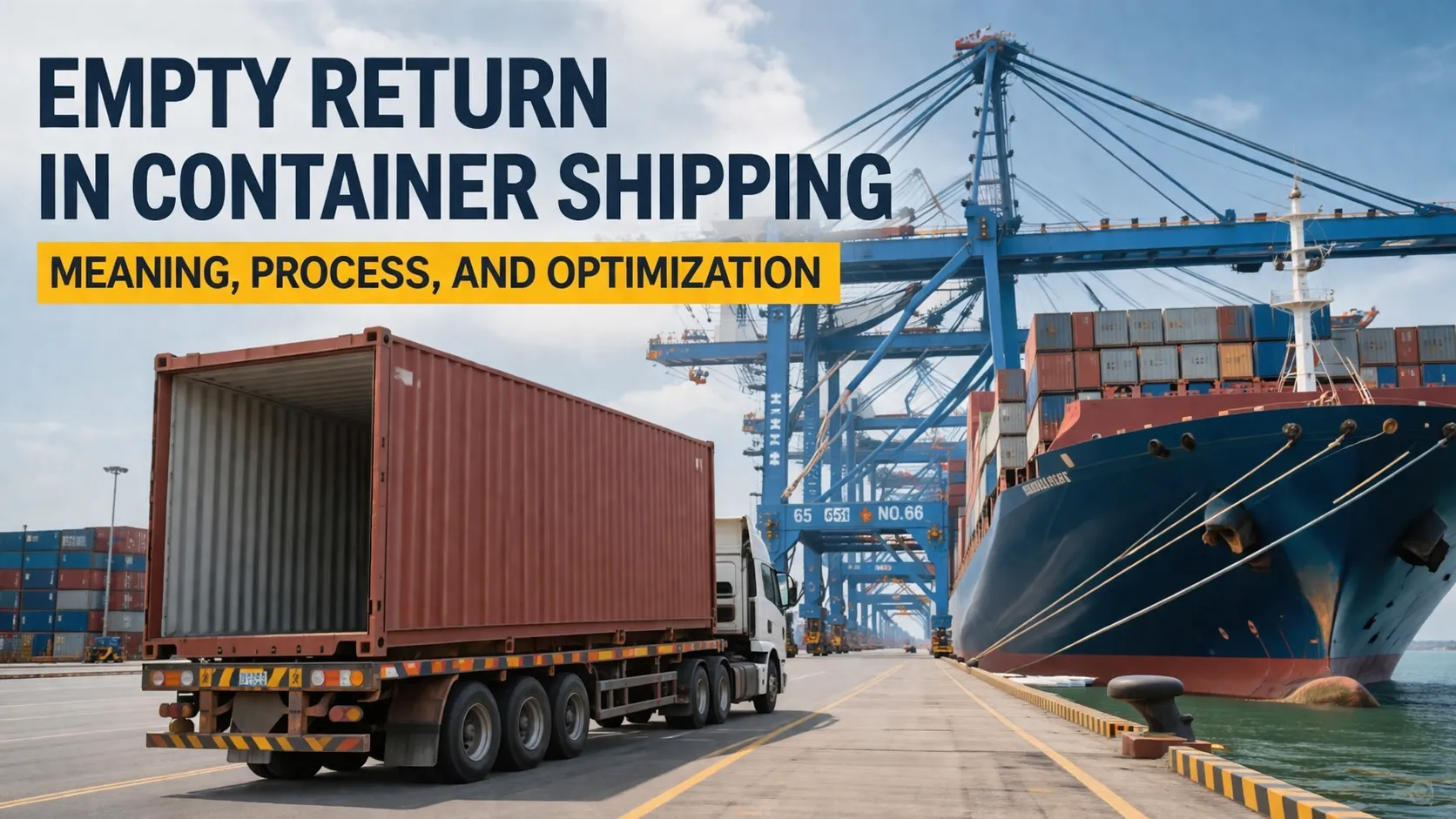
Empty return (or empty container return) refers to the process of sending a shipping container back after the cargo has been unloaded at its destination.
Once a container completes its primary task, delivering goods, it becomes an empty asset that must be repositioned for reuse. Typically, it is returned to:
- a container yard (CY),
- a port terminal,
- or a designated depot assigned by the carrier.
This step ensures that containers remain in circulation and are available for future shipments, which is essential for maintaining global trade flows.
The Role of Empty Return in Logistics
An empty return is not just a routine operational step; it plays a strategic role in the shipping ecosystem.
1. Maintaining Container Availability
Containers are valuable assets. Their timely return ensures that shipping lines have sufficient equipment for new shipments.
2. Balancing Global Trade Flows
Trade imbalances often create surpluses of containers in importing regions and shortages in exporting ones. Empty returns and repositioning help correct this imbalance.
3. Avoiding Additional Costs
Delays in returning containers can result in:
- detention charges,
- storage fees,
- operational inefficiencies.
4. Reducing Port Congestion
Unreturned containers occupy valuable space in terminals, slowing down cargo handling operations and affecting throughput.
In short, efficient empty return management is essential for both operational continuity and cost control.
The Full Container Shipping Process (Including Empty Return)
To understand the importance of empty return, it is useful to look at the entire lifecycle of a shipping container.
1. Empty Container Pickup: The process begins when an empty container is collected from a depot or terminal and transported to the shipper’s warehouse for loading.
2. Loading (Stuffing): Goods are loaded into the container and sealed for transport.
3. Inland Transportation: the loaded container is transported (by truck or rail) to the port of departure.
4. Ocean Freight: The container is loaded onto a vessel and shipped to the destination port.
5. Discharge at Destination: Upon arrival, the container is unloaded from the vessel and moved to a terminal or inland facility.
6. Cargo Unloading (Unstuffing): The consignee receives the goods, and the container becomes empty.
7. Inspection and Preparation: Before return, the container may be inspected, cleaned, or repaired if needed.
8. Empty Return: The empty container is returned to a designated location (depot, terminal, or yard) specified by the carrier.
9. Repositioning and Reuse: Depending on demand, the container may:
- be reused locally,
- or repositioned to another region where containers are needed.
This cyclical process highlights how empty return connects the end of one shipment with the beginning of the next.
Challenges in Empty Container Return
Despite its importance, empty return is one of the most complex stages in logistics.
Key challenges include:
- Changing return locations due to terminal congestion
- Limited depot capacity, especially in busy ports
- Tight deadlines, leading to detention fees
- Coordination issues between carriers, truckers, and consignees
Additionally, global trade imbalances mean that millions of containers must be moved empty across long distances, increasing costs and inefficiencies.
How Logistics Teams Optimize Empty Return
To manage these challenges, logistics professionals rely on a combination of planning strategies and digital tools.
1. Accurate Planning and Slot Booking
Confirming return locations and booking time slots in advance helps avoid delays and congestion.
2. Street Turns (Reuse Without Return)
In some cases, containers are directly reused for a new shipment without being returned to a depot, reducing unnecessary movements.
3. Data-Driven Repositioning
Shipping lines analyze demand patterns to move empty containers to regions where they are needed most.
4. Real-Time Container Tracking
One of the most effective optimization methods is real-time tracking of containers across their entire journey.
Tracking tools allow logistics teams to:
- monitor container status and location,
- anticipate arrival and unloading times,
- plan empty returns in advance,
- avoid missed deadlines and detention fees.
For example, platforms like TimeToCargo provide a consolidated view of container movements across multiple carriers. By tracking containers in real time from loading to empty return, logistics teams can better coordinate each stage of the shipment lifecycle and make faster operational decisions.
Instead of relying on fragmented data from different shipping lines, having a single interface for container tracking helps reduce uncertainty and improve the efficiency of empty return operations.
Why Tracking Tools Are Critical
The complexity of modern supply chains makes manual coordination insufficient. Without visibility:
- return deadlines are easily missed,
- containers may be sent to the wrong depot,
- and logistics costs increase significantly.
Tracking platforms help transform empty returns from a reactive process into a predictable and optimized workflow.
Bottom Line
Empty return is a fundamental yet often overlooked component of container shipping. It ensures that containers remain in circulation, supports global trade balance, and directly impacts logistics costs.
As supply chains become more complex, efficient empty return management is no longer optional. By combining operational best practices with modern tracking tools like TimeToCargo, logistics teams can improve visibility, reduce delays, and optimize container utilization across the entire shipping cycle.