
Table of Contents
Forecasting demand in the UK retail sector is no longer a manual exercise. Today’s retailers rely on predictive analytics powered by artificial intelligence (AI) to drive accurate sales forecasts, optimise stock levels, and improve logistics planning. Predictive analytics transforms historical data, promotional calendars, and external signals into reliable insights on future demand.
Leading industry estimates place the UK AI in the retail market at USD 554.78 million in 2025, with projected growth to USD 2,469.74 million by 2034 at an 18.05% compound annual growth rate (CAGR). Retailers like Waitrose already expanded AI-driven forecasting partnerships in 2024 to enhance stock accuracy and reduce waste, showing how demand models influence the supply chain.
UK regulation, particularly under data protection and logistics compliance frameworks such as GDPR and UK data protection law, shapes how retailers can ethically and legally use consumer data for forecasting. Within the wider context of Reshaping UK Logistics, we explore how AI-powered predictive analytics supports demand forecasting, the associated regulatory implications, and the practical takeaways for UK retail logistics teams.
What Predictive Analytics Means for UK Retail
Predictive analytics uses statistical algorithms and machine learning to analyse data and forecast future outcomes. At its core, this technology turns raw retail data into actionable predictions on stock requirements, promotional impact, and seasonal demand.
In the UK retail context, predictive analytics feeds into logistics by enabling companies to forecast demand spikes and plan distribution. For example, AI models can incorporate weather patterns, holiday trends, and historical sales to improve accuracy. These models are increasingly important as shoppers expect availability and personalised experiences across channels.
UK Market Size and Growth of AI-Driven Forecasting
The UK AI in retail market was valued at USD 554.78 million in 2025. It is expected to grow to USD 2,469.74 million by 2034, at a CAGR of 18.05% from 2026 to 2034.
| Metric | Value |
|---|---|
| UK AI in retail market (2025) | USD 554.78 million |
| Projected 2034 value | USD 2,469.74 million |
| CAGR (2026–2034) | 18.05 % |
| Dominant tech share (Machine Learning) | 40.13 % |
| Online Retail share | 65 % |
Machine learning leads adoption, particularly in demand forecasting, CRM, and inventory optimisation. Retailers investing in AI analytics gain better forecasts and smarter logistics decisions. Software integration decisions often depend on WMS vs TMS software for UK logistics firms.
UK Regulatory Context for Demand Forecasting

Retailers operating in the UK must align predictive analytics with data protection and logistics regulations. The UK GDPR governs the use of personal data, so retailers must ensure transparency and lawful processing when using customer behaviour data in forecasting models. Data minimisation and purpose limitation are core principles that predictive analytics platforms must respect.
In logistics, compliance with trading standards and supply chain traceability requirements also affects how forecast data is used. For instance, accurate forecasting helps meet supply chain due diligence obligations under UK-specific food traceability law, reducing spoilage and ensuring product availability. Retailers should also align AI ethics frameworks with the Centre for Data Ethics and Innovation (CDEI) guidance on the use of AI, ensuring algorithms do not propagate bias.
Benefits of AI-Driven Demand Forecasting
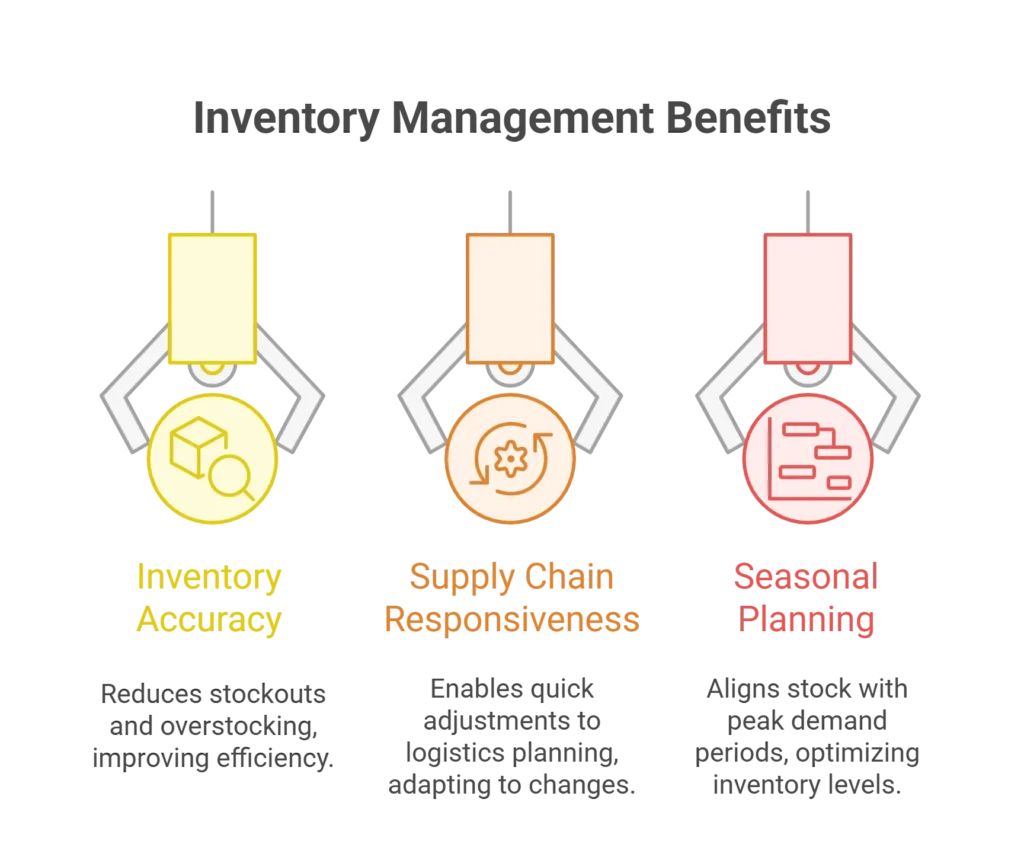
AI improves demand forecasts by analysing diverse data sets, cutting reliance on manual planning and gut feel. For UK retailers, benefits include:
- Improved inventory accuracy, reducing stockouts and overstocking.
- Enhanced supply chain responsiveness, enabling quick adjustments to logistics planning.
- Better seasonal and promotional planning, aligning stock with peak demand periods.
Granular forecasting at the SKU and store level allows logistics teams to optimise warehouse allocation and transport routes ahead of demand spikes. This delivers both cost efficiencies and elevated customer satisfaction.
Case Study: AI Forecasting in UK Retail Logistics
In 2024, Waitrose expanded its AI-driven demand forecasting in partnership with Blue Yonder. The AI model integrated variables such as local store behaviour and seasonal data to reduce stockouts and improve customer satisfaction. This initiative helped Waitrose match supply more closely with anticipated demand, streamlining logistics and reducing waste. Real-time insights become even stronger when combined with IoT cold chain monitoring in UK transport.
Challenges and Practical Barriers

Despite clear benefits, UK retailers face hurdles when deploying predictive analytics:
- Data quality issues, where inconsistent data yields unreliable models.
- Integration complexity across legacy systems.
- Skills gaps, as data science expertise remains in short supply.
Logistics teams must prioritise rigorous data governance and invest in staff training to unlock the value of predictive analytics.
Bottom Line
Predictive analytics is reshaping how UK retailers forecast demand and run logistics. With the UK AI in the retail market poised for growth and regulatory frameworks such as the UK GDPR guiding ethical data use, AI forecasting offers tangible benefits for inventory and supply chain operations. Logistics leaders should embrace AI forecasting, prioritise compliance, and invest in data quality to reduce costs and meet customer expectations. In doing so, retailers secure a competitive advantage and enhance operational resilience across the UK retail landscape.
FAQs
What does it mean to forecast demand in the UK retail sector?
Predicting future customer demand using data analytics and AI models to align stock and logistics.
How does predictive analytics improve inventory management?
It analyses historical and real-time data to reduce stockouts and overstock.
Is AI-based forecasting compliant with UK data laws?
Yes, if it follows UK GDPR and data minimisation principles.
What’s the main benefit of AI forecasting in logistics?
Greater accuracy in stock planning and reduced supply chain inefficiencies.
Do UK retailers already use AI for demand forecasting?
Yes, leading UK retailers have implemented AI forecasting systems to optimise stock.
Disclaimer
This article is for general informational purposes only. It does not constitute legal, financial, or operational advice for logistics or retail businesses.