
Table of Contents
We start with the container shipping trends shaping the UK’s maritime logistics in 2025. Containerised freight remains central to UK international trade, even as total port freight traffic settles at lower levels not seen since the year 2000. Across the UK, 51 major seaports, total tonnage in 2024 recorded at 429.7 million tonnes, a 1% decline from 2023, driven by shifts in global demand and trade routes.
Felixstowe, Southampton and London Gateway handle most container volumes in Britain. Felixstowe consistently leads as the largest container hub, processing around 50% of the UK container traffic in 2025, with a capacity near 4.2 million TEUs. Southampton follows as the second largest, handling close to 1.8–2.0 million TEUs. London Gateway has emerged strongly, expanding its role with rising throughput and automation.
These ports are pivot points for imports from Asia and exports to global partners, including the United States and Europe. Deep-sea and short-sea dynamics are shifting, with deep-sea container tonnage rising and export patterns adjusting after Brexit.
The result is a UK container shipping market that is adapting to global pressures while investing in capacity and connectivity, supporting efficient International Freight Forwarding.
UK Container Traffic Performance in 2024‑25

Understanding the latest data
The UK’s maritime freight statistics for 2024 show international traffic reached 334.5 million tonnes, up slightly from 2023. Although total tonnage fell marginally in 2024 compared with 2023, deep-sea container traffic climbed by 6%, with notable increases on long-haul routes.
Container shipping trends in the UK reveal that imports are driving much of this growth, even as exports decline slightly. China was the largest contributor to deep-sea container volume increases in 2024, accounting for a substantial share of the uptick. These patterns underline changing global trade flows and the UK’s positioning in them.
UK Port Traffic Metrics 2024–25
| Metric | 2023 | 2024 |
|---|---|---|
| Total UK port tonnage | ~433 million t | 429.7 million t |
| International traffic | ~331 million t | 334.5 million t |
| Deep-sea container traffic | Growth trend | +6% |
This table shows tonnage flows have steadied, though broader freight volumes remain subdued.
Port of Felixstowe: UK Container Leader
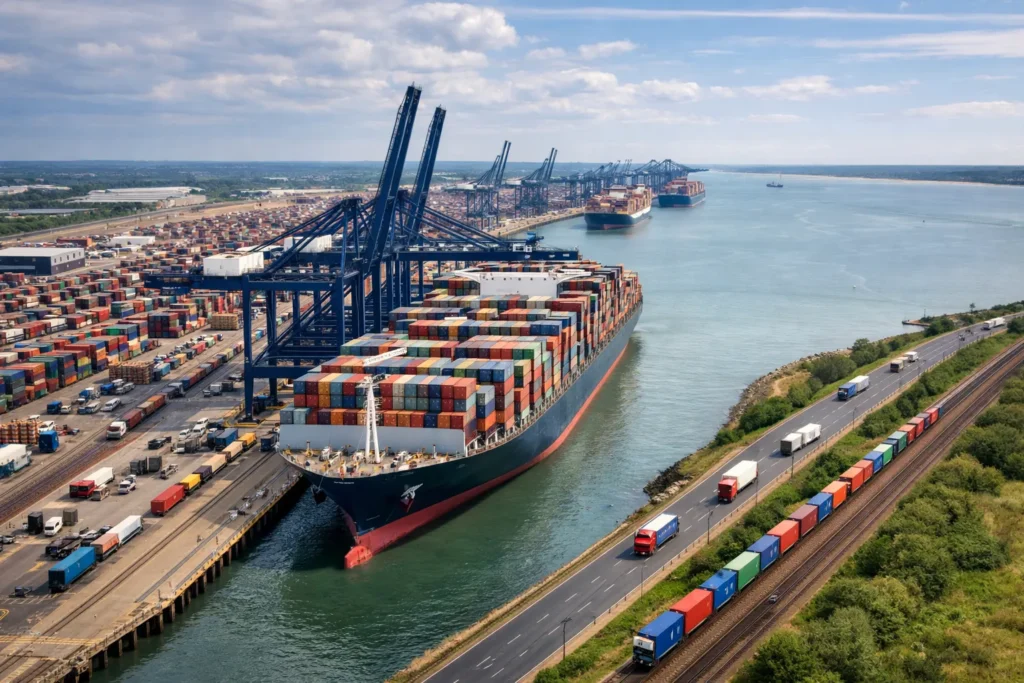
Felixstowe remains the dominant container gateway
At the heart of container shipping trends in the UK is the Port of Felixstowe. Located on the Suffolk coast, it handles nearly half of all containerised trade in Britain. The port’s deep-water berths and advanced handling systems accommodate ultra-large container ships over 400 metres long.
In 2025, Felixstowe’s container volume capacity is reported at around 4.2 million TEUs, up slightly as carriers shift larger vessels into UK services. The port’s rail and road links connect directly to major logistics hubs across the Midlands and southern England, bolstering inland distribution.
Ongoing investments, such as the Felixstowe‑to‑Nuneaton rail upgrade, aim to improve intermodal throughput and reduce road congestion.
Port of Southampton: Strategic Southern Gateway
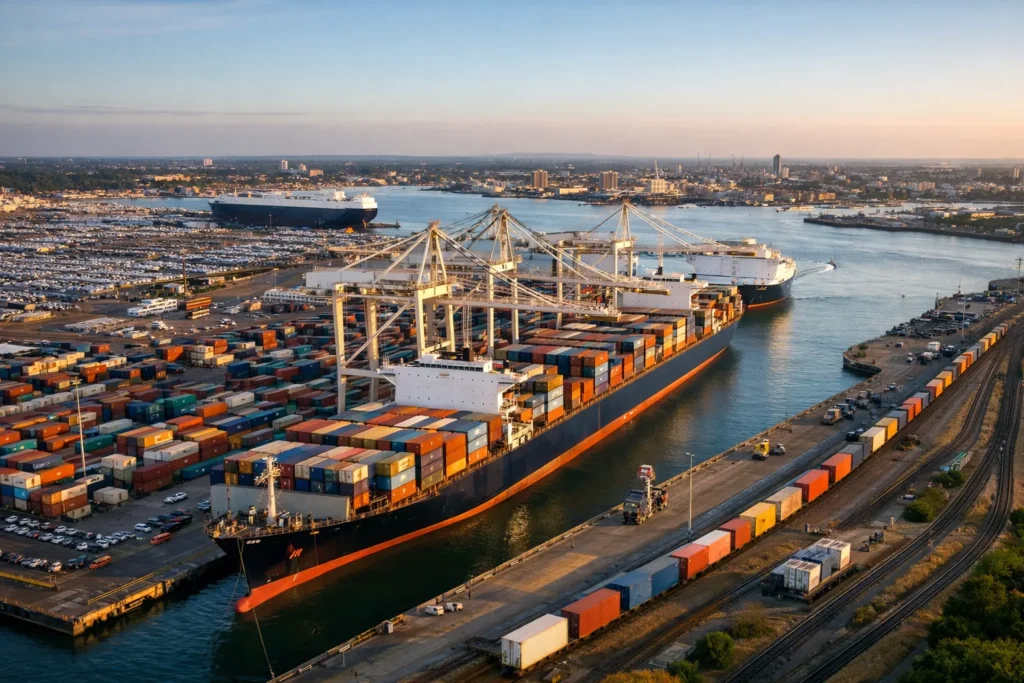
The Port of Southampton is Britain’s second-largest container port, with annual throughput between 1.76–2.0 million TEUs. Its deep-sea terminal has capacity for several large vessels at once, and its rail links support W10 gauge containers transported inland.
Southampton’s strategic position near key shipping routes from Asia and the Americas makes it a favoured call for carriers seeking reliable UK access. The container terminal, operated by DP World, runs alongside major automotive export traffic, making the port a hub of diversified freight.
London Gateway: Growth and Capacity Expansion
London Gateway’s development reflects broader container shipping trends in the UK. Initially opened in 2013, the Essex port has steadily expanded capacity and automation. Data reports show scheduled vessel capacity at London Gateway increased by nearly 50% year‑on‑year by mid‑2025.
London Gateway’s proximity to London and integration with the Thames Freeport logistics zone improve distribution agility. A 5G connectivity rollout aims to enhance port automation and predictive analytics, supporting UK Pallet Networks in choosing the right provider for domestic and European distribution.
Case Study: Maersk’s Strategic Shift to London Gateway

In February 2025, Maersk began reallocating major UK container operations from Felixstowe to London Gateway. This reflects shifting container shipping trends based on service reliability and hinterland access.
Early impact included improved schedule integrity for several Asia‑UK services and better integration with Thames Freeport warehousing. This shift demonstrates how carrier decisions influence port competitiveness and local supply chains.
Infrastructure and Supply Chain Impacts
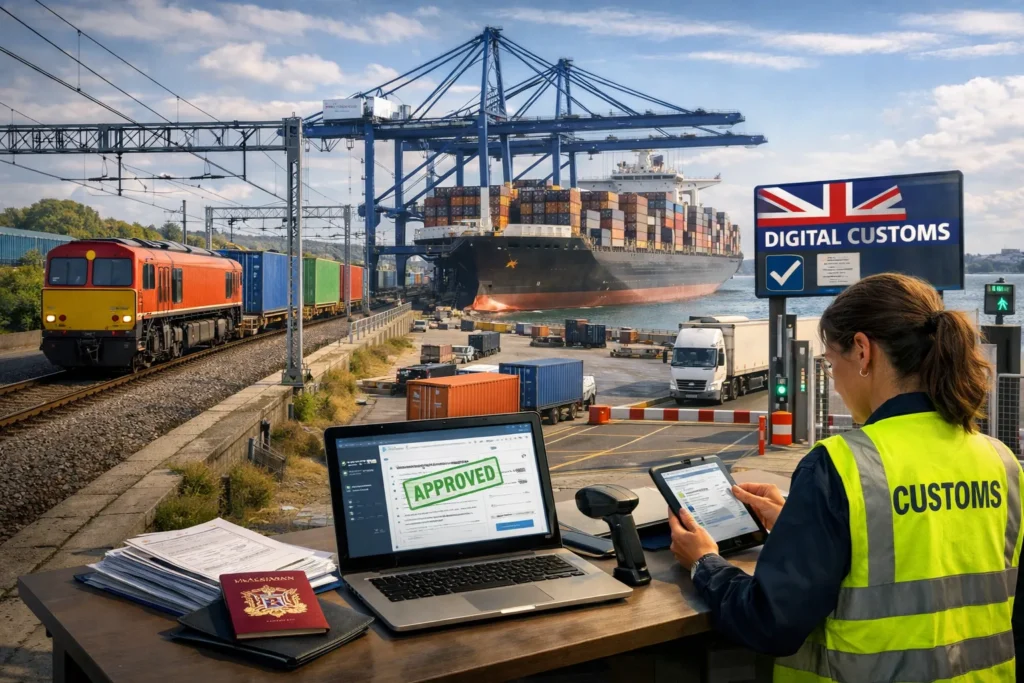
Investments and connectivity
Across the UK, investment in port infrastructure continues. The Felixstowe‑to‑Nuneaton rail upgrade and deeper berths at London Gateway aim to handle larger vessels and reduce bottlenecks. Rail enhancements shorten inland transit times, improving reliability for importers and exporters.
Customs processes remain a key focus for 2025. Post‑Brexit regulations still affect dwell times and documentation, pushing ports and carriers to adopt digital customs solutions to speed clearance and reduce delays.
Environmental and Regulatory Context
Port authorities and carriers face tighter environmental rules. The UK has committed to reducing sulphur and nitrogen emissions from shipping under its Clean Maritime Plan, promoting shore power and low‑emission fuels. These measures add operational considerations for logistics planners.
Future Outlook for UK Container Shipping
Looking ahead, container shipping trends in the UK point to modest growth driven by import demand and evolving trade links. Deeper integration with inland transport and digital customs systems will be critical. While total port tonnage sits below pre‑2000 levels, containerised freight shows resilience.
Ports that invest in capacity, connectivity and automation are likely to attract mainline services. Strategic partnerships, like those between carriers and ports, will also determine service patterns. The UK’s logistics ecosystem must adapt to maintain its global shipping relevance.
FAQs
What defines UK container shipping trends?
Patterns in TEU volumes, import‑export balances, and carrier port calls.
Which UK port handles the most container traffic?
Port of Felixstowe, handling about 50% of containerised trade.
Is UK container traffic growing in 2025?
Deep‑sea container tonnage increased in 2024.
What role does London Gateway play?
Growing throughput and automation with strong Thames Freeport links.
How do Brexit regulations affect ports?
Customs complexity can slow clearance and increase dwell times.
Disclaimer
The information provided in this article is based on current data and trends. While every effort is made to ensure the accuracy of the data, the dynamics of the container shipping industry are subject to change.