
Table of Contents
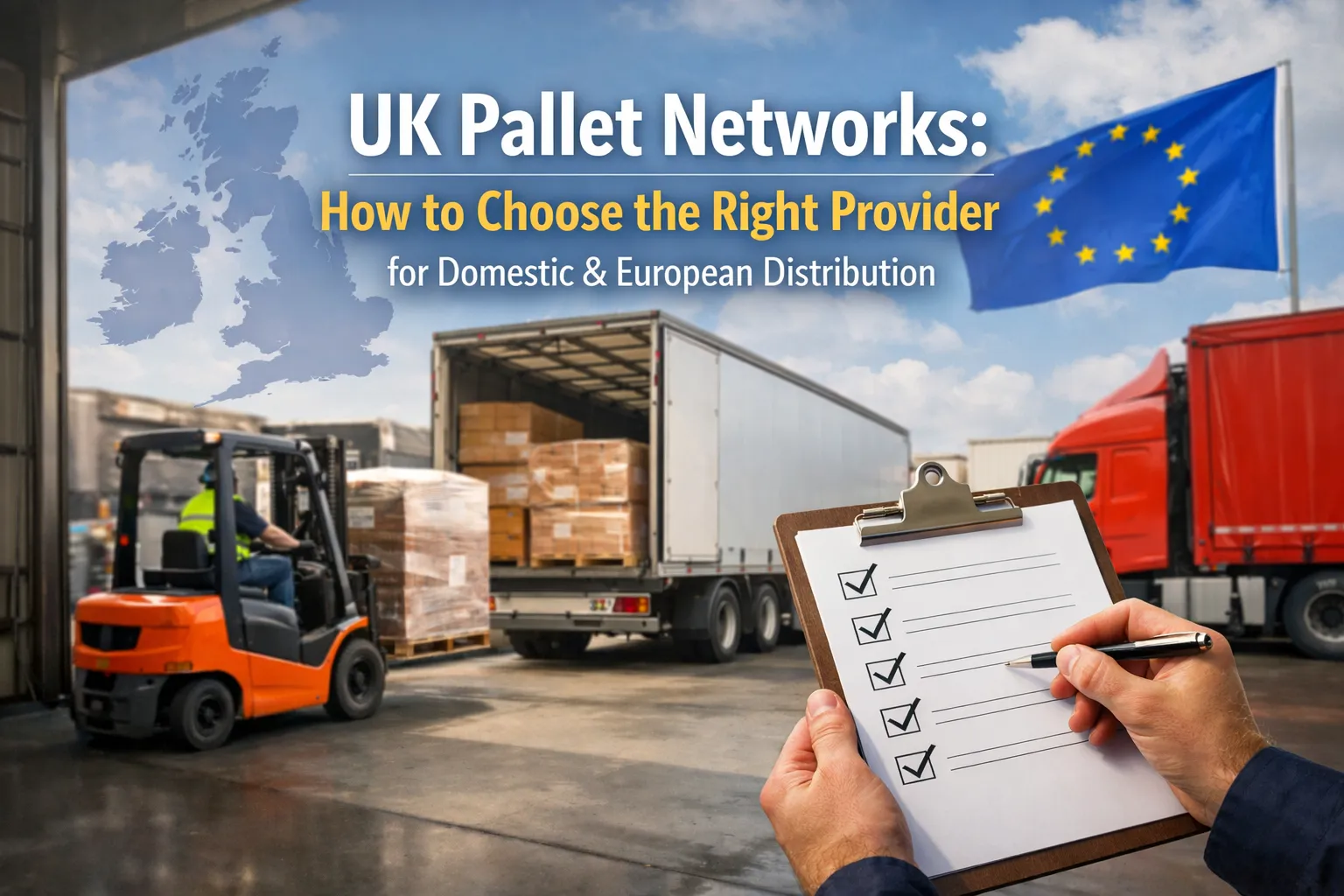
Understanding UK Pallet Networks is essential for businesses seeking reliable domestic and European distribution in 2025. Pallet networks remain the backbone of UK road freight logistics, responsible for moving more than 14.9 million pallets between January and June 2025 across the country.
These networks deliver both next-day and economy services, with next-day accounting for 61.6 per cent of volumes and economy at 38.4 per cent, reflecting strong demand for rapid transport. Service levels remain robust, with 96 per cent of deliveries meeting quality and timing criteria, even as volumes grow. UK pallet networks use the hub-and-spoke model, which consolidates freight at central hubs before distribution across nationwide member depots, improving efficiency and utilisation.
Domestic coverage is comprehensive; almost all UK postcode areas are reachable. For businesses aiming to ship into EU markets, many pallet network providers also offer structured European distribution options that complement International Freight Forwarding services.
Choosing the right provider depends on capacity, service levels, network reach, and integration with customs processes. Our article provides clear criteria and data to help you make a confident decision.
What is a UK Pallet Network?
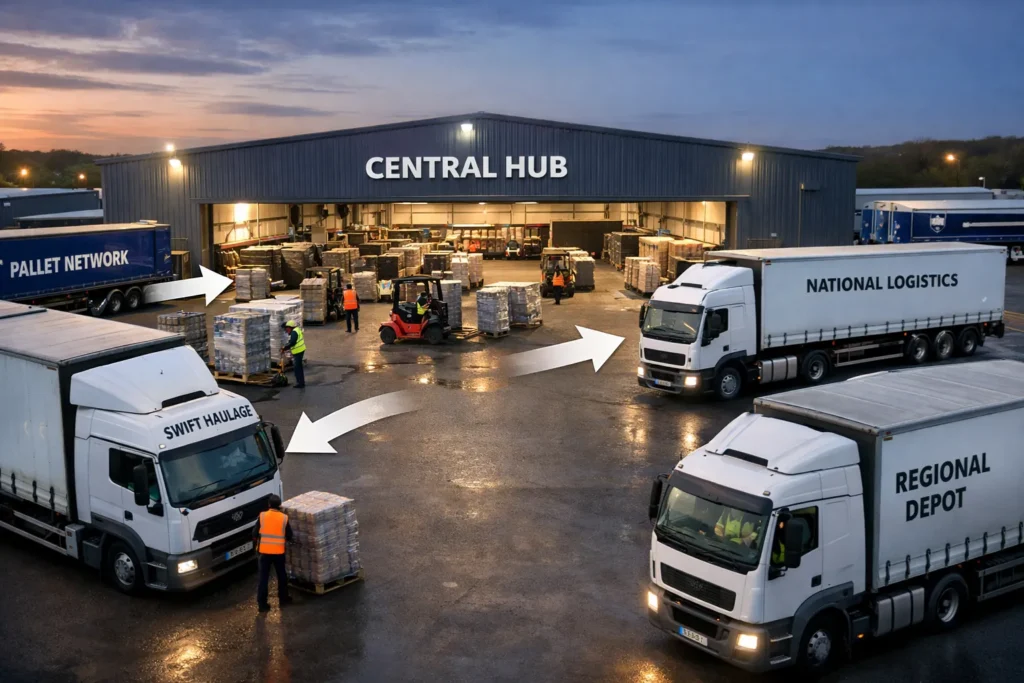
The hub-and-spoke structure underpins how UK Pallet Networks operates. Member hauliers collect pallets locally, transfer them to a central hub for sorting, and redistribute them to regional depots for final delivery. This structure improves trailer utilisation because multiple consignments share space, raising average fill rates well above standalone transport. High utilisation means lower transport costs and fewer vehicles on the road, reducing carbon emissions compared to fragmented freight solutions.
National coverage is guaranteed through a network of member depots, ensuring consistent domestic reach from Scotland to Cornwall. This model also gives businesses access to timed delivery windows and a choice between next-day or economy services to match urgency and budget. Effective implementation of this model is often the first indicator of a reliable pallet network provider.
Key Criteria for Choosing the Right Provider

1. Service Levels and Delivery Performance
Reliable network partners must demonstrate consistent on-time performance. Data from 2025 shows that UK pallet networks achieve 96 per cent compliance with delivery criteria, meaning most consignments arrive when and how they should. High service levels correlate with strong customer satisfaction and fewer operational disruptions.
When evaluating providers, request current service level data and ask how often they meet delivery commitments for both domestic and European routes. Europe-bound pallets require smooth cross-border handling and robust tracking to avoid delays at ports or post-Brexit customs. A provider’s performance record should reassure you that shipments arrive on time and intact every time.
2. Network Reach and Regional Coverage
A provider’s geographic footprint directly impacts delivery times and costs. Top pallet networks in the UK cover 100 per cent of UK postcode areas via member depots and hubs. Full domestic coverage means shorter collection windows and faster transit times, which benefit tight supply chains.
For European distribution, check if the network has partnerships or owned facilities that reduce hand-offs abroad. Proximity to major transport corridors and hubs like Felixstowe or Dover is valuable for exports and imports. Reliable reach ensures that your pallet volumes travel efficiently from origin to destination.
Cost Structure and Transparency

Understanding Pricing Models
Cost is a key differentiator when choosing a pallet network. Pricing hinges on pallet size, weight, service level, and distance. Next-day services command premiums over economy options, which accept longer transit. For European services, additional costs include customs handling fees and potential port charges. Best-in-class providers offer clear pricing structures with no hidden fees.
Ask for pricing schedules and a breakdown of how charges apply to different services. Transparent cost models help you compare providers fairly and predict budgets with confidence.
Volume Discounts and Contract Terms
If you commit to a higher volume or long-term contract, many networks will offer tiered discounts. Regular users of pallet services benefit from this structure, especially when distributing large volumes regularly. Be sure to compare how pricing changes with volume and whether minimum commitments apply. You should also clarify terms for peak periods, when demand and costs can fluctuate. Align pricing with your shipping patterns for the best value.
Case Study: Pallet Network Growth and Selection
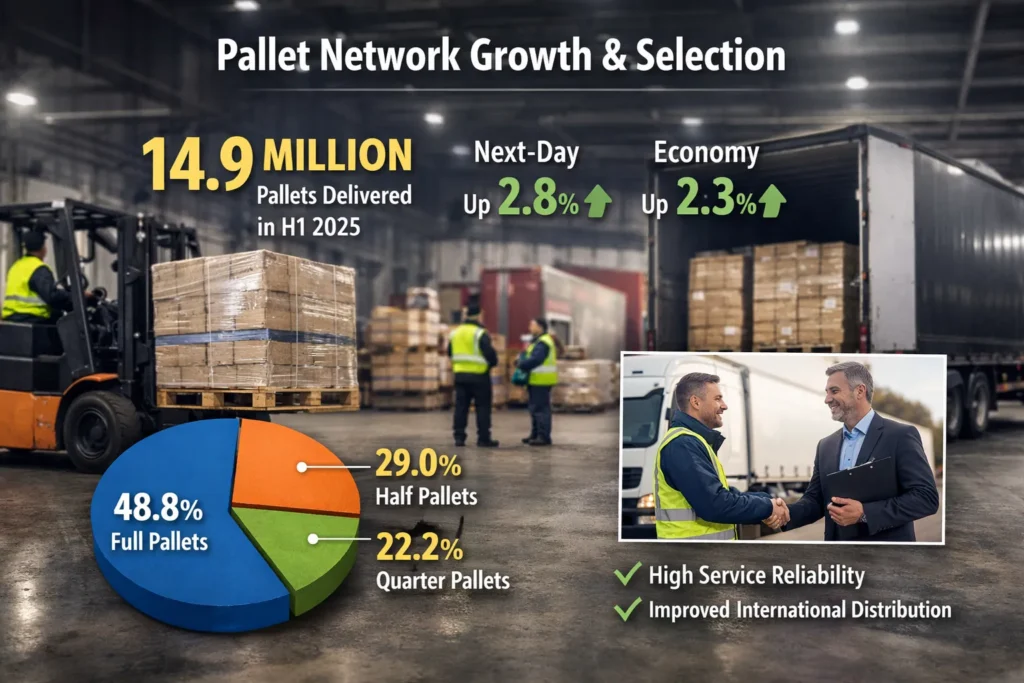
In H1 2025, the UK’s eight major pallet networks collectively delivered more than 14.9 million pallets, a 2.7 per cent increase over the same period in 2024. Next-day volumes were especially strong, up 2.8 per cent, while economy services grew by 2.3 per cent. Full pallets accounted for 48.8 per cent of volume, half pallets 29.0 per cent, and quarter pallets 22.2 per cent. Despite volume growth, 96 per cent of deliveries met the required criteria, showing scalability without service degradation.
A UK manufacturer of consumer goods selected a pallet network partner based on its high service reliability and strong volume performance for both domestic and European transport routes. This decision reduced stockouts and improved international customer satisfaction.
Domestic vs European Distribution Requirements
Domestic Logistics Priorities
For UK distribution, priority metrics include delivery punctuality, postcode coverage, and handling of varying pallet sizes. The majority of UK pallet traffic remains domestic, with networks reporting robust volumes across full, half, and quarter pallets. Speed and predictability influence inventory turnover and retail fulfilment. Choose providers with proven UK performance data and strong intra-UK transit times.
European Shipping and Customs Compliance
European distribution adds complexity. Following Brexit, customs documentation for EU shipments must be accurate to avoid delays. Choose partners with expertise in export paperwork, EU transit regulations, and VAT handling. Integrated customs support and tracking capabilities are essential. Reliable European distribution requires a provider with strong cross-border operational protocols and clear communication systems.
Sustainability and Environmental Regulations
Emissions and Efficiency Gains
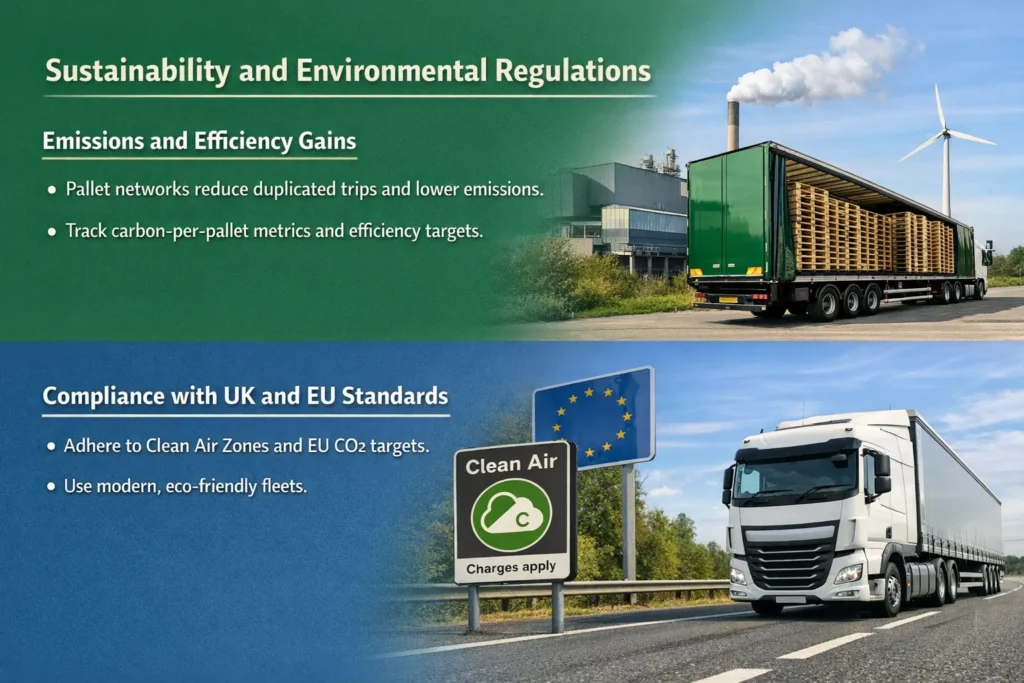
Pallet networks enhance environmental performance through consolidation, reducing duplicated trips and lowering emissions. High utilisation rates improve efficiency, which aligns with UK carbon reduction goals and complements broader logistics strategies alongside sea and air freight.
Select networks that disclose sustainability metrics, such as carbon-per-pallet figures or modal shift initiatives. Environmental commitment reflects long-term operational health and regulatory compliance.
Compliance with UK and EU Standards
UK and EU emissions regulations evolve constantly. Ensure your pallet network partner complies with standards such as the UK’s Clean Air Zones and EU CO2 targets for freight. Networks with modern fleets and eco-friendly practices minimise regulatory risk and future-proof your supply chain.
Technology and Visibility
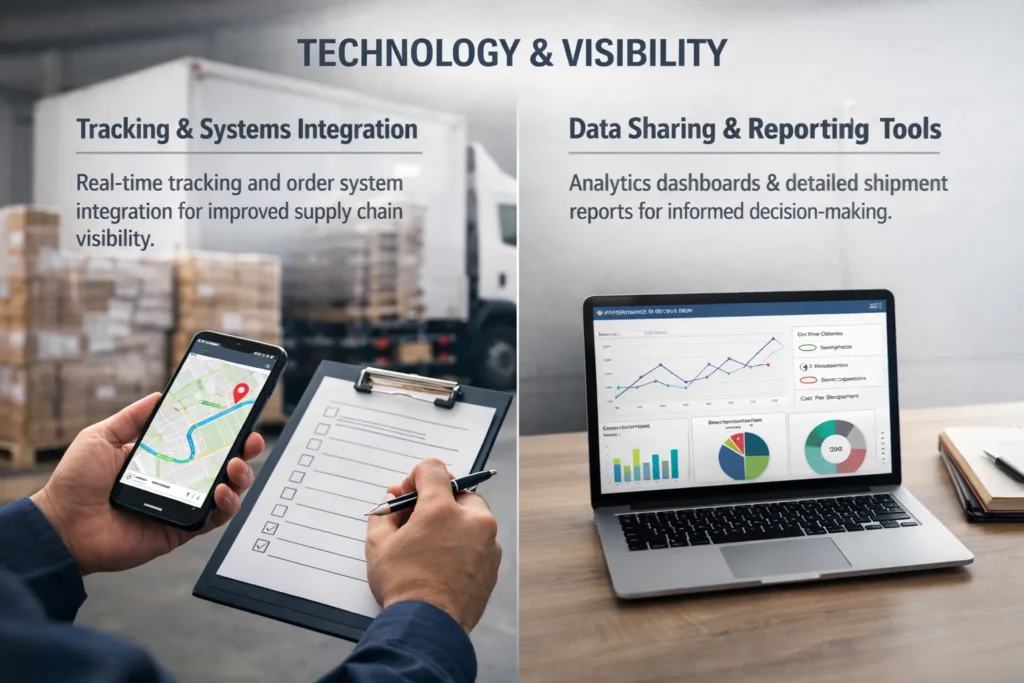
Tracking and Systems Integration
Real-time tracking and integration with your order systems strengthen supply chain visibility. Choose a pallet network with advanced tracking systems and automated notifications. High visibility reduces risk, improves customer satisfaction, and supports strategic planning.
Data Sharing and Reporting Tools
Access to performance dashboards and shipment analytics helps you manage costs and service quality. Look for providers offering detailed reporting on delivery times, exceptions, and costs per shipment. Actionable data empowers decisions that optimise distribution performance.
Table: UK Pallet Network Selection Checklist
| Factor | What to Check | Why It Matters |
|---|---|---|
| Service Level | On-time delivery % | Ensures reliability |
| Coverage | National & European reach | Affects speed & cost |
| Pricing | Transparent tariffs | Budget accuracy |
| Volume Discounts | Tiered pricing options | Cost efficiency |
| Compliance | Customs & emissions | Risk mitigation |
| Technology | Tracking & data tools | Visibility & control |
Bottom Line
Choosing the right UK Pallet Networks provider requires an objective evaluation of service levels, coverage, cost transparency, compliance, and technology. Data from 2025 underlines the strength of the UK pallet network sector, with consistent growth and high service quality. Match these metrics to your business needs for both domestic and European distribution. Ask providers for current performance data and clear pricing schedules, and prioritise partners with strong customs expertise for cross-border shipping. A strategic choice today builds resilience and reliability into your logistics tomorrow.
FAQs
What are UK pallet networks?
Collaborative freight hubs and member hauliers delivering palletised goods nationwide.
What’s the difference between next-day and economy services?
Next-day guarantees faster delivery; economy is slower with lower cost.
Can pallet networks deliver to Europe?
Yes, with proper customs documentation and EU transit processes.
How reliable are UK pallet network deliveries?
Around 96 per cent of consignments meet the required delivery criteria.
Do pallet networks support large and small pallets?
Yes, networks handle full, half, and quarter pallets efficiently.
Disclaimer
This article is for general informational purposes only. Logistics regulations, pricing, and service levels may change. Always confirm details directly with pallet network providers before making operational decisions.