
Table of Contents
Understanding Incoterms 2020/2025 is essential for UK importers using sea and air freight. These international commercial terms define who pays what, when responsibility for goods transfers, and how risk is managed in global logistics. In 2025, UK international freight remains heavily dominated by sea shipment, roughly 85–86% by weight, with air freight commanding a smaller volume but high value share (about 33% of total freight value) because it carries time-sensitive and premium goods.
Incoterms rules, established by the International Chamber of Commerce (ICC), are used globally, and all UK import contracts must explicitly specify which Incoterm applies. These terms do not cover every detail of a contract but standardise key logistics responsibilities such as transport, insurance, and risk transfer within International Freight Forwarding. From EXW (where the buyer bears most costs) to DDP (where the seller assumes nearly all responsibilities), the choice of Incoterm has a direct impact on cost planning, customs preparation, and overall freight performance.
UK importers who align Incoterms with freight mode, particularly when choosing between sea and air freight, reduce disputes and improve supply chain predictability.
Why Incoterms Matter for UK Sea and Air Freight

The Role of Incoterms in Global Logistics
Incoterms provide a uniform framework for contracts involving sea and air freight. They determine who pays for carriage, who insures the goods, and when the risk transfers from seller to buyer. For UK importers, this clarity is vital in managing cross-border logistics costs and avoiding disputes. Sea freight terms like FAS, FOB, CFR, and CIF apply only to shipments moving via waterborne routes.
Meanwhile, terms covering any mode, including air, such as FCA, CIP, and DAP, allow for flexible contracts spanning multiple transport legs.
Many UK importers underestimate the impact of Incoterm selection on customs liability and freight pricing. A mis-selected Incoterm can shift customs clearance responsibility to the wrong party, resulting in unexpected £35–£65 customs entry fees or additional handling costs.
By contrast, a well-chosen Incoterm allows cost and risk control early in the procurement cycle, improving shipping forecasts and contractual compliance. Ending decisions clearly and precisely in contracts reduces administrative burden and aligns with HMRC customs requirements.
Impact on Costs: Sea vs Air Freight

Sea freight remains the backbone of UK international trade by weight, handling approximately 85% of imports. Typical sea freight costs for a 40-foot container from China to the UK range from £1,800 to £2,600 in 2025. In contrast, air freight often costs £4–£8 per kg but delivers in 7–10 days. This stark cost difference, sometimes 8–10 times more for air, makes Incoterm alignment essential.
UK importers opting for air freight often use CIP (Carriage and Insurance Paid) or DAP (Delivered at Place) to ensure predictable door-to-door conditions, especially for high-value goods.
Here’s a quick comparison of core cost drivers for typical import routes:
| Freight Mode / Cost Item | Typical Cost (UK) | Transit Time | Best Use Case |
|---|---|---|---|
| Sea Freight FCL (40ft) | £1,800–£2,600 | 4–8 weeks | Heavy, bulk, non-urgent cargo |
| Air Freight | £4–£8 per kg | 7–10 days | High-value, urgent goods |
| Customs Entry Filing | £35–£65 per shipment | N/A | Mandatory import clearance |
| Terminal Handling Charges | £25–£75 per container | N/A | Port terminal handling costs |
Using Incoterms correctly means forecasting these costs accurately and assigning cost ownership clearly between buyer and seller.
For example, CIF (Cost, Insurance, Freight) assigns insurance to the seller, but the buyer still manages customs duty and VAT in the UK. Conversely, DDP has the seller assume almost all cost components before delivery, a choice that must be reflected in pricing and customs planning.
Choosing the Right Incoterm for Sea and Air Freight
Sea Freight Incoterms for UK Importers
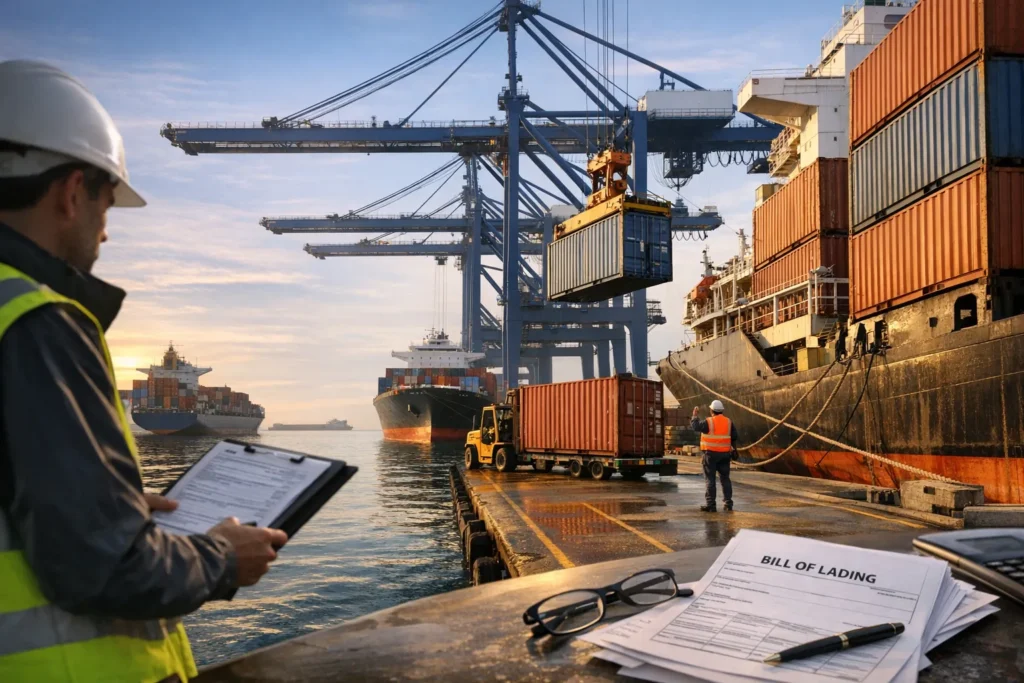
For UK importers using sea freight, selecting the proper Incoterm controls risk and cost exposure. The four key terms designated for ocean transport are:
- FAS (Free Alongside Ship): Seller delivers goods beside the vessel.
- FOB (Free on Board): Seller loads goods on board and risk transfers at the ship’s rail.
- CFR (Cost and Freight): Seller pays freight, but risk transfers earlier.
- CIF (Cost, Insurance and Freight): Seller pays freight and insurance to the destination port.
Choosing FOB over CIF can reduce upfront costs if the importer can negotiate cheaper insurance independently. FAS benefits UK importers with strong port handling capabilities, especially at major hubs such as Felixstowe and Southampton. But whichever term is chosen, UK importers must ensure the Incoterm is clearly stated on shipment documentation to support Post-Brexit Customs declarations with HMRC and avoid delays.
Incoterms Suitable for Air Freight
For air freight, Incoterms with flexible delivery points are preferred. These include:
- FCA (Free Carrier): Seller delivers to the carrier, and risk passes at the named place.
- CPT (Carriage Paid To): Seller pays freight to the named place (freight forwarder or airport).
- CIP (Carriage and Insurance Paid To): Seller pays freight and minimum insurance.
- DAP (Delivered at Place): Seller delivers ready for unloading, but buyer handles import clearance.
These terms enable importers to match delivery expectations with air carriers’ schedules and customs processing in the UK. The faster transit times of air freight demand precise contract terms because delayed paperwork can negate speed advantages. Selecting CIP ensures basic insurance coverage up to the named airport or door.
A UK Market Case Study
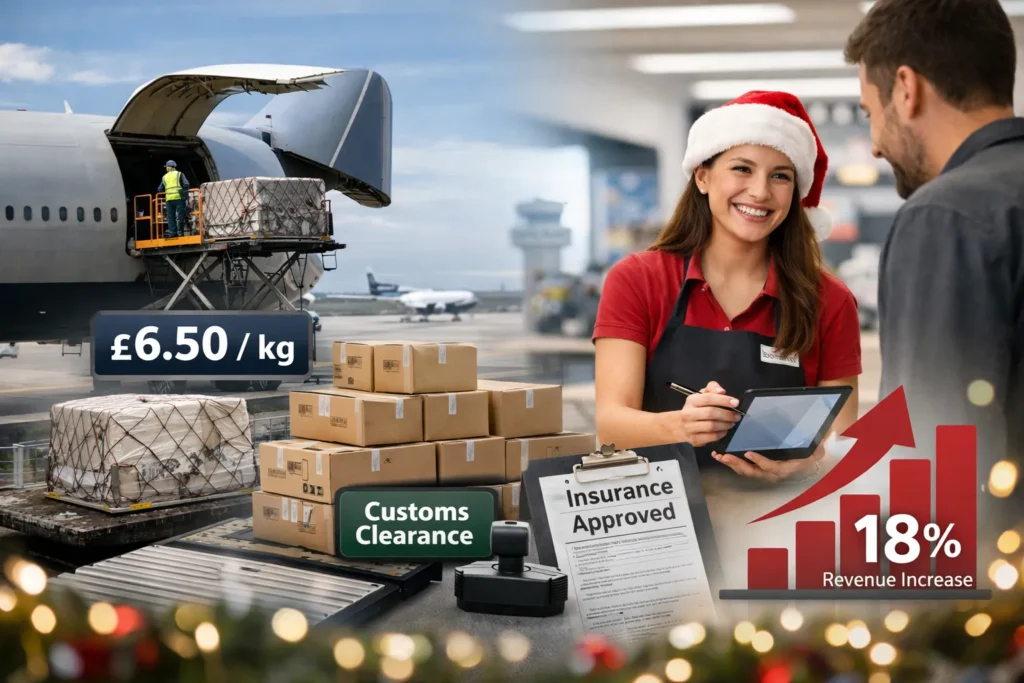
In Q4 2024, a UK electronics importer shifted from CIF sea freight to CIP air freight for high-value components due to seasonal demand spikes ahead of Christmas. Sea transit delays via the Suez Canal (disrupted in early 2024) pushed arrival dates beyond critical retail windows.
With CIP, the importer paid £6.50 per kg air freight but reduced stock-out risks and retail penalties. Clear CIP allocation meant customs clearance and insurance were pre-planned, eliminating last-minute delays. The result was an 18% revenue uplift from on-time product availability compared to sea-only strategies.
Practical Steps for UK Importers
- Identify your freight mode: sea dominates by weight, air by value.
- Match Incoterm to your supply chain plan while specifying the named port or place.
- Allocate customs responsibility early to avoid surprises at UK borders.
- Calculate total landed costs including duty (0–12%), VAT (20%), and handling fees.
Bottom Line
Choosing the right Incoterm for sea and air freight in the UK is not optional; it is strategic. Incoterms determine cost responsibility, risk transfer, and customs outcomes for every shipment into the UK. By aligning transport mode, cost expectations, and contractual clarity, importers can optimise supply chains and reduce unexpected charges. The best outcomes are achieved when terms are chosen early, documented accurately, and integrated into financial and customs planning.
FAQs
What Incoterm transfers risk at the port of shipment?
FOB transfers risk when goods are loaded on board the vessel.
Is VAT always charged on UK imports?
Yes, UK VAT is 20% and is applied to the value plus freight and duty.
Can air freight use FOB Incoterms?
No, FOB applies only to sea freight.
Do Incoterms cover customs duties?
No, Incoterms do not dictate duty rates.
Should Incoterms be in every contract?
Yes, to avoid ambiguity and disputes.
Disclaimer
This content is for general information only and does not constitute legal, customs, or financial advice. Always confirm Incoterms and import obligations with your freight forwarder or customs adviser.