
Table of Contents
International freight forwarding underpins UK trade with global partners, handling complex cross-border shipments for businesses in 2025. This logistical service orchestrates air, sea, rail and road movements from origin to destination, including customs and documentation compliance, making it vital to UK importers and exporters. Freight forwarding bridges carriers such as shipping lines and airlines with traders, reducing time, cost and risk and improving supply chain outcomes.
In the UK market, freight forwarding and customs agents generated £29.5 billion in revenue in 2025 and grew by 5.2 % year-on-year, reflecting robust demand for cross-border logistics services.
The UK’s international freight flows remain substantial: around 70 % of freight by weight is imports and 30 % exports, with sea freight moving ~86 % of cargo by weight and air freight accounting for ~33 % of value because of high-value shipments.
Freight forwarding also navigates trade documentation, duty management and multimodal carriage, enhancing competitiveness for British firms on the global stage. In this article, we explain how freight forwarders operate within UK regulations, costs and trends shaping international freight forwarding today.
What Is International Freight Forwarding in the UK?

International freight forwarding is a specialised service that arranges the physical movement of goods across borders. At its core, a freight forwarder functions as the intermediary between businesses and carriers such as liner shipping companies, airlines and haulage firms. Forwarders organise multimodal transport, ensuring goods move efficiently by road, rail, sea or air and that international legal requirements are met. Freight forwarders also handle customs clearance, insurance and documentation such as bills of lading or air waybills.
In the UK, freight forwarders must be knowledgeable about the UK Trade Tariff and HMRC requirements, including customs codes, duties and taxes. Forwarders often help clients comply with Incoterms and advise when to consolidate shipments to reduce costs. The British International Freight Association (BIFA) sets common standards. Practical knowledge of documentation and customs processes is essential to avoid delays and unexpected charges.
UK exporters and importers rely on freight forwarders to reduce risk, improve delivery predictability and keep shipments compliant with UK and global trade regulations.
Key Modes of International Freight in the UK
Sea Freight: Volume Leader
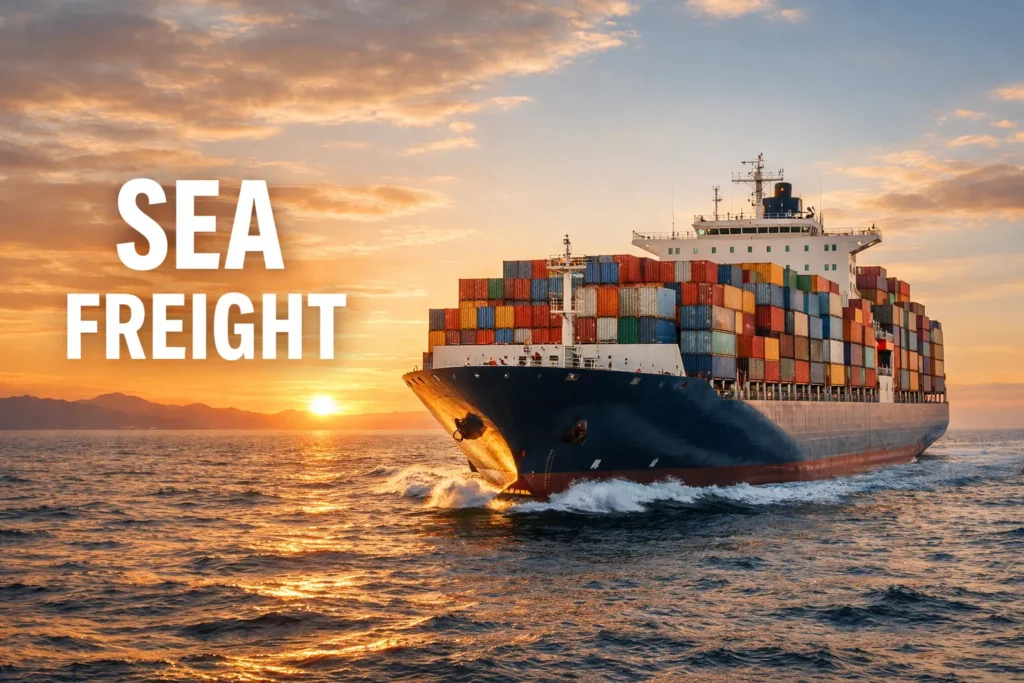
Sea freight dominates the UK’s international freight forwarding landscape by sheer volume. In 2024, UK ports handled 429.7 million tonnes of cargo, with ~85 % of international freight by weight moved by sea.
Sea transport remains cost-effective for bulky, low-value goods and long-distance trade routes. Most UK sea freight heads to and from the EU and other European regions, with short-sea trade accounting for ~68 % of total UK international port tonnage.
Forwarders negotiate shipping space, consolidate cargo and manage complex documentation for sea shipments. Choosing the right port and carrier can reduce dwell time and cost, especially during peak shipping periods. Sea freight’s dominance in weight terms underlines its importance, but forwarders balance sea and air options to meet client needs.
Air Freight: Value Champion
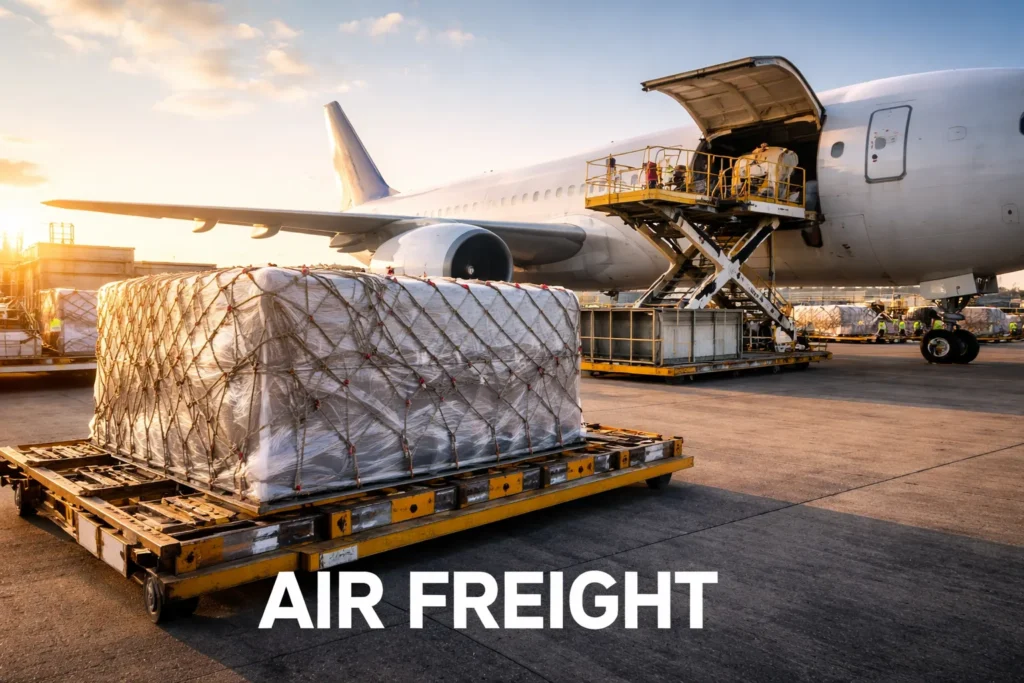
Air freight accounts for less than 1 % of international freight by weight but delivers ~33 % of total freight value for UK trade. This disproportion reflects high-value or time-sensitive goods such as electronics, pharmaceuticals and fashion.
In 2025, UK air freight hubs like Heathrow and East Midlands Airport will have seen growth in dedicated cargo services, boosting capacity for express and high-value shipments. Forwarders manage bookings, security compliance and customs clearance for air shipments, often at a higher cost per kilo than sea freight.
UK Trade Data & Freight Forwarding Demand
International freight forwarding in the UK aligns with wider trade flows. In 2024, freight by weight showed a strong import share (70 %) and a significant export presence (30 %), with value terms skewed slightly towards imports at 61 %.
The UK freight forwarding and customs agents sector directly employed 57,784 people in 2025, with modest employment growth of 1.2 %. These figures underline the sector’s role in sustaining logistics employment and supporting businesses trading overseas.
Table: UK Freight Forwarding Snapshot (2025)
| Metric | Value (2025) |
|---|---|
| UK freight forwarding market size | £29.5 billion |
| Sector growth rate | 5.2 % |
| Freight forwarding employment | 57,784 jobs |
| Import share by weight | 70 % |
| Export share by weight | 30 % |
| Sea freight tonnage at UK ports | 429.7 million t |
Cost Factors in International Freight Forwarding
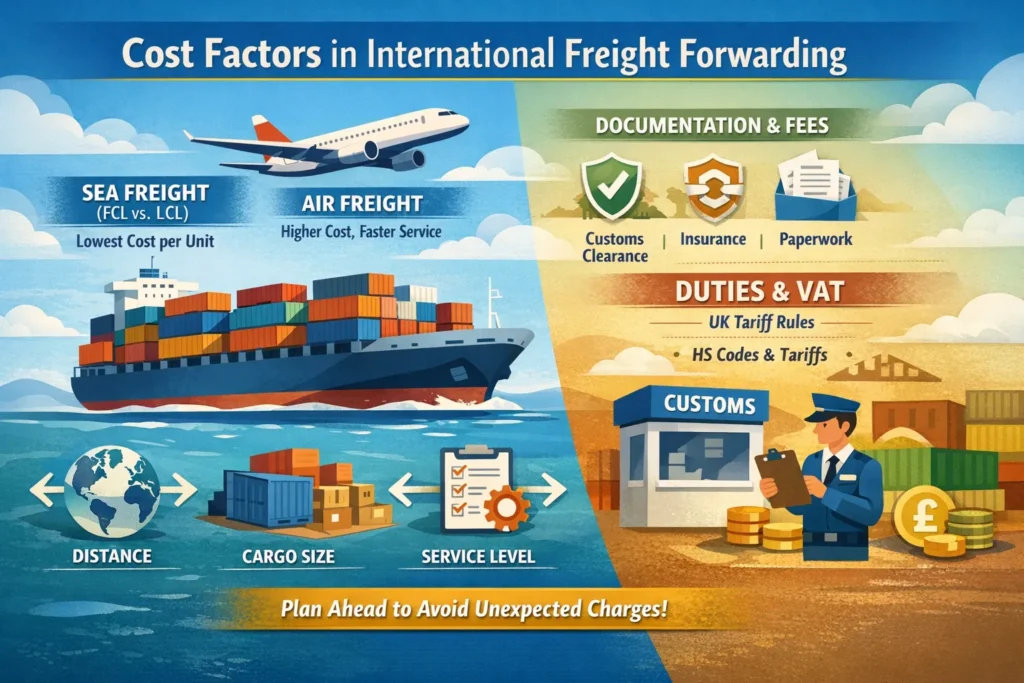
International freight forwarding costs in the UK vary widely based on shipment mode, distance, cargo dimensions and service level. Sea freight typically offers the lowest cost per unit for large consignments. Forwarders often quote based on container size or volume, such as Full Container Load (FCL) versus Less than Container Load (LCL). Air freight costs remain higher due to speed and premium handling.
Forwarders also add fees for documentation, customs clearance and insurance. Exporters and importers must budget for duties and VAT under UK tariff rules, which vary by commodity. Accurate HS codes and advanced documentation reduce unexpected charges at border entry points.
Choosing the right service level, door-to-door versus port-to-port, affects price and complexity. Door-to-door services, often including customs brokerage, simplify processes for clients but come at a higher cost. Forwarders help optimise these decisions to keep total landed cost competitive.
UK Regulatory Environment for Forwarders
International freight forwarding in the UK operates under a complex regulatory framework. Forwarders must comply with HMRC customs rules, including EORI registration for cross-border shipments. Accurate tariff classification and documentation remain prerequisites for legal compliance.
Forwarders also adhere to trading conditions that limit liability and outline responsibilities for loss or damage. Many adopt the British International Freight Association (BIFA) standard trading conditions to ensure legal clarity.
Brexit has shifted regulatory landscapes, with UK-specific trade documentation replacing pre-existing EU models. Forwarders must stay abreast of changes in tariffs, licence requirements and risk management provisions. Forwarders that invest in compliance expertise reduce delays and financial penalties for clients.
Digital Trends Shaping Freight Forwarding in 2025
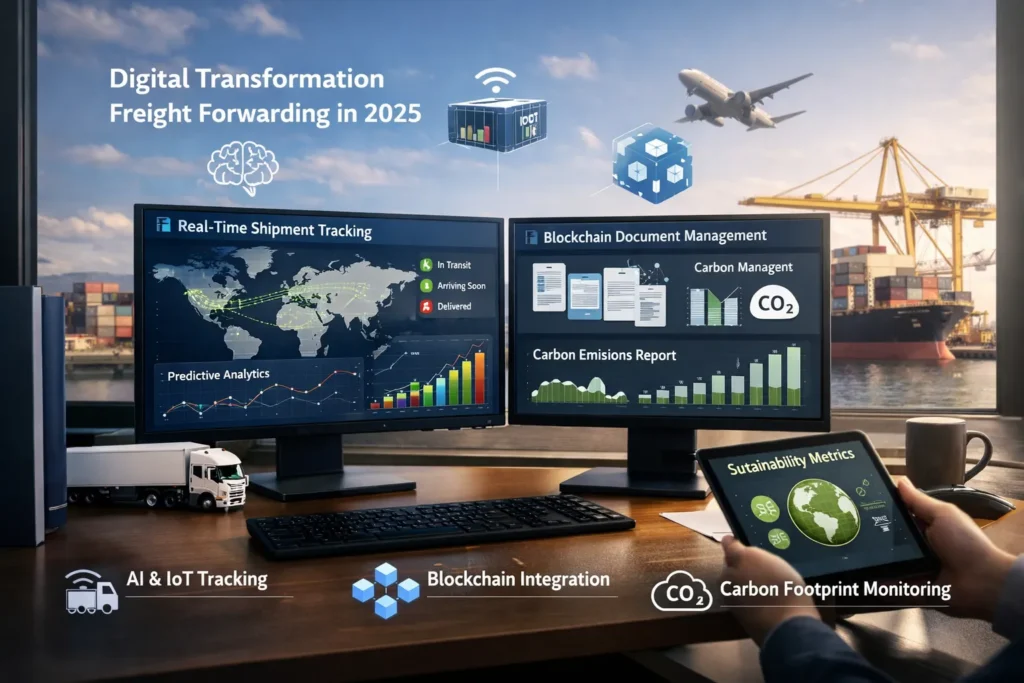
In 2025, digitalisation is transforming international freight forwarding operations in the UK. Advanced tools such as AI-driven route optimisation, IoT tracking and blockchain for document exchange improve visibility, reliability and performance.
Forwarders increasingly provide real-time tracking dashboards and predictive analytics to anticipate disruptions. This investment raises service levels and client confidence while reducing manual errors and paperwork. Sustainability metrics are also being integrated into freight planning, supporting carbon footprint monitoring.
Digital adoption enables forwarders to compete globally and respond to fluctuating demand. As supply chains face uncertainty, data-driven decision-making reduces risk and enhances resilience in international logistics. Don’t miss our recent post about logistics.
Case Study: UK–China Electronics Export
In 2025, a UK electronics assembler exported high-value components to partners in Shanghai using a freight forwarder. The forwarder coordinated multimodal transport air freight for urgent shipments and sea freight for bulk consignments. They managed customs clearance through UK ports, secured cargo insurance and provided weekly tracking reports.
The result was a 25% reduction in transit delays and a 12% cost saving compared with the previous year’s logistics spend, demonstrating how professional freight forwarding improves trade outcomes.
Best Practices for UK Businesses
- Engage early with a freight forwarder: start planning 8–12 weeks before shipment.
- Prepare accurate customs documentation: errors delay clearance and incur fines.
- Choose appropriate Incoterms: clear responsibilities, reduce disputes.
- Leverage technology: real-time visibility improves reliability.
- Understand tariff codes: correct HS codes, minimise duties.
These practices strengthen UK companies’ global trade operations and build resilience in freight forwarding.
Bottom Line
International freight forwarding remains central to UK trade in 2025, shaping how goods move across borders efficiently and compliantly. With £29.5 billion in market revenue and strategic multimodal networks, forwarders reduce logistical complexity for importers and exporters alike. Strong regulatory awareness and proactive planning enable businesses to control costs and avoid clearance delays. Embracing digital tools further enhances forecasting and operational performance. Freight forwarders help UK companies manage documentation, tariffs and carrier relationships, improving global competitiveness.
FAQs
What is international freight forwarding?
A service arranging cross-border transport, customs and documentation for goods.
Why use a freight forwarder in the UK?
Forwarders reduce risk and handle compliance, saving time and cost.
What modes do UK freight forwarders use?
Sea, air, road and rail, depending on cost and urgency.
Do forwarders handle customs paperwork?
Yes, they prepare and file the required customs documentation.
What is the largest freight mode by volume in the UK?
Sea freight accounts for roughly 85 % of international freight by weight.
Disclaimer
This article is for general informational purposes only and does not constitute legal, financial or regulatory advice. Always consult a qualified logistics or customs professional.