
Introduction
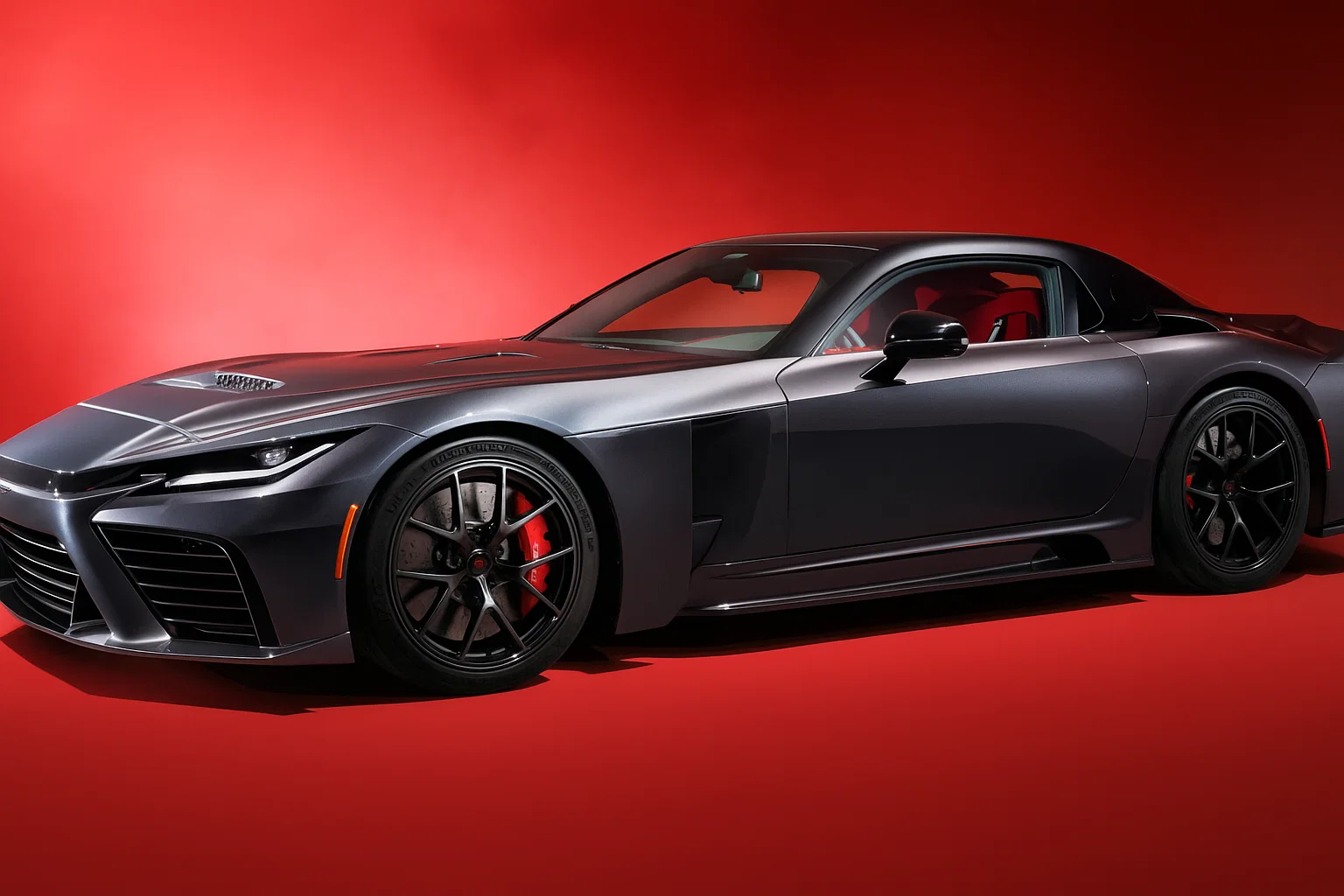
The arrival of the Toyota GR GT marks a bold turn for Toyota into the high-performance supercar arena. Debuted on 5 December 2025, the GR GT packs a V8 enhanced by hybrid assistance delivering a headline figure of 641 bhp and a rear-wheel-drive layout designed to challenge established rivals.
With a projected top speed over 199 mph (≥ 320 km/h) and lightweight mixed construction, Toyota positions the GR GT not as a distant unicorn, but as a real competitor to cars such as Mercedes-AMG GT.
This article explores the GR GT’s specifications, engineering choices, and market impact with clear data and insight.
Quick Facts: GR GT at a Glance
| Specification | Detail |
|---|---|
| Engine | 3,998 cc twin-turbo V8 + hybrid electric motor |
| Power output (target) | 650 PS / 641 bhp (or more) |
| Torque (target) | 850 Nm or more |
| Transmission | 8-speed automatic (wet-clutch), rear-wheel drive |
| Body/frame | Aluminum frame with carbon-fibre-reinforced panels |
| Dimensions | 4,820 mm L × 2,000 mm W × 1,195 mm H |
| Weight (target) | ≤ 1,750 kg |
| Weight distribution | 45% front : 55% rear |
| Suspension | Double wishbone all around |
| Brakes | Carbon-ceramic discs (front & rear) |
| Tyres | Michelin Pilot Sport Cup 2 (265/35 ZR20 front, 325/30 ZR20 rear) |
| Top speed (target) | ≥ 320 km/h (≈ 199+ mph) |
| Seating | 2 (driver + passenger) |

GR GT Specifications: Powertrains, Performance and Structure
V8 Hybrid Powertrain and Outputs
The core of GR GT’s appeal lies in its 3,998 cc twin-turbo V8 engine paired with a transaxle-integrated electric motor. Toyota lists the targeted output at 650 PS or greater (approximately 641 bhp), with 850 Nm or more of torque.
Power flows to the rear wheels through a newly developed 8-speed automatic with a wet-start clutch and a mechanical limited-slip differential.
This hybrid setup addresses a common V8 challenge maintaining torque during gear shifts. The electric motor fills momentary torque gaps during downshifts or throttle transitions.
This technology promises both brutal acceleration and smoother transitions than a purely mechanical V8. That balance targets drivers who want raw power without sacrificing usability.
Performance Targets and Dynamics
Toyota’s internal target for GR GT’s top speed is 320 km/h (≈ 199 mph) or higher, matching the supercar segment’s expectations. The car rides on Michelin Pilot Sport Cup 2 tyres (265/35 ZR20 front, 325/30 ZR20 rear), paired with carbon-ceramic Brembo brakes for serious stopping power.
Handling benefits from a front-engine, rear-wheel-drive layout with the engine mounted well back, plus a 45:55 front-to-rear weight distribution. Double-wishbone suspension all around and a low centre of gravity support agile car control. These dynamics suggest the GR GT will deliver both straight-line speed and track-ready handling.
Construction & Design: Lightness Meets Aggression
Architecture and Materials
The GR GT uses an all-aluminum frame for the main body structure. Exterior panels including bonnet, roof, doors, and boot lid use carbon-fibre-reinforced plastic (CFRP) to cut weight while retaining rigidity.
Final production weight aims to stay at 1,750 kg or lower, despite the heavy hybrid powertrain. Combined with the rear-biased weight distribution, this structural design gives GR GT an advantage in balance a key trait in high-performance grand tourers.
Styling and Aerodynamics
The GR GT brings a classic long-bonnet and short-tail profile, with a cab-rearward cabin and two-seat layout. The overall dimensions: 4,820 mm long, 2,000 mm wide, 1,195 mm tall, with a wheelbase of 2,725 mm.
Aerodynamic elements include large front cooling inlets, NACA-style bonnet ducts, wide rear haunches and aggressive venting all optimized for both downforce and engine cooling. The design workers reportedly collaborated with aerodynamicists from day one. The result blends visual drama with true performance intent.
This aesthetic muscular front, wide stance, low roof signals Toyota’s intent to enter serious supercar territory rather than soft-sell the GR GT as a luxury GT.
Market Positioning: Where Does GR GT Stand
Direct Competition and Pricing Speculation
Toyota aims the GR GT squarely against the AMG GT and similar grand tourer supercars from Europe. The car has the power, speed, and rear-drive layout to slot into that segment.
Early industry estimates not official yet suggest a base GR GT might land around USD 180,000–220,000, with higher-spec or track-focused versions reaching USD 260,000+ or more. those numbers hold, GR GT undercuts many European rivals while delivering competitive performance.
Production Timeline and Availability
According to official seems-in-house planning, GR GT is still under development. Full global launch and deliveries are expected around 2027.
That timing gives GR calendar-year 2026 for final validation and homologation. The gradual ramp-up may limit early availability, making the first production GR GT units especially desirable among enthusiasts.
Why GR GT Matters: Significance for Toyota and Supercar Landscape
Hybrid V8 Return in an EV Age
At a time when many manufacturers pivot to full electric drive, the GR GT’s hybrid twin-turbo V8 signals renewed faith in performance-driven combustion cars. Adding an electric motor addresses emissions and drivability, yet retains the visceral sound, torque, and character of a V8.
This move may influence other automakers to consider hybrid or mild-hybrid V8s for performance cars, rather than chasing all-electric solutions only. In that sense, GR GT could help preserve a niche — but meaningful category in the supercar segment.
Re-establishing Brand Performance Heritage
With GR GT, the performance arm Toyota Gazoo Racing re-enters the halo-car arena. The car references historical icons such as Toyota 2000GT and Lexus LFA, while adopting modern engineering.
If the GR GT finds success, it can change global perception: Toyota is no longer just practical and hybrid it can also build serious supercars with performance credentials. For consumers, that means broader choice, blending reliability, hybrid sensibility, and raw speed. Don’t miss our recent post about Trump Wants Popular Asian Kei Cars Built and Sold in the US.
Bottom Line
The Toyota GR GT emerges as a serious contender in the 2025–2027 supercar field. It delivers a hybrid-enhanced V8, aggressive styling and well-engineered chassis balance. Its combination of performance, construction, and competitive pricing potential gives buyers a compelling alternative to European rivals.
For enthusiasts and collectors, GR GT offers rare value: a brand-new halo car from a major manufacturer, blending daily usability with supercar thrill. For Toyota, it proves the company still cares about emotion and driving purity. The GR GT matters and it could redefine what “Toyota performance” means for years ahead.
Disclaimer:
All information in this article Specifications, pricing, release timelines, and technical details may change as manufacturers update official documents.